
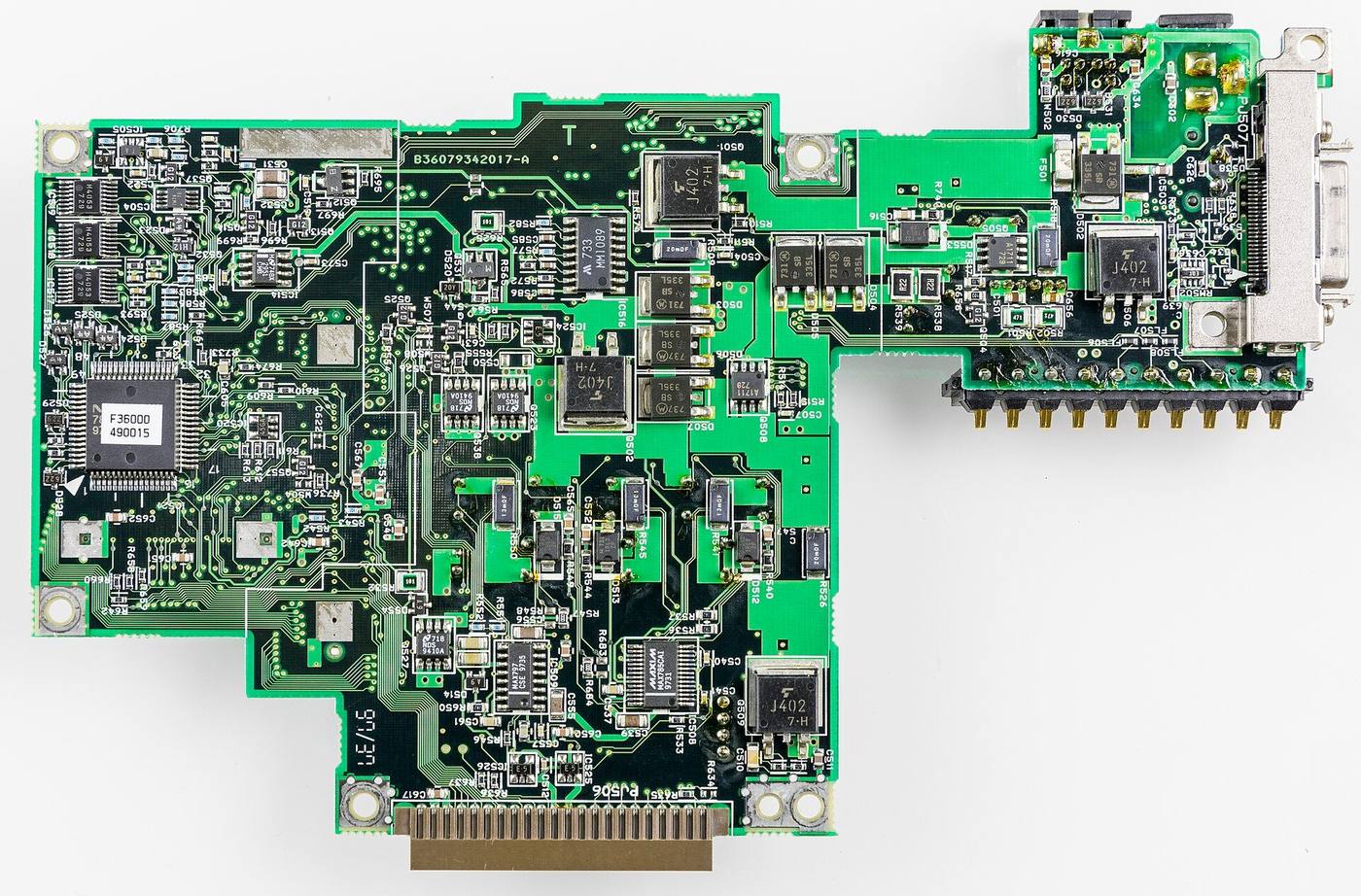
The smallest AI is also the most radical: a model that runs on a microcontroller — milliwatts of power, kilobytes of memory — inside the sensor itself. No server, no network, no cloud: the instrument measures and the instrument decides whether what it measured is worth reporting.
This is TinyML — machine learning on embedded hardware — and for a ship's sensor network it's the bottom layer of the intelligence stack: the anomaly that gets caught at the source, by the sensor that saw it, on power the sensor already had.
Key findings
- TinyML runs inference on microcontrollers — milliwatt power, kilobyte memory, no OS — inside the sensor itself. Established
- The maritime use is always-on monitoring — the sensor that watches continuously without needing a server to interpret. Established
- The model is simple by design — anomaly scoring, threshold detection, wake-on-anomaly — not complex inference. Established
- The payoff is bandwidth and power — only anomalies transit the network; the sensor sleeps otherwise. Established
- TinyML complements, not replaces, the edge server — the sensor flags, the shipboard model analyzes. Established
The model inside the instrument
A conventional sensor reports data; a TinyML sensor reports a judgement — 'this vibration signature is anomalous', 'this acoustic pattern is a bearing fault', 'this reading is outside the learned normal'. The model runs on the microcontroller the sensor already has, at milliwatt power, without a network connection. The instrument doesn't just measure; it interprets — and the interpretation is what decides whether the data is worth waking the network for. Established
The maritime jobs
- <strong>Vibration monitoring.</strong> A bearing-mounted sensor that learns the machine's normal vibration and flags the drift. Research demonstration
- <strong>Acoustic detection.</strong> Ultrasonic or audible sensors catching the signature of a failing pump or leaking valve. Research demonstration
- <strong>Wake-on-anomaly.</strong> The sensor sleeps; the TinyML model watches; an anomaly wakes the network and reports — power saving by design. Established
- <strong>Environmental sensing.</strong> Temperature, humidity, tank-level sensors that flag excursions locally. Research demonstration
The constraint is the model size
TinyML's limit is the model's simplicity — kilobytes of memory fit a threshold detector, not a reasoning engine. The TinyML sensor can't diagnose; it can only notice — which is exactly its value: the anomaly it catches gets passed up the stack to a more capable model, while the sensor continues its watch on milliwatts. The architecture is layered intelligence: the sensor notices, the edge computer analyses, the system decides. Established
The bandwidth economics
The deeper value is data economics: a ship's sensor network produces more data than the satellite link can carry, and most of it is uninteresting normal operation. A TinyML layer that filters at the source — only anomalies transit, the normal stays aboard — turns a bandwidth problem into a bandwidth budget. The sensor isn't just intelligent; it's the network's throttle, deciding what's worth the uplink. Maritime-GPT analysis
What we know
- TinyML puts inference inside the sensor — milliwatt, kilobyte-scale, no network.
- The application is continuous monitoring that only reports anomalies.
- The model is deliberately simple — detection at the source, diagnosis upstream.
What we don't
- Marine-certified TinyML hardware reliability at scale.
- The false-alarm rate of embedded anomaly detection aboard.
- How TinyML integrates with existing ship sensor buses.
Being tested
- TinyML vibration/acoustic monitors on machinery.
- Wake-on-anomaly power budgeting.
- Sensor-to-edge layered anomaly architectures.
Maritime-GPT analysis
TinyML is the intelligence layer nobody sees — the model inside the sensor, doing inference on milliwatts, deciding what's worth reporting. It's not glamorous, but it's the architecture's foundation: the anomaly caught at the instrument, the bandwidth saved at the source, the always-on watch the ship's power can actually afford. The smart ship isn't one big brain; it's a thousand small ones that know when to speak. Maritime-GPT analysis
This is a research feature, not operational guidance. Simulation results are reported as simulation; demonstrations are not deployments; company claims are attributed as such. Verify safety-critical decisions against official nautical publications and flag-state requirements.
Sources & evidence
The edge architecture TinyML is the bottom layer of.
The machinery-monitoring application the sensors feed.
The bandwidth economics the sensor filtering serves.