
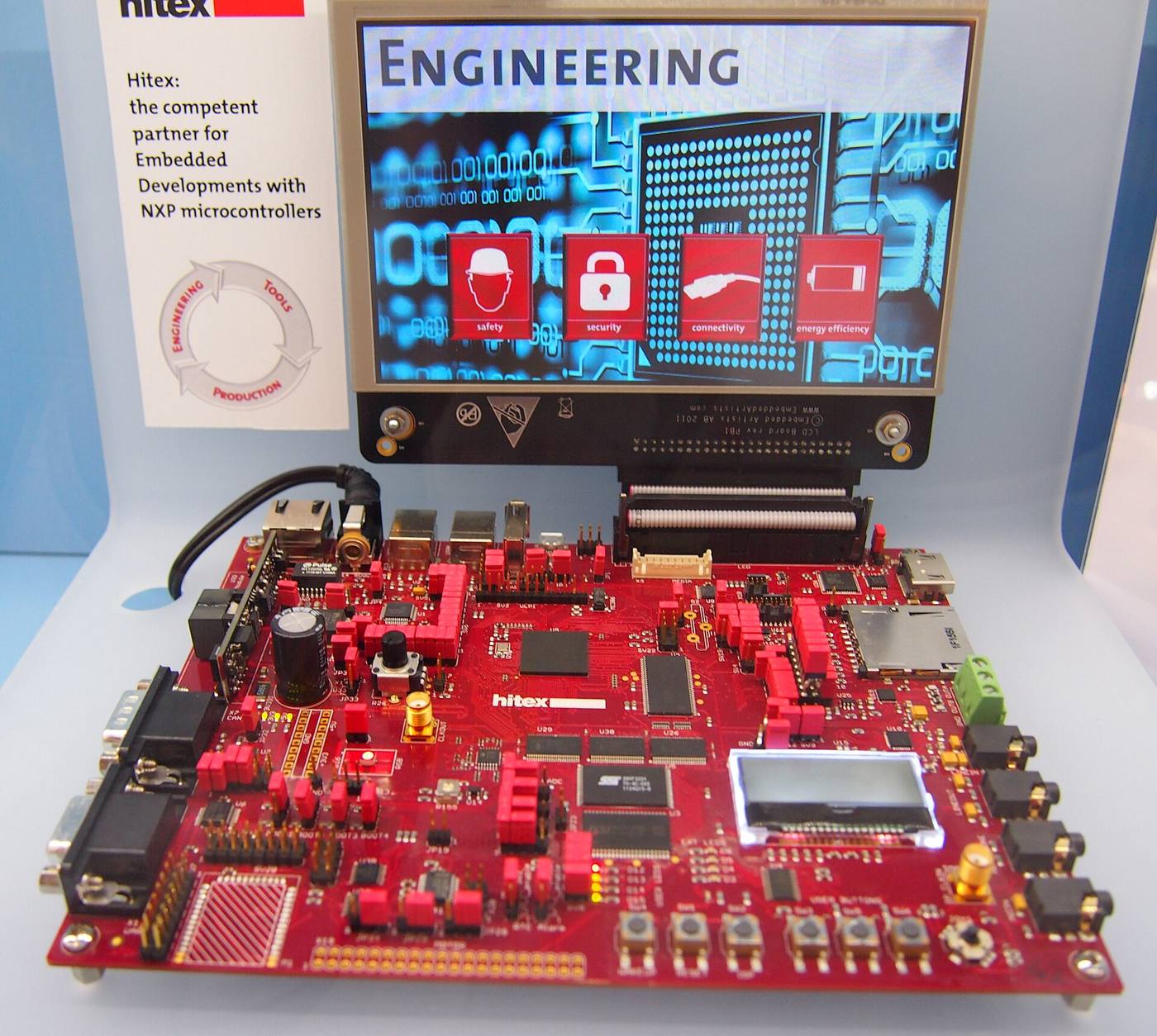
Putting AI aboard a ship is a hardware problem before it's a software one. The compute must survive salt air, constant vibration, heat, and a finite power budget — and produce answers without a datacentre to fall back on. A rack that's trivial onshore is a marine-engineering problem at sea.
The shipboard-inference question — what hardware, at what power, running which models — is the constraint that decides what the edge can actually deliver, and it's a different kind of compute problem than the one the cloud solved.
Key findings
- The shipboard environment is hostile — vibration, salt, heat, humidity, and a bounded power budget all constrain the hardware. Established
- The power/performance trade-off is real — the model must fit a ship's electrical budget, not a datacentre's. Established
- Ruggedized or industrial-grade compute is required — consumer-grade hardware fails in marine service. Established
- The inference stack must assume no connectivity — the ship's AI runs on what's aboard, not what it can reach. Established
- The right-sizing question is the design decision — how much model fits in the power/thermal envelope the ship offers. Maritime-GPT analysis
The hostile environment
A ship's machinery space is one of the worst compute environments in industry: constant vibration, salt-laden air, temperature swings, humidity, and electromagnetic noise from the plant. Consumer-grade servers fail there — connectors loosen, fans clog, conformal coatings can't keep pace. The shipboard AI runs on ruggedized or marine-certified hardware, which is heavier, more expensive, and more limited than the equivalent onshore box — the compute budget is set by what survives the sea, not what the model would like. Established
The power constraint
A ship is a power plant with a fixed budget — every watt the AI draws competes with the hotel load, and the marginal power is expensive. A datacentre-class GPU rig isn't an option; the shipboard inference runs on embedded accelerators, low-power GPUs, or dedicated AI edge modules that fit a ship's electrical envelope. The constraint isn't just power draw — it's the thermal budget too: the heat the hardware produces must be rejected into a space that may already be hot. Established
The offline requirement
The ship's AI can't assume a connection — the satellite link drops, the bandwidth costs, and the operational need doesn't pause. Everything the model needs must be aboard: the weights, the retrieval corpus, the tool access to ship sensors. That makes the hardware question circular — the model that can run onboard is bounded by the hardware, which is bounded by the power and thermal envelope — so the AI's capability is set by the rack, not by the frontier. Established
Right-sizing the model
The practical engineering is right-sizing: a quantized small language model or a compact perception network that fits the ship's power and thermal budget, rather than the biggest model that could be squeezed in. The capability question shifts from 'what can the AI do' to 'what can this hardware run reliably in this environment' — and the answer is a smaller, faster, more specialized model than the cloud would use, deployed where the connectivity can't reach. Maritime-GPT analysis
What we know
- The marine environment demands ruggedized compute — consumer hardware fails at sea.
- Power and thermal budgets bound the model size the ship can run.
- The offline requirement means the AI's full stack must be aboard.
What we don't
- The optimal hardware/model pairing for typical vessel power budgets.
- How marine-certified AI compute costs compare to capability gains.
- Whether distributed shipboard inference (multiple edge nodes) scales.
Being tested
- Marine-certified edge AI modules for navigation/monitoring.
- Power-aware model deployment strategies.
- Thermal management for shipboard compute racks.
Maritime-GPT analysis
Shipboard inference is where the AI's ambition meets the ship's physics — the model that could run on a datacentre's budget has to fit inside a rack that survives vibration, salt, and a finite power supply. The right-sizing is the engineering: not the biggest model that fits, but the smallest that does the job reliably. The sea doesn't care how good your AI is if the hardware can't run it — so the hardware is the capability. Maritime-GPT analysis
This is a research feature, not operational guidance. Simulation results are reported as simulation; demonstrations are not deployments; company claims are attributed as such. Verify safety-critical decisions against official nautical publications and flag-state requirements.
Sources & evidence
The model-compression the hardware constraint drives.
The model-right-sizing answer to the hardware budget.
The connectivity reality the offline requirement reflects.