
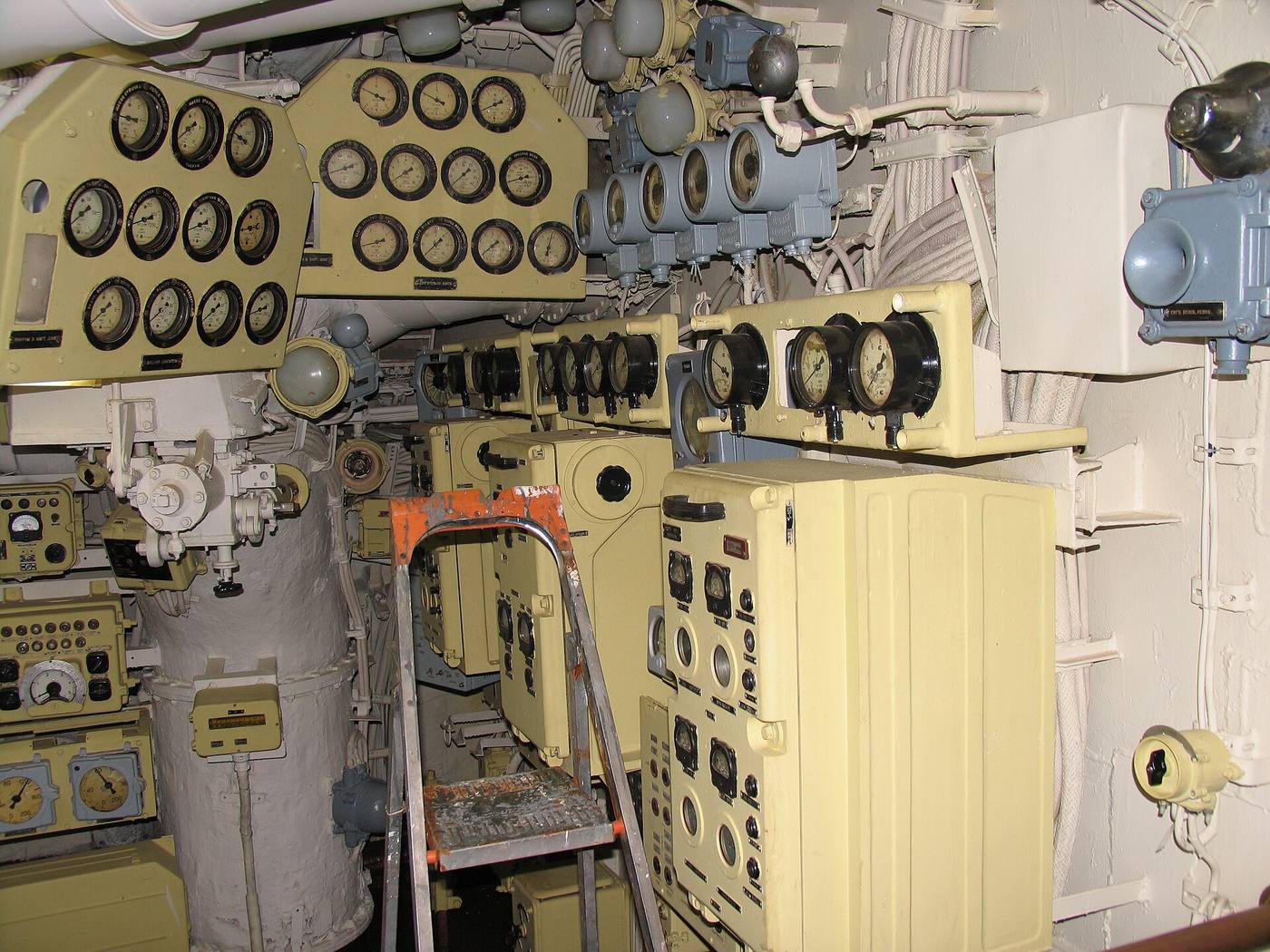
Mid-Indian Ocean, a deep depression moves faster than forecast and the VSAT link — shared between crew welfare, ECDIS updates and engine telemetry — degrades exactly when the master most wants a second opinion. Every ship officer knows this moment. It is the simplest argument in maritime technology: the situations where AI decision support would help most are correlated with the situations where connectivity is worst. Maritime-GPT analysis
LEO constellations improved the pipe. They did not change the correlation — weather, congestion and contested electromagnetic environments still take links down, bandwidth still costs, and a cloud call still adds latency a manoeuvre may not tolerate. The research and regulatory direction in 2026 is converging on a blunt conclusion: a ship's critical intelligence has to live aboard. Maritime-GPT analysis
Key findings
- Peer-reviewed work now shows small language models running on constrained shipboard-class hardware through quantization — offline maritime LLM assistance is feasible today, not hypothetical. Research demonstration
- Cyber resilience is already mandatory for newbuilds (IACS UR E26/E27, contracts from July 2024) — onboard AI is regulated software from day one. Established
- The winning pattern is offline-first with opportunistic sync, not "cloud when it works": the ship must remain fully capable with the link down. Maritime-GPT analysis
- Edge doesn't mean weak — it means bounded: quantized models, local retrieval, deterministic fallbacks. The constraint is architectural, not a compromise to apologise for. Maritime-GPT analysis
- Vendor and open-project evidence for offline maritime assistants exists, but remains claims and demonstrations, not audited deployments. Experimental

Why "just use the cloud" fails at sea
Four constraints make shipboard AI different from enterprise AI. Maritime-GPT analysis
- Connectivity is conditional, not binary. Links degrade gracefully and asymmetrically — a ship can often receive but not send, or send kilobytes but not streams. Architectures that assume "online/offline" as a switch mis-model the real failure modes.
- Latency has a safety floor. A round trip to a cloud model plus a congested satcom hop is fine for a maintenance question, useless inside a developing encounter.
- Bandwidth is an operating cost. Streaming sensor data ashore for inference competes with mandatory traffic and crew welfare on a metered pipe.
- Attack surface. Every shore dependency is also a cyber dependency — and ship cybersecurity is now regulated, not optional.
What can actually run aboard
The honest stack, per current evidence: Research demonstration
- Quantized small language models — 2026 peer-reviewed work demonstrates SLMs compressed for inference on constrained hardware achieving useful maritime assistance locally. Capability is real; expect assistant-class reasoning, not frontier-model depth.
- Local retrieval (RAG) — the vessel's own manuals, SMS procedures, charts, and passage plans indexed aboard. Retrieval is where offline quality is won or lost: a modest model grounded in correct local documents beats a larger one guessing.
- Deterministic analytics — anomaly detection, trending, CPA/closest-approach math — should never have needed a neural network in the first place; they run fine on industrial CPUs already aboard.
- Sensor-fusion inference — computer vision and track correlation on edge accelerators (the hardware class used for autonomous-vehicle perception) is proven technology ashore and transferable aboard within power/cooling envelopes.
Maritime-GPT conceptual synthesis of the offline-first pattern: the vessel is fully functional disconnected; the shore link is an enhancement, not a dependency. Maritime-GPT analysis
The regulatory floor nobody mentions
Onboard AI isn't unregulated prototype territory. IACS Unified Requirements E26 and E27 — cyber resilience of the ship and of onboard systems — apply to new ships contracted for construction from 1 July 2024, and IMO Resolution MSC.428(98) has required cyber risk in the Safety Management System since January 2021. Established An AI assistant that can't be patched, logged, isolated and audited inside the SMS isn't a product — it's a survey finding waiting to happen. Maritime-GPT analysis
Edge deployment actually helps here: an inference workload that never leaves the ship has a smaller attack surface than one streaming vessel data to a cloud endpoint — a point worth stating plainly because "AI" and "cyber" are usually discussed as separate problems when aboard a ship they're the same one. Maritime-GPT analysis
What we know / don't / being tested
What we know
- Quantized SLMs run useful inference on constrained hardware — peer-reviewed feasibility is established.
- Cyber requirements (IACS E26/E27, MSC.428(98)) already bind any new onboard software.
- Deterministic decision-support math needs no connectivity at all.
What we don't know
- How SLM quality degrades on genuinely maritime vocabulary and edge cases at scale — little published benchmarking.
- Lifecycle: how an edge model is versioned, surveyed and updated under flag/class oversight.
- Whether the power/cooling envelope of existing ships constrains the hardware class more than vendors assume.
Being tested
- Open offline-assistant projects (e.g., Sail_Pal) and vendor offerings — demonstrations, not audited fleets.
- Hybrid split: fast local model aboard, heavier cloud model when bandwidth allows, single answer surface.
- On-device fine-tuning from vessel logs — a ship's AI that learns its own ship.
Maritime-GPT analysis
Offline-first is not the fallback architecture — it is the correct one. Design for zero link, prove the vessel fully capable, then treat connectivity as free extra capability when it appears. Every maritime AI product should answer one question on page one: "what still works in the Indian Ocean with the antenna iced?" Maritime-GPT analysis
This is the architecture Maritime-GPT applies in its own product direction — onboard decision support that remains functional disconnected, with cloud sync as enhancement. That is a product position, stated as such — not independent evidence. Maritime-GPT analysis
Open research problems
- Maritime SLM benchmarks: no agreed public test suite measures edge-model quality on genuine shipboard tasks (procedures, regulations, machinery diagnostics).
- Verified update paths: how a compressed model's behaviour is regression-tested and logged under survey regimes.
- Graceful capability tapering: principled fallback ladders — full model → distilled model → deterministic — rather than binary failure.
- Onboard-vs-cloud trust boundaries: what data may leave the vessel, under what consent and logging.
Evidence scorecard
| Dimension | Rating | Basis |
|---|---|---|
| Evidence strength | Moderate | Peer-reviewed feasibility for SLM edge inference; regulatory baseline verified; deployment evidence thin. |
| Research maturity | Experimental → early product | Demonstrated components; integrated shipboard systems not yet independently validated. |
| Regulatory maturity | Established | Cyber resilience already mandatory for relevant newbuilds; AI-specific rules pending via MASS Code. |
| Maritime deployment | Limited | Project/vendor demonstrations exist; no audited large-fleet evidence published. |
| Confidence in conclusions | High | Core claim — offline-first is architecturally correct — follows from constraints, not from any single study. |
Related tools & reading
- The MASS Code — connectivity and cyber requirements
- Can an LLM be trusted with COLREGS decisions?
- Maritime GPT technology approach
- Free maritime tools
Sources
- Research on shipboard-deployable small language models / edge inference (2026) — Sensors (MDPI)Peer-reviewed (2026)
Quantized small language models running inference on constrained shipboard-class hardware — evidence that useful maritime LLM capability no longer requires a data centre. - UR E26 / UR E27 — cyber resilience of ships and onboard systems (press release) — IACSIndustry — mandatory for newbuilds
Cyber resilience is mandatory for ships contracted from 1 July 2024 — any onboard AI system must be designed inside this perimeter. - MSC.428(98) — maritime cyber risk management in safety management systems — International Maritime OrganizationPrimary — regulation
Cyber risk must be addressed in the SMS for in-service vessels since 1 January 2021 — the compliance wrapper around all onboard software, AI included. - Offline-capable maritime AI assistant (open project repository) — Sail_Pal projectIndustry / open project
Working example of the offline-first assistant pattern — treated here as a project claim, not independent evidence.
Fact-check: regulatory dates verified against IACS and IMO material (accessed 5 October 2026). Feasibility claims cite the named peer-reviewed study; vendor and open-project items are labelled as such. Editorial analysis, not engineering or compliance advice.