
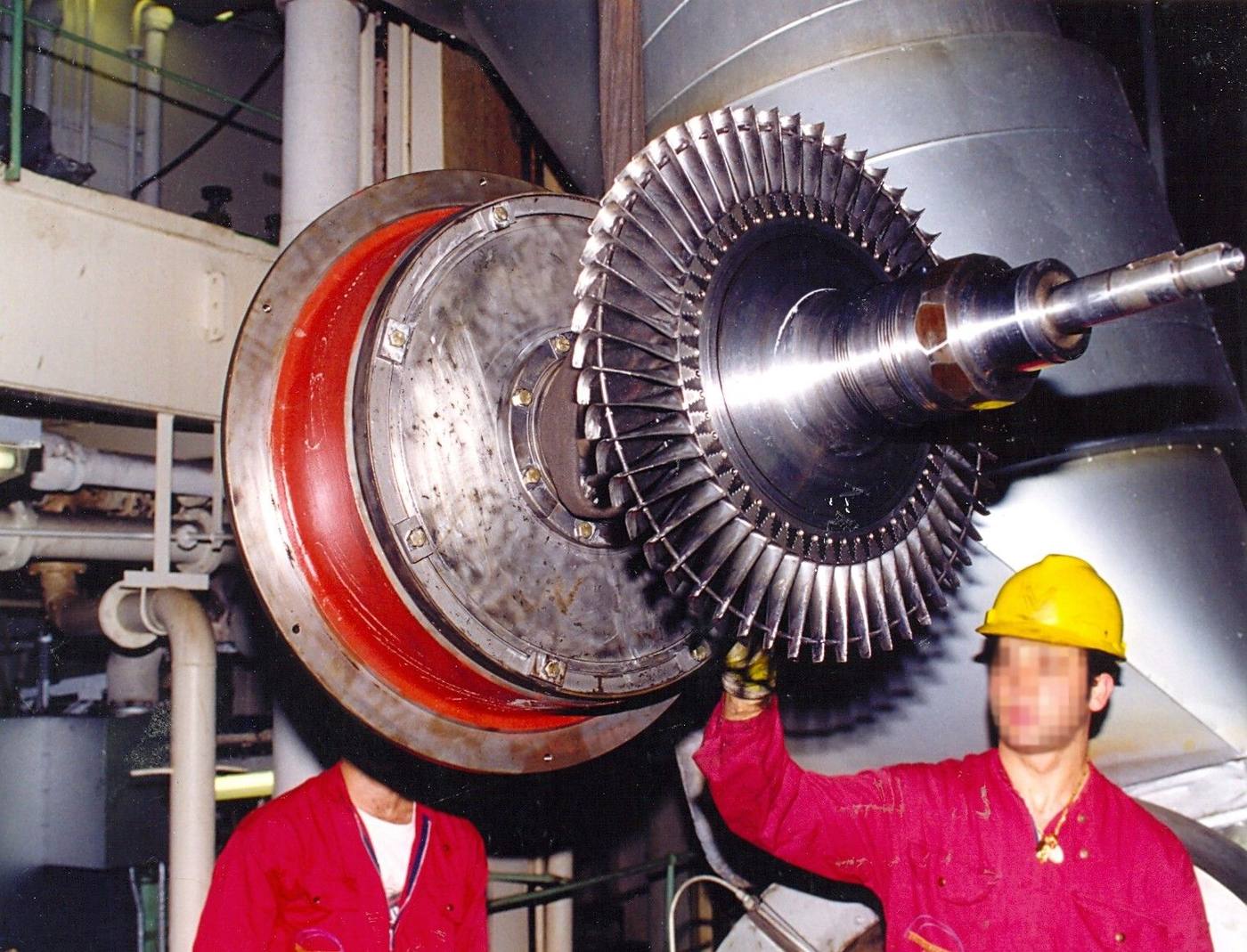
The turbocharger is the marine diesel's highest-stress rotating component — a rotor spinning at tens of thousands of RPM on a bearing whose failure is a cascade: the rotor contacts the housing, the compressor stalls, and the engine that depended on the boost loses power suddenly. A turbocharger failure isn't a gradual degradation; it's a fast event that happens at the end of a slow signature.
AI monitoring reads that signature — the vibration spectrum that shifts as the bearing wears, the temperature that drifts as the lubrication degrades — and converts the fast failure into a predicted event with a lead time.
Key findings
- The turbocharger is the engine's highest-stress rotor — high RPM, high temperature, and a failure mode that cascades. Established
- Vibration is the primary signature — bearing wear, rotor imbalance, and fouling all surface in the spectrum. Established
- The failure is fast but the signature is slow — the bearing degrades over weeks; the rotor failure is minutes. Established
- Compressor fouling is a separate signal — efficiency loss that precedes the mechanical failure. Established
- The AI's value is the trend, not the alarm — the vibration that's drifting is the warning the threshold doesn't catch. Research demonstration
Why the turbocharger is special
At tens of thousands of RPM, the turbocharger's bearing is operating at the edge of mechanical endurance — and the failure isn't a gentle decline. A worn bearing lets the rotor contact the housing, and the result is a compressor stall, a sudden loss of boost, and an engine that's suddenly down on power exactly when it needs it. The failure is fast; the signature is slow — the bearing wears over weeks of vibration drift before the rotor lets go in minutes. Established
The signatures
- <strong>Vibration spectrum.</strong> Bearing wear, rotor imbalance, and shaft misalignment all surface in the frequency content. Established
- <strong>Efficiency degradation.</strong> Compressor fouling — dirt and oil on the blades — shows up as reduced boost before the mechanical failure. Established
- <strong>Temperature trends.</strong> Bearing and oil temperature drifting as lubrication degrades. Established
- <strong>Speed/pressure anomalies.</strong> A turbocharger that can't hold boost under load is telling you something. Research demonstration
The trend, not the alarm
The vibration alarm catches the rotor at the failure threshold; the AI catches the drift toward it — the spectrum that's slowly shifting, the efficiency that's declining, the temperature that's rising a degree a week. The trend detection is the early warning the alarm can't provide, and it's what converts 'the turbocharger failed mid-ocean' into 'we cleaned the compressor at the next port and replaced the bearing on schedule'. Research demonstration
What a caught turbocharger saves
A turbocharger failure at sea means losing boost — the engine derates, the speed drops, and the schedule slips; in the worst case the rotor damage cascades into the engine. A predicted turbocharger means a planned cleaning, a bearing swap at the port call, and the machine back on line without the mid-ocean power loss. The economics are straightforward: the parts and labor of a planned overhaul against the cost of an emergency repair plus the schedule delay. Established
What we know
- The turbocharger is the engine's highest-stress rotating component.
- Vibration and efficiency signatures precede the mechanical failure.
- The failure is fast; the signature is slow — the trend is the warning.
What we don't
- Validated prediction windows across turbocharger types.
- How fouling-vs-bearing-wear signatures disambiguate in practice.
- Whether trend monitoring measurably reduces turbocharger casualties.
Being tested
- Vibration-spectrum trending on live turbochargers.
- Compressor-fouling detection from efficiency data.
- Planned-maintenance conversion from turbocharger prognosis.
Maritime-GPT analysis
Turbocharger monitoring is the signature-reading case at its purest — a rotor at 30,000 RPM on a bearing that fails fast, but only after a slow vibration drift that the trend catches and the alarm misses. The AI doesn't prevent the failure; it converts the fast cascade into a slow problem you can schedule. The turbocharger that gets its compressor cleaned at the port call instead of failing mid-ocean is the machinery AI's value in one component. Maritime-GPT analysis
This is a research feature, not operational guidance. Simulation results are reported as simulation; demonstrations are not deployments; company claims are attributed as such. Verify safety-critical decisions against official nautical publications and flag-state requirements.