
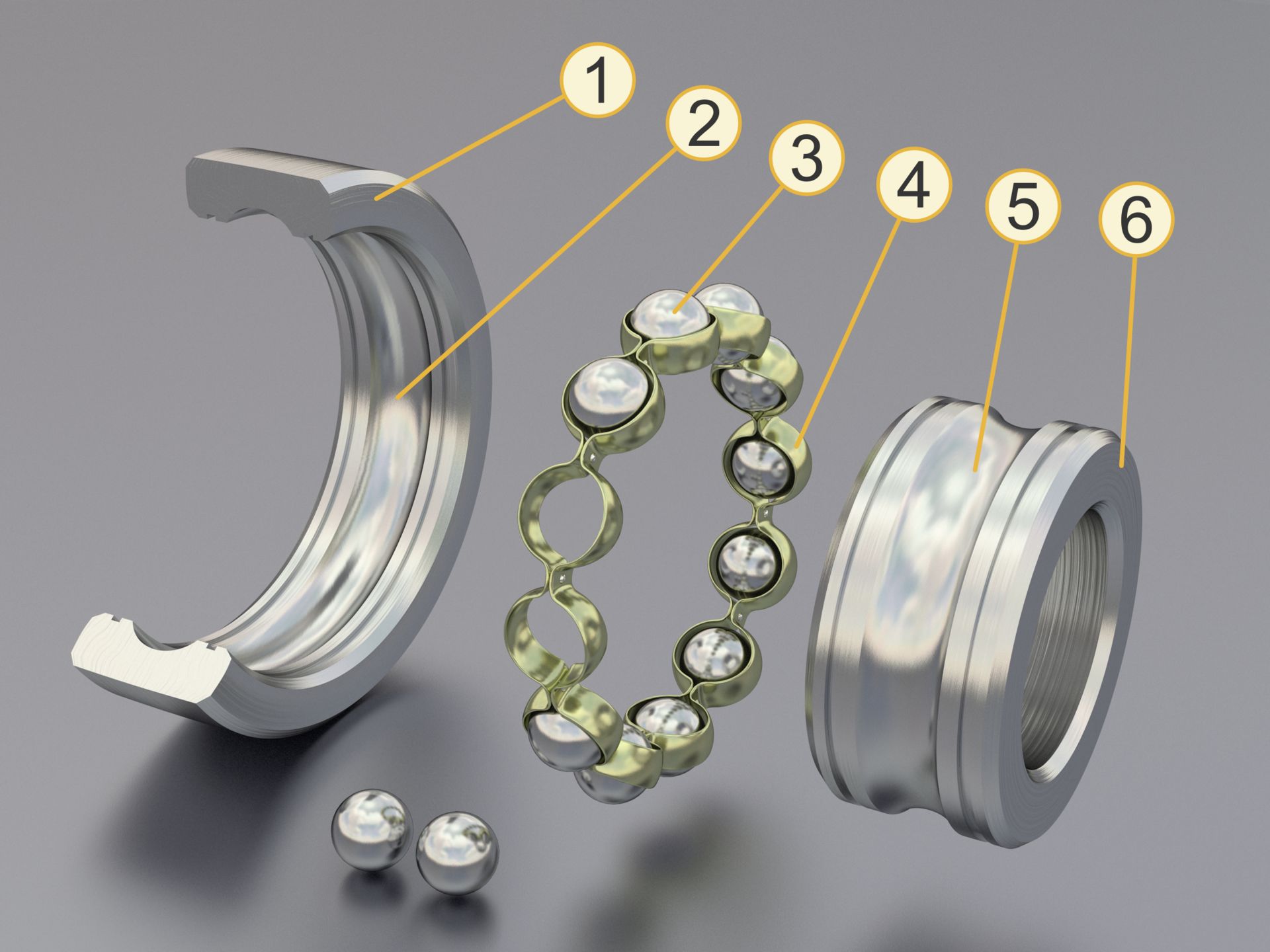
Bearings are the ship's universal failure point — the main engine has them, the generators have them, every pump, compressor, and fan has them, and they all fail the same way: the raceway wears, the vibration signature shifts, and the machine that was fine yesterday is on a trajectory to seize. A bearing failure is the most common machinery casualty precisely because bearings are everywhere.
AI bearing prediction is the cross-machinery play — the vibration signature is a common language across all the rotating equipment, and a model that reads it is a predictor for the whole engine room, not just one machine.
Key findings
- Bearings are the universal failure point — every rotating machine aboard has them. Established
- The vibration signature is the common language — the same wear modes produce the same spectral signatures across machines. Established
- The prediction is a spectrum problem — the fault frequencies (ball pass, inner race, outer race) are identifiable in the FFT. Established
- Early-stage detection is the value — the bearing that's audible at Stage 3 was readable in the spectrum at Stage 1. Research demonstration
- One model class fits many machines — the bearing-frequency math transfers across equipment types. Established
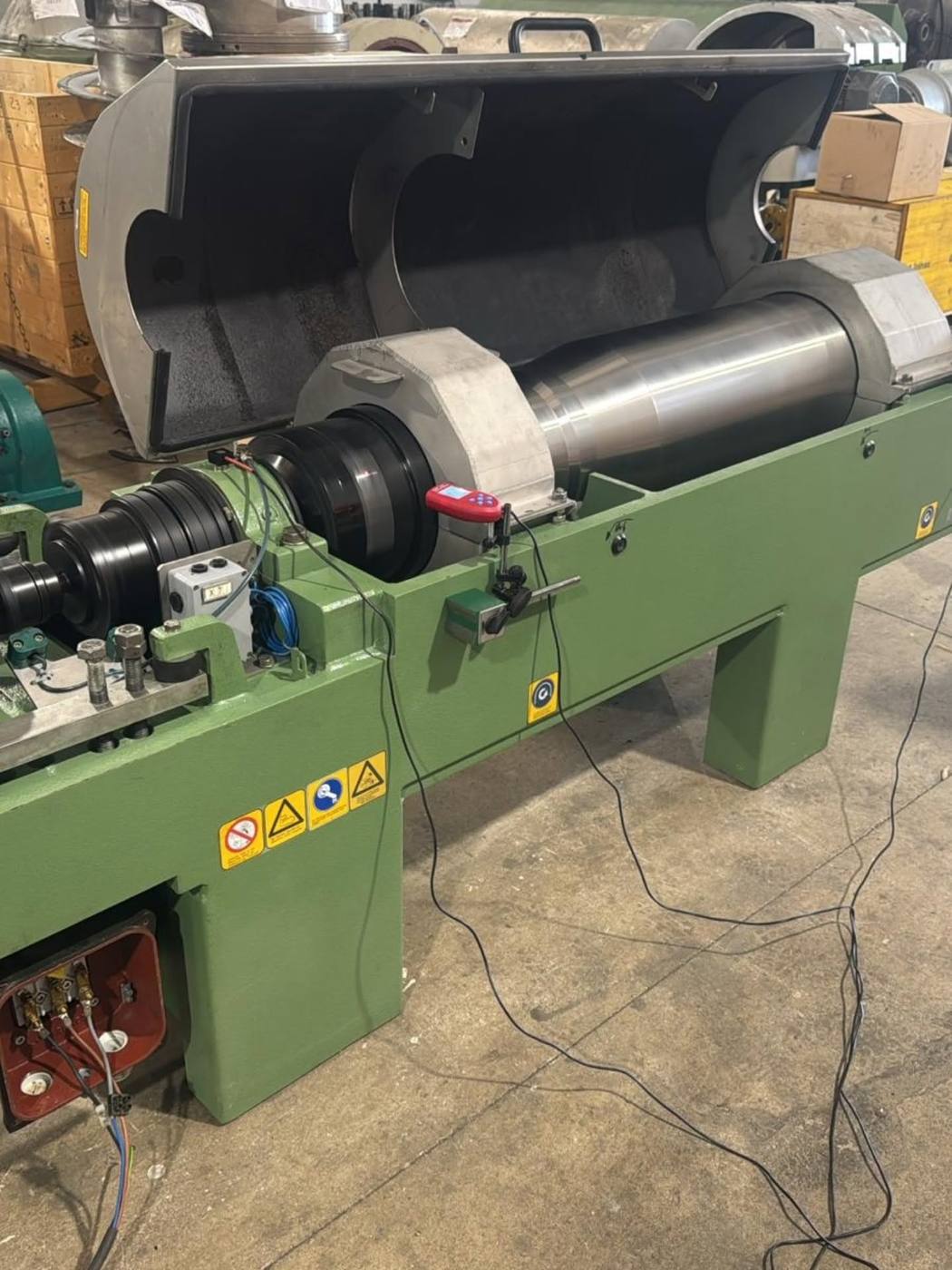
The everywhere failure
The bearing is the mechanical interface between every rotor and its housing — and the wear modes are universal: the rolling element pits, the raceway spalls, the cage degrades, and the lubricant film breaks down. Because every rotating machine on the ship has bearings, the bearing is the highest-probability failure — not because any one bearing is fragile, but because there are so many of them. The monitoring problem isn't 'watch this critical bearing'; it's 'watch all of them'. Established
The spectral language
Every bearing fault produces a characteristic frequency — the ball-pass frequencies of the inner and outer race, the fundamental train frequency of the cage — and the FFT of the vibration signal reads them directly. The AI's job is the pattern match: a rising amplitude at the outer-race frequency is a raceway fault, a rising amplitude at the ball-pass frequency is a rolling-element fault, and the spectral shape tells you which failure mode is developing. The language is the same across a pump bearing and a generator bearing. Established
Stage 1 vs Stage 4
The bearing's failure progression is well-documented: Stage 1 is ultrasonic, inaudible but readable in the high-frequency spectrum; Stage 4 is the audible grinding that precedes seizure. The AI's value is catching Stage 1 — the spectral signature that a human ear can't hear but a vibration sensor and an FFT can read — because the bearing that's caught at Stage 1 is a planned replacement; the one caught at Stage 4 is an emergency. The lead time between the stages is the maintenance window the prediction buys. Research demonstration
The cross-machinery model
Because the fault-frequency math is the same across equipment — a 3000-RPM pump bearing and a 900-RPM generator bearing both produce calculable race and ball-pass frequencies — a model trained on the spectral signatures generalizes across machines. The predictor isn't a pump model or a compressor model; it's a bearing model, and that makes it the widest-coverage machinery AI on the ship: one class of detection, applied to every rotating machine. Established
What we know
- Bearings are the universal failure point across all rotating machinery.
- Fault frequencies are identifiable in the vibration FFT.
- Early spectral detection is the maintenance window the alarm misses.
What we don't
- Detection accuracy across the full range of bearing types aboard.
- How noise from the machine's normal operation masks early signatures.
- Whether fleet-scale bearing monitoring reduces casualties measurably.
Being tested
- Cross-machine bearing models on pump, fan, and compressor data.
- Early-stage (Stage 1/2) detection from spectral features.
- Fleet-wide bearing monitoring at scale.
Maritime-GPT analysis
Bearing prediction is the machinery AI's volume play — the one failure mode that's in every rotating machine, readable through the same spectral language, and valuable precisely because it's everywhere. The honest framing is the stage progression: the bearing that's caught at Stage 1 in the spectrum is a planned repair; the one caught at Stage 4 by the alarm is an emergency. A model that reads the common signature across the whole engine room is the machinery monitor that scales. Maritime-GPT analysis
This is a research feature, not operational guidance. Simulation results are reported as simulation; demonstrations are not deployments; company claims are attributed as such. Verify safety-critical decisions against official nautical publications and flag-state requirements.