
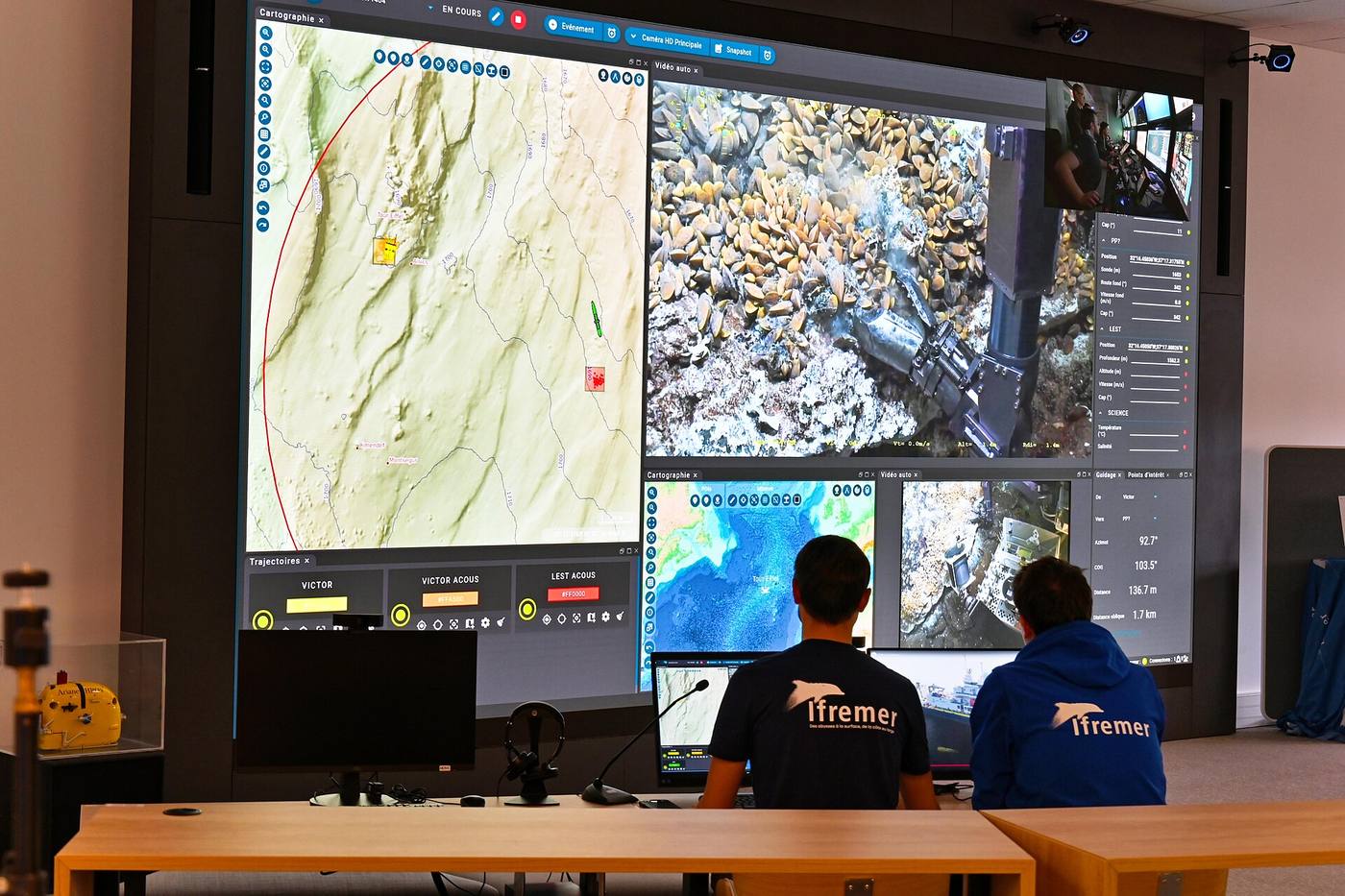
Maritime law is built on the master: one accountable human, aboard, in command. The MASS Code broke that assumption deliberately — it introduced the Remote Operations Centre and the Remote Operator, relocating the master's function ashore without abolishing accountability. What it did not settle is the harder question: when the ship is autonomous, the link is down, and the rulebook gives the master duties the software can't perform — who commands?
This is not philosophy. The answer determines who certifies the vessel, who insures it, and who goes to court when it goes wrong.
Key findings
- The MASS Code creates the Remote Operator/ROC roles but retains the master as an accountable party — autonomy relocates command; it does not remove it. Established
- The master's legal duties (COLREGS compliance, safe navigation, distress response) attach to a person; autonomous systems don't inherit them by default. Established
- Link-loss is the load-bearing scenario: a remotely commanded ship that loses its command link must degrade gracefully to autonomy or to a safe state — a case the code requires to be addressed but does not fully specify. Established
- No jurisdiction has resolved the 'unmanned but not autonomous' legal gap — a ship with no master aboard but a human ashore is new law, not old law applied. Maritime-GPT analysis
- The autonomy-vs-remote-control distinction in the code (ship decides vs human decides from afar) is the axis on which responsibility is assigned. Established
What the code actually did
The non-mandatory MASS Code's structural move was to define the ship's functions — navigation, engineering, safety — as capabilities that can be performed aboard, remotely, or autonomously, then require the owner to assign responsibility for each. The Remote Operator is a recognized role; the Remote Operations Centre a recognized facility. But the master's statutory duties under SOLAS, STCW and flag-state law still point at a human, and the code's mechanisms point that human at the ROC, not off the ship. Established
The three command configurations
| Config | Who steers | Who answers to the law | The hard case |
|---|---|---|---|
| Manned, decision support | Crew aboard | Master aboard | Current baseline — no novelty |
| Remotely operated | ROC operator | Remote operator + master function relocated | Link loss mid-manoeuvre |
| Autonomous (in envelope) | Ship system | Master/ROC supervises; owner defines | Envelope exit — code requires fallback |
The link-loss scenario
Satellite dropout mid-transit is not a hypothetical — it is the ocean's baseline reliability. The code's answer is the operating envelope plus a required fallback state: the ship must be designed so a link failure degrades it to autonomy within its certified envelope, or to a defined safe state (slow, loiter, anchor), not to ambiguity. What the code does not yet fully specify is the test: how graceful, how fast, and how verified. That is the engineering question the experience-building phase exists to fill. Established
The liability reality
Liability follows responsibility. If a remotely operated ship collides, the chain of fault runs through the ROC operator, the link, the shipowner's system design, and the classification of what the ship was authorised to do. Maritime law has a century of precedent for a master aboard; it has none for a master ashore. Until case law or flag-state interpretation fills the gap, the insurance and litigation risk is borne by early adopters — which is itself a deployment brake. Maritime-GPT analysis
What we know
- The MASS Code keeps human accountability while relocating where the accountable human sits.
- Operating-envelope + fallback-state is the mechanism for link-loss.
- Remote operator is now a recognized role under IMO instruments.
What we don't
- How courts will assign fault in a remote-vs-autonomous command ambiguity.
- Whether 'safe state' can be achieved safely in confined, congested water.
- Which flag states will certify fully unmanned operation first.
Being tested
- Link-loss drills and graceful-degradation certification.
- ROC staffing, training and watchkeeping standards.
- Multi-ship supervision ratios for remote operators.
Maritime-GPT analysis
The interesting question is not 'autonomous or remote' — it is 'who has the con when the system fails'. The code's honest answer is that every configuration still terminates at a human — aboard, ashore, or both in a degraded sequence. Vendors who describe 'unmanned' as 'unmanned everywhere' are describing a legal state that doesn't yet exist. The master moved ashore; the accountability didn't move at all. Maritime-GPT analysis
This is a research feature, not operational guidance. Simulation results are reported as simulation; demonstrations are not deployments; company claims are attributed as such. Verify safety-critical decisions against official nautical publications and flag-state requirements.
Sources & evidence
The instrument that created ROC/Remote Operator roles and the envelope+fallback model.
The supervision side of the same command question.