
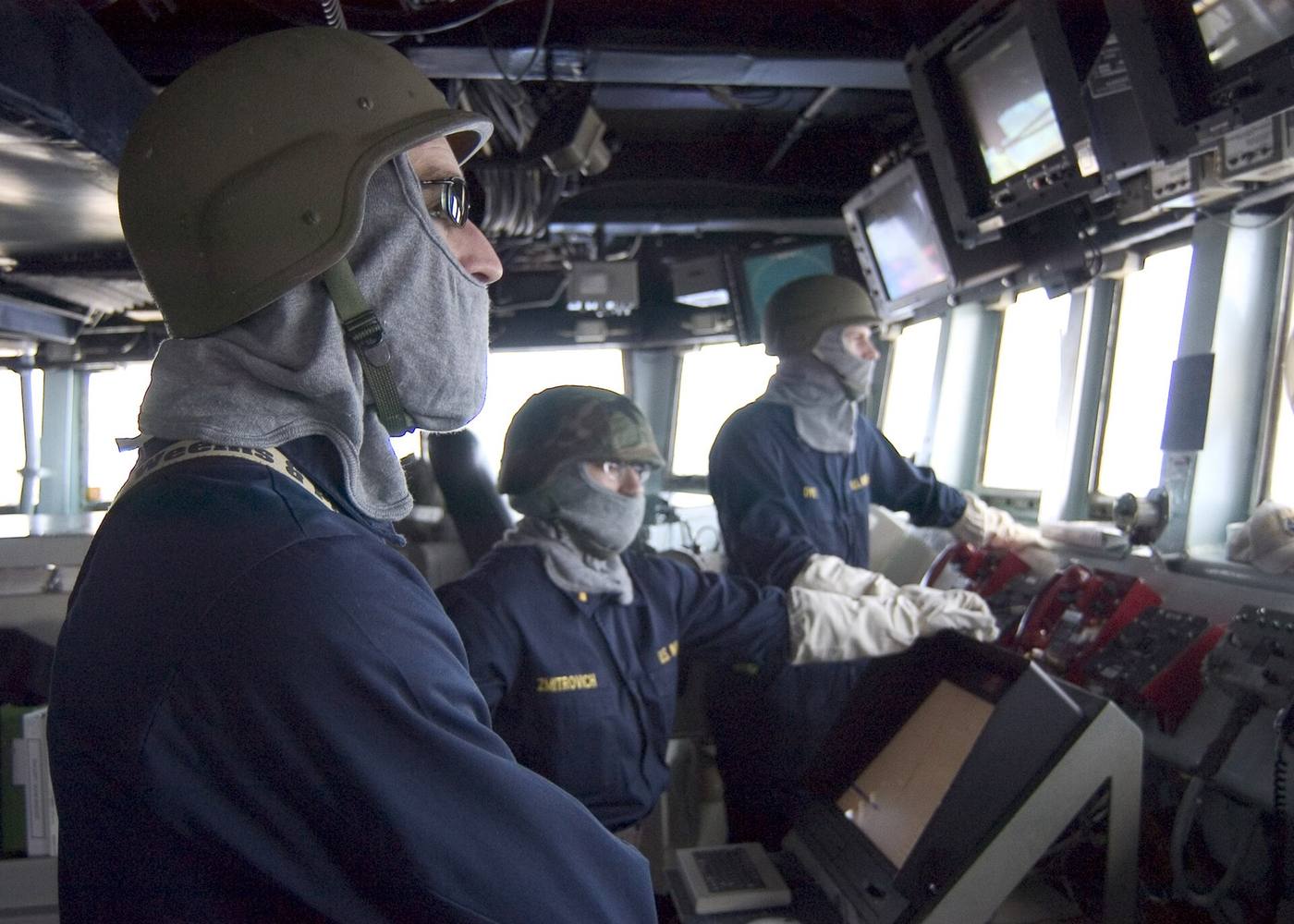
The standard answer to "is AI safe on the bridge" is "the human stays in the loop." It sounds like a design. It isn't — it's a job description nobody can do. Take the task away from the officer, leave them responsible for catching the machine's rare failure, and you've created the single worst human-factors assignment in the literature: watch a reliable system do nothing wrong, indefinitely, then intervene instantly and correctly the one time it does. Maritime-GPT analysis
Aviation learned this the expensive way — automation's ironies are a 40-year-old textbook. Maritime is now running the same experiment on its bridges, and the human-factors literature is telling it exactly what to expect. Maritime-GPT analysis
Key findings
- Seafarers' trust in autonomy is measurably low — and lowest among the most professionally committed officers, not the least skilled. Research demonstration
- Real-world early deployments show the predicted failure mode: automated-ferry operators report a shift to passive "button-pressing" backup, producing boredom, deskilling and strain. Field trial
- Passive supervision degrades the very skill it's meant to preserve — an officer who doesn't navigate loses the ability to navigate in an emergency. Maritime-GPT analysis
- Supervisory information needs are real but variable — navigators want the system's risk-analysis output, and no single display level fits all. Research demonstration
- The MASS Code requires human oversight but doesn't specify how — the supervision-design problem is the open seam between regulation and engineering. Established
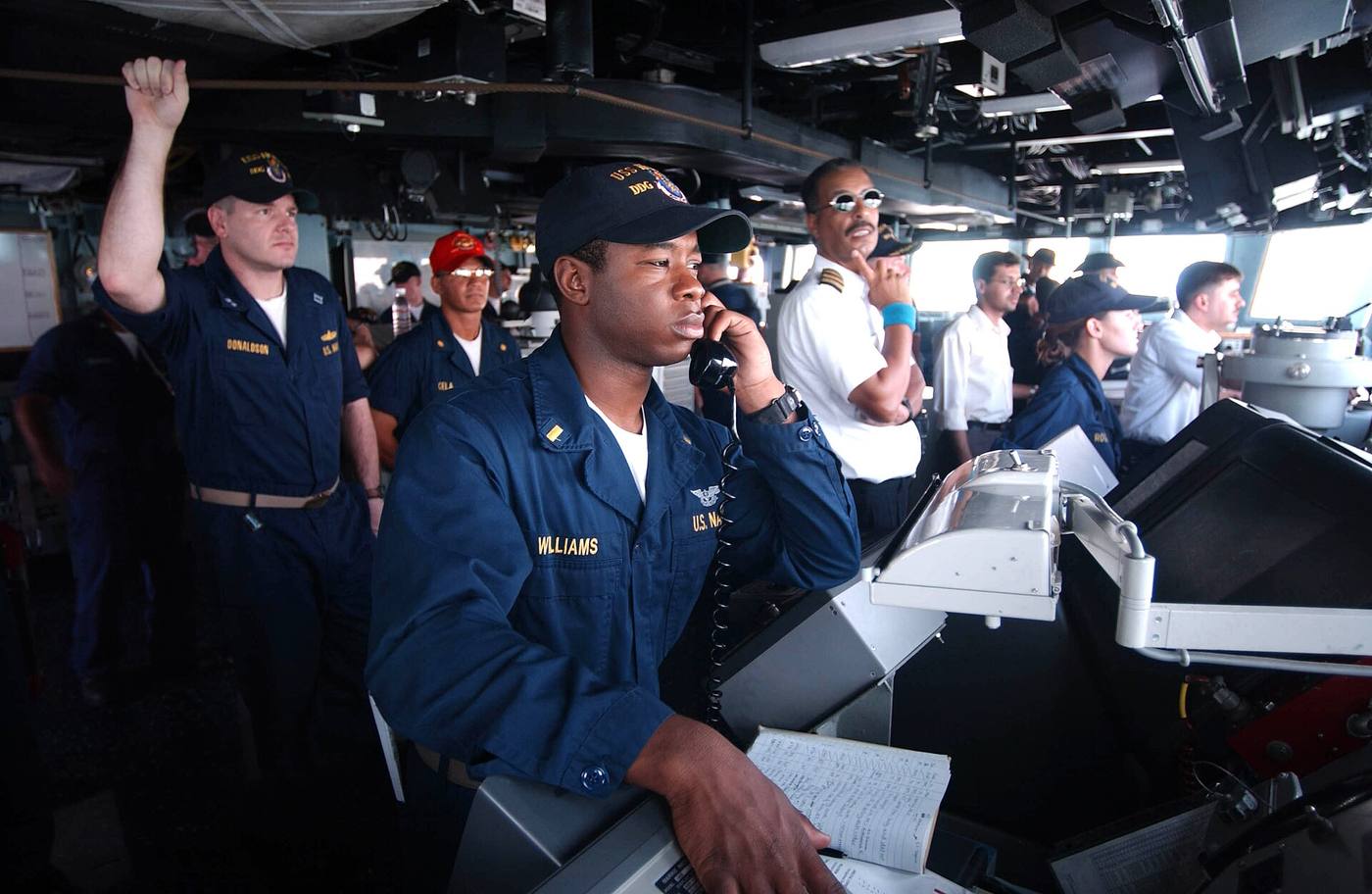
The three failure modes of 'in the loop'
Out-of-the-loop performance. Remove a human from a task and their situation awareness decays; put them back suddenly in an emergency and they intervene cold — the worst possible moment to be least informed. The ferry-operator interviews show it isn't hypothetical: real officers on real automated ships describe becoming monitors of a system they understand less each voyage. Field trial
Deskilling. Navigation is a perishable skill — collision judgement, ship-handling feel, the pattern-matching that catches a bad sensor. A bridge officer who only watches doesn't maintain it. The deskilling reported by automated-ferry operators is the predictable erosion of competence the loop was supposed to preserve. Field trial
Automation bias and mistrust. Two failure directions at once: over-trust (assume the automation is right, stop checking) and under-trust (ignore it when it's right). The Norwegian data shows officers defaulting to mistrust — low trust in autonomy that correlates with higher professional commitment. The sceptics are the good officers; designing for the loop means designing for people who don't believe in it. Research demonstration
What 'good supervision' actually requires
The transparency research gives the constructive answer. When 34 licensed navigators were shown four levels of system transparency — from bare decisions to full reasoning plus inputs — the consistent need wasn't more data, it was the right layer: the output of the system's collision-risk analysis. Supervisors don't want raw telemetry or a verdict; they want to see what the machine thinks is dangerous. Research demonstration
And they want it differently — supervisory strategies varied enough that no single display fit everyone, which is an argument for adjustable transparency and demand-driven explanation (echoing the XAI finding that more explanation can add load). Research demonstration
Maritime-GPT synthesis — the loop that keeps the human capable, not just present. Maritime-GPT analysis
What we know / don't / being tested
What we know
- Passive 'in the loop' supervision produces boredom, deskilling and degraded intervention.
- Officer trust in autonomy is low and concentrated among the most skilled.
- Supervisors need the system's risk assessment, not its raw data or bare verdict.
What we don't know
- The right engagement level — enough involvement to stay skilled, not so much the automation is pointless.
- Remote-supervision spans — how many ships one ROC operator can genuinely oversee.
- Long-term effects — what 5 years of monitoring does to a master's competence.
Being tested
- Adaptive transparency — information depth matched to situation and operator.
- Skill-preserving duty design — officers kept active rather than purely monitoring.
- ROC watchkeeping — the new shore-based supervision role and its human factors.
Maritime-GPT analysis
"In the loop" is a responsibility, not a design — design the engagement. The systems that will work are the ones that keep the officer doing, notwatching: AI that handles the routine while the human still exercises real judgement often enough to stay sharp, with an override that's practised, instant and trusted. The automation should make the human better at the rare event, not worse at it — and right now most designs do the opposite. Maritime-GPT analysis
Open research problems
- Engagement calibration — the minimum meaningful involvement that preserves competence.
- ROC human factors — alertness, handover, span-of-control standards for shore watchkeeping.
- Calibrated-trust design — systems that earn appropriate reliance, not blanket trust or mistrust.
- Competency measurement — how to certify that a supervising officer remains capable of takeover.
Evidence scorecard
| Dimension | Rating | Basis |
|---|---|---|
| Evidence strength | Moderate–high | Real-operator studies + large trust surveys; consistent direction. |
| Research maturity | Field-validated | Deployed automation already showing the failure modes. |
| Operational significance | Critical | The binding constraint on autonomy is human, not technical. |
| Confidence in conclusions | High | Findings from real operators and large samples; analysis labelled. |
Related tools & reading
Sources
- How can maritime automation and autonomy be safely implemented? A mixed-method topic model — WMU Journal of Maritime Affairs (2025)Peer-reviewed — 1,009 officers
Norwegian bridge officers score very low on trust in autonomy; 12 topics of concern, dominated by reliability/redundancy and a strong call for human presence, oversight and control. - From captain to button-presser: operators' perspectives on navigating highly automated ferries — IOP Conference Series (2022)Peer-reviewed — real operators
Interviews with ferry operators on actually-deployed automated navigation: a shift to a passive backup role produced boredom, deskilling, stretched resources and organizational strain. - Navigators' perspective on information requirements for supervisory control of autonomous ships — Human Factors / HFESPeer-reviewed — 34 licensed navigators
Four transparency levels tested: navigators need the system's collision-risk analysis output, and supervisory information needs vary — the 'what to show' question has no one answer. - Pride and mistrust? Professional commitment and trust in autonomy (N = 2,016) — WMU Journal of Maritime Affairs (2024)Peer-reviewed
Higher professional commitment → lower trust in autonomy; the sceptics are the most committed officers, not the least skilled.
Findings from the cited operator studies and surveys; accessed 5 October 2026. Editorial analysis only.