
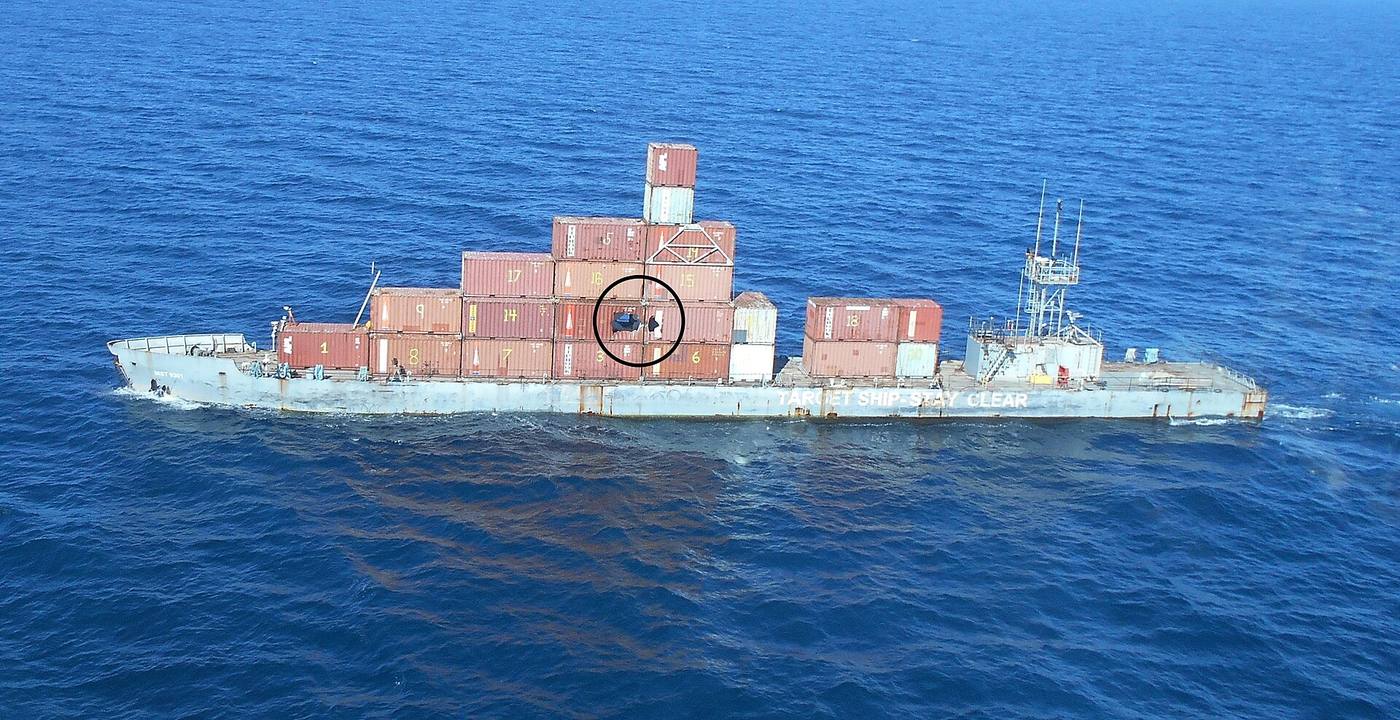
For nearly a decade, "autonomous shipping" at the IMO meant workshops, scoping papers and pilot projects. That phase ended in London this May: on 21 May 2026, the Maritime Safety Committee adopted the International Code of Safety for Maritime Autonomous Surface Ships — the MASS Code — through Resolution MSC.595(111), and invited governments to give it effect from 1 July 2026. Established
There is no single dramatic moment a code like this produces. No ship changed status overnight. What changed is subtler and larger: for the first time, a remotely operated or autonomous cargo ship has a globally agreed definition of what "safe" means, an agreed way to prove it, and a timetable — written down — for when the rules become binding.
Key findings
- The MASS Code is non-mandatory and goal-based — it sets safety outcomes, not prescriptive equipment rules. Established
- It applies to cargo ships covered by SOLAS Chapter I; autonomous and remotely operated passenger ships are outside its initial scope. Established
- The master retains overall responsibility for the ship at all times — explicitly including when the master is not physically aboard. Established
- A mandatory code is targeted for adoption by 1 July 2030, entry into force 1 January 2032. Forecast
- The experience-building phase — real voyages under flag-State supervision — is what will decide the mandatory text. What happens between now and 2028 matters more than the code's current wording. Maritime-GPT analysis

What the code actually is
The MASS Code is a goal-based instrument: rather than prescribing specific equipment or algorithms, it defines safety objectives and requires the ship's design and operation to demonstrate, through risk assessment and verification, that those objectives are met. Established According to IMO's announcement, it introduces requirements across navigation, connectivity, remote operations, fire safety and search and rescue, with "strong emphasis on risk assessment, robust system design, cybersecurity and the integration of Remote Operations Centres." Established
Two commitments define its character. First, equivalence: an autonomous ship must be designed and operated to "a level of safety, security and environmental protection that is expected of a conventional ship" — and remains bound by SOLAS and other mandatory instruments. Established Second, accountability: the master keeps overall responsibility for the ship at all times, even when ashore. The code does not create a ship without an accountable human; it relocates where that human sits. Established
The architecture it implies
The framework does not certify an "autonomy level." It asks the owner to define an operational context — where the ship goes, in what conditions, with what human supervision — and then to demonstrate that the system can operate safely inside that envelope and degrade safely outside it. Conceptually, a compliant MASS system separates functions roughly like this:
Maritime-GPT conceptual synthesis of the code's risk-based structure — not a diagram from the regulation. The code specifies outcomes and verification, not this exact architecture. Maritime-GPT analysis
The timeline is the story
The non-mandatory period is not a loophole — it is the data-collection phase that writes the binding rules:
What it doesn't settle
Three hard questions sit outside the code's current text. COLREGS conformance — how a machine interprets "give-way," "safe speed" or "last resort" manoeuvring in ambiguous traffic — is delegated to risk assessment, not resolved by rule. Maritime-GPT analysis Second,liability: who answers for an algorithmic decision — owner, master, ROC operator, software vendor — is not assigned by this instrument. Third, performance verification: "demonstrate safety" is an objective; the standards, test methods and evidence thresholds that turn it into practice are exactly what the EBP exists to define. Maritime-GPT analysis
What we know / what we don't
What we know
- Scope, effective date and the mandatory-code timetable are fixed in an IMO resolution.
- Cyber resilience for new ships is already mandatory under IACS UR E26/E27 (contracts from 1 July 2024) — the floor MASS builds on.
- Human accountability is preserved: master retains responsibility, ROCs are a regulated component.
What we don't know
- How flag States will differentially implement a non-mandatory code — port State treatment is untested.
- What evidence will satisfy a MASS risk assessment in practice — the EBP hasn't started.
- Whether 2030/2032 dates hold if incident data or political pressure accelerates the timeline.
Being tested now
- Remote operations from shore centres under real traffic conditions.
- Software assurance and change-control for continuously updated AI systems — a survey regime designed for steel, not software releases.
- Connectivity degradation: what the ship does when the link to the ROC drops.
Maritime-GPT analysis
The non-mandatory label undersells this. Classification societies are already writing the code into approval pathways, insurers are already asking whether a MASS operation was run against it, and flag States now have a single document to point to. In maritime regulation, "voluntary" standards have a habit of becoming market requirements years before they become legal ones — insurers and charterers move faster than conventions. Maritime-GPT analysis
The practical signal for owners: the design conversation for any ship delivered after ~2028 now happens in the shadow of the mandatory code. Buildability around MASS — connectivity redundancy, ROC interface provisions, software change-control evidence — is cheaper to design in than to retrofit. For seafarers, the more consequential near-term shift is not crew removal but the creation of a new credentialed role: remote operator inside an ROC, with watchkeeping logic ashore. Maritime-GPT analysis
Open research problems
- Verification of adaptive systems — how to survey software whose behaviour changes with model updates, under a regime built for fixed hardware.
- COLREGS interpretation under uncertainty — multi-vessel, degraded-sensor encounters are still where autonomy research is weakest; the code leaves conformance to risk assessment rather than specifying it.
- Human factors of shore-based watchkeeping — alertness, handover, and span-of-control standards for ROCs are not yet codified.
- Cyber-physical incident taxonomies — no agreed classification yet separates "AI error," "sensor fault" and "cyber intrusion" in MASS casualty reporting.
Evidence scorecard
| Dimension | Rating | Basis |
|---|---|---|
| Evidence strength | High | Primary IMO resolution + official briefing; dates and scope directly verified. |
| Regulatory maturity | Developing | Framework adopted and in effect as non-mandatory; mandatory text not yet written. |
| Maritime deployment | Field trial | Trials internationally per IMO; limited operational fully-crewless cargo shipping. |
| Confidence in conclusions | High | Facts are regulatory record; analysis is labelled separately throughout. |
Related tools & reading
- Can an LLM be trusted with COLREGS decisions?
- Edge AI at sea — onboard intelligence without the cloud
- Maritime GPT technology approach
- Maritime glossary — MASS, COLREGS, SOLAS and more
Sources
- IMO adopts first global Code for autonomous ships (press briefing, 22 May 2026) — International Maritime OrganizationPrimary — official
Official announcement of adoption, scope, effective date, roadmap and key requirements. - Resolution MSC.595(111) — International Code of Safety for Maritime Autonomous Surface Ships (adopted 21 May 2026) — International Maritime OrganizationPrimary — regulatory text
The code itself: governments invited to give effect from 1 July 2026; non-mandatory, designed for later transition to mandatory status. - MSC 111 meeting summary — MASS Code adoption and session outcomes — International Maritime OrganizationPrimary — official summary
Roadmap detail: EBP framework at MSC 112 (Dec 2026), mandatory-code development 2028, adoption by 1 July 2030, entry into force 1 January 2032. - Autonomous shipping — regulatory scoping exercise background — International Maritime OrganizationPrimary — official
The multi-year regulatory scoping exercise that produced the MASS Code's scope and definitions. - UR E26 / UR E27 cyber resilience requirements — press release — IACSIndustry — classification
Cyber resilience requirements already mandatory for new ships contracted from 1 July 2024 — the baseline the MASS Code's cybersecurity emphasis builds on.
Fact-check: all regulatory dates, scope statements and quotations verified against the IMO resolution text and official briefing (accessed 5 October 2026). This article is editorial analysis, not legal or compliance advice — confirm obligations with your flag State and classification society.