
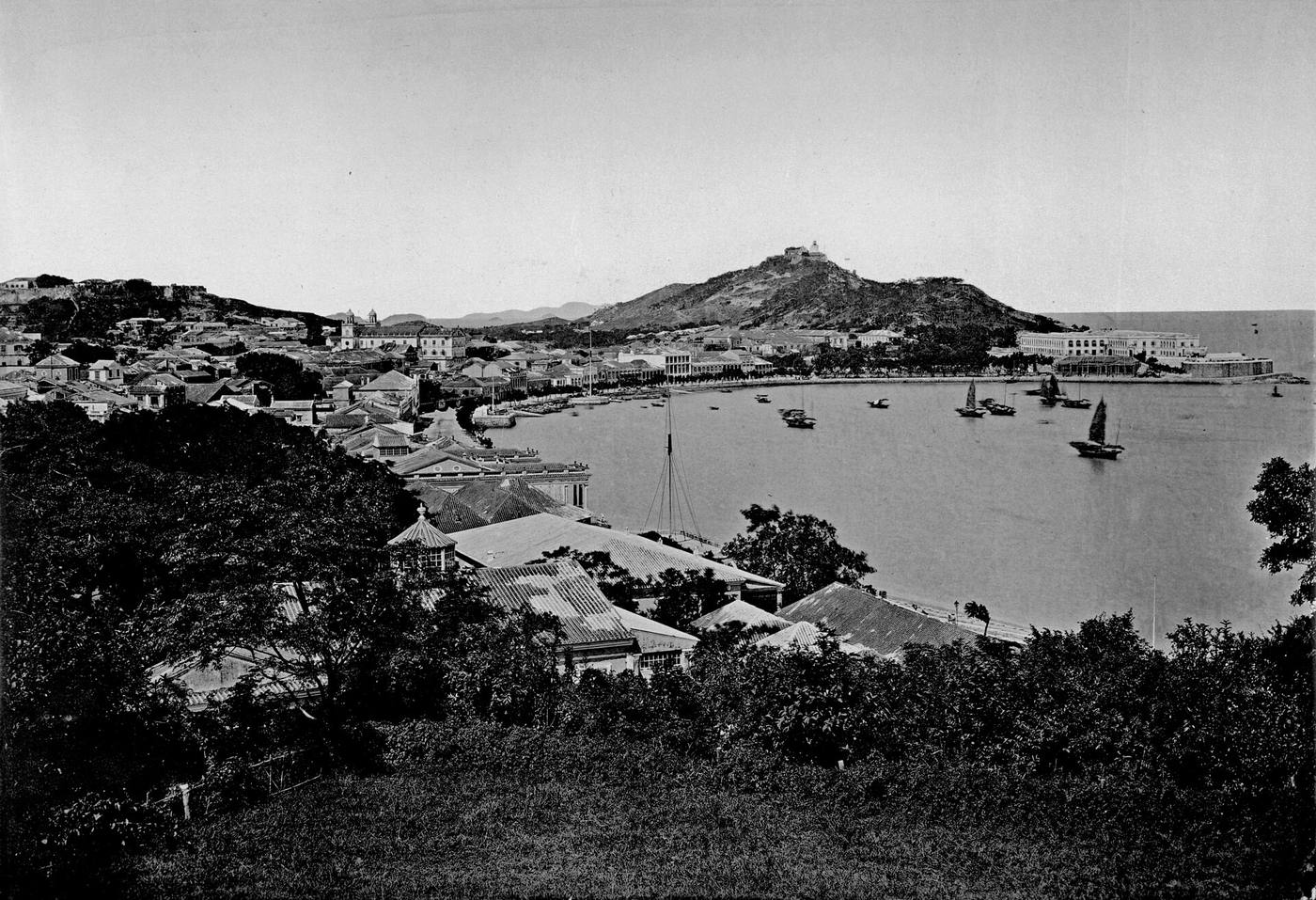
Most collision-avoidance research lives in a simplifying environment: open water, a handful of target ships, steady geometry. The port approach is the opposite — a corridor of converging traffic, unpowered and small craft that don't answer on VHF, tug-and-tow combinations, crossing ferries, pilots, anchorage drift, and margins measured in tens of metres.
This is not a subtlety. The congested-port regime is the one where the assumptions embedded in most published AI avoidance systems break down at once — and the one where a casualty is most expensive.
Key findings
- Published AI collision-avoidance work is overwhelmingly evaluated in open-water, low-density, simulation environments — congested confined water is the least-represented regime. Established
- Port approaches violate the field's standard assumptions: multi-ship interactive intent, non-COLREGS-compliant small craft, human pilot behaviour, and dead-slow manoeuvring. Maritime-GPT analysis
- Small-craft density is the detection + prediction problem combined — the classes the datasets underserve are the majority population. Established
- COLREGS in confined water is locally customised — harbour bylaws, pilotage conventions, VTS procedures — a regional knowledge layer no generic model has. Maritime-GPT analysis
- The credible near-term role is decision support for a human pilot/master, not autonomous transit — consistent with what classification societies certify today. Established
Why open-water methods don't transfer
The standard collision-avoidance formulation — track targets, estimate CPA, apply COLREGS manoeuvre — assumes the geometry stays analysable and the rules stay readable. In a congested approach, both fail simultaneously: the target set is too dense to resolve into clean encounters, and the 'rules' are a mix of COLREGS, harbour bylaws, pilotage convention, and local VTS practice that no model trained on open-sea data has seen. Maritime-GPT analysis
The specific failure modes
- <strong>Detection saturation.</strong> Dozens of small contacts within a few hundred metres saturates the fusion pipeline — the small-vessel weakness at its worst. Research demonstration
- <strong>Intent prediction fails.</strong> Pleasure craft, fishing boats and tenders do not follow rational-agent motion models; the RL methods trained on ship-on-ship encounters have no prior for them. Maritime-GPT analysis
- <strong>Margin collapse.</strong> Metre-scale clearances leave no room for the conservative buffers simulation work is scored on — the model must be right, not safe-on-average. Established
- <strong>Human-in-the-loop isn't optional.</strong> Pilots exist precisely because local knowledge isn't formalised — the thing that makes the regime hard is the thing that isn't in the data. Established
What the honest stack does
Congested water is where the 'decision support, not autonomy' line stops being a legal hedge and becomes the engineering answer. The deployed systems that work in ports are advisory: enhanced situational awareness, conflict alerting, small-target detection — tools that extend the pilot and master, not replace them. Autonomy research acknowledges the port problem as the hard case; the MASS Code's experience-building phase is, in part, the mechanism to learn it. Maritime-GPT analysis
What we know
- Open-water simulation dominates the published avoidance literature.
- Congested confined water is the regime where the standard assumptions break.
- Deployed port-area systems are advisory, not autonomous.
What we don't
- A published autonomous transit through dense, real-world harbour traffic.
- How to encode local pilotage convention and harbour bylaws into a model.
- Whether RL transfer from open-sea simulators survives port conditions.
Being tested
- High-density, confined-water simulators for training and evaluation.
- Assistive-decision-support (not autonomous) port navigation tools.
- Multi-sensor small-craft detection for approach channels.
Maritime-GPT analysis
The approach channel is the stress test the industry demos avoid. If the marketing video shows open ocean, ask about the port. The honest answer is that congested confined water is the last problem autonomy solves, not the first — and the near-term value is exactly the decision-support role the technology is actually capable of today. Maritime-GPT analysis
This is a research feature, not operational guidance. Simulation results are reported as simulation; demonstrations are not deployments; company claims are attributed as such. Verify safety-critical decisions against official nautical publications and flag-state requirements.
Sources & evidence
The rules as written — vs the local custom that actually governs confined water.
The regulatory track under which port autonomy would be certified.
Documents the open-water simulation bias of the avoidance literature.
The multi-ship reasoning problem the congested port multiplies.