
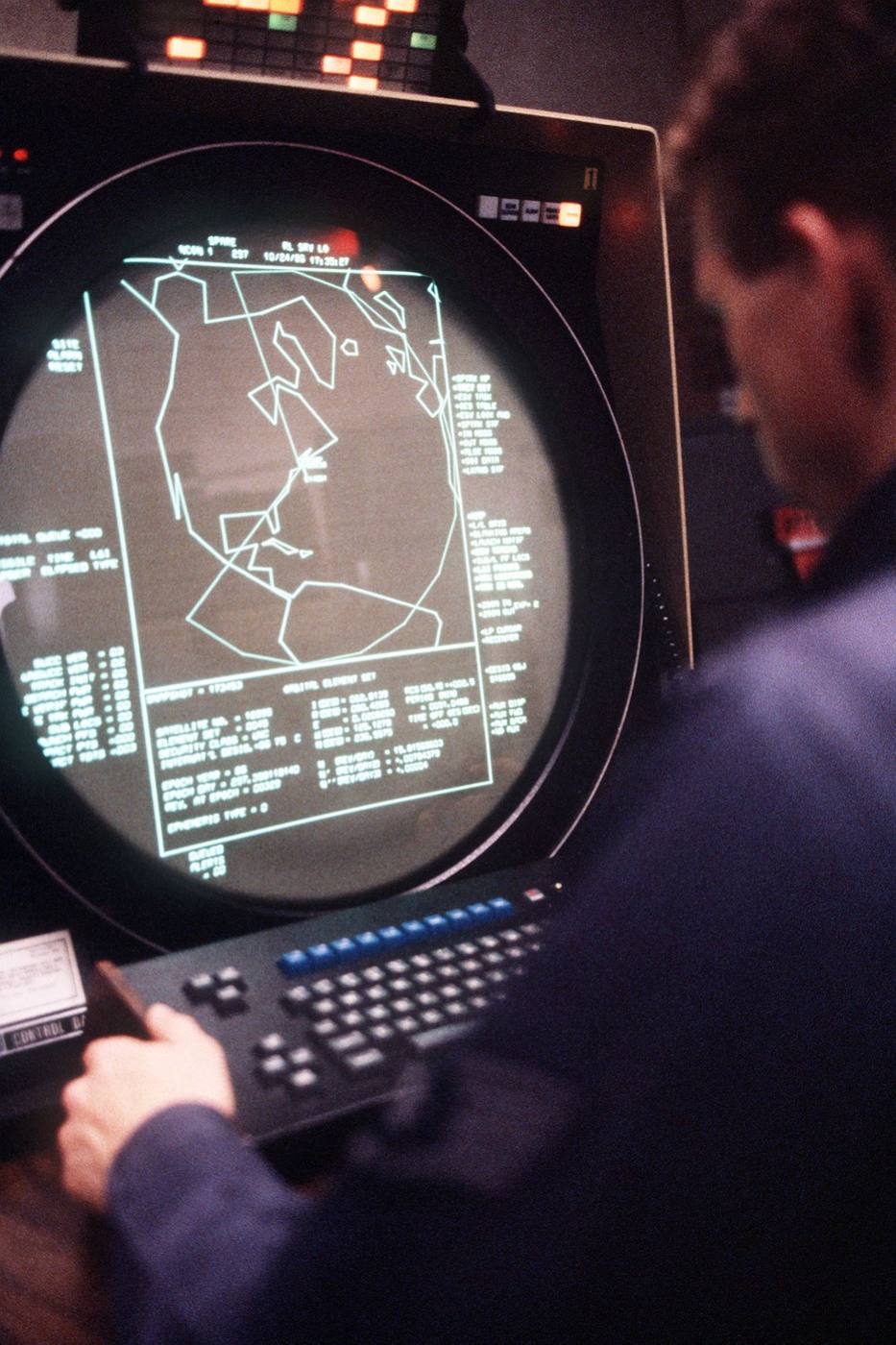
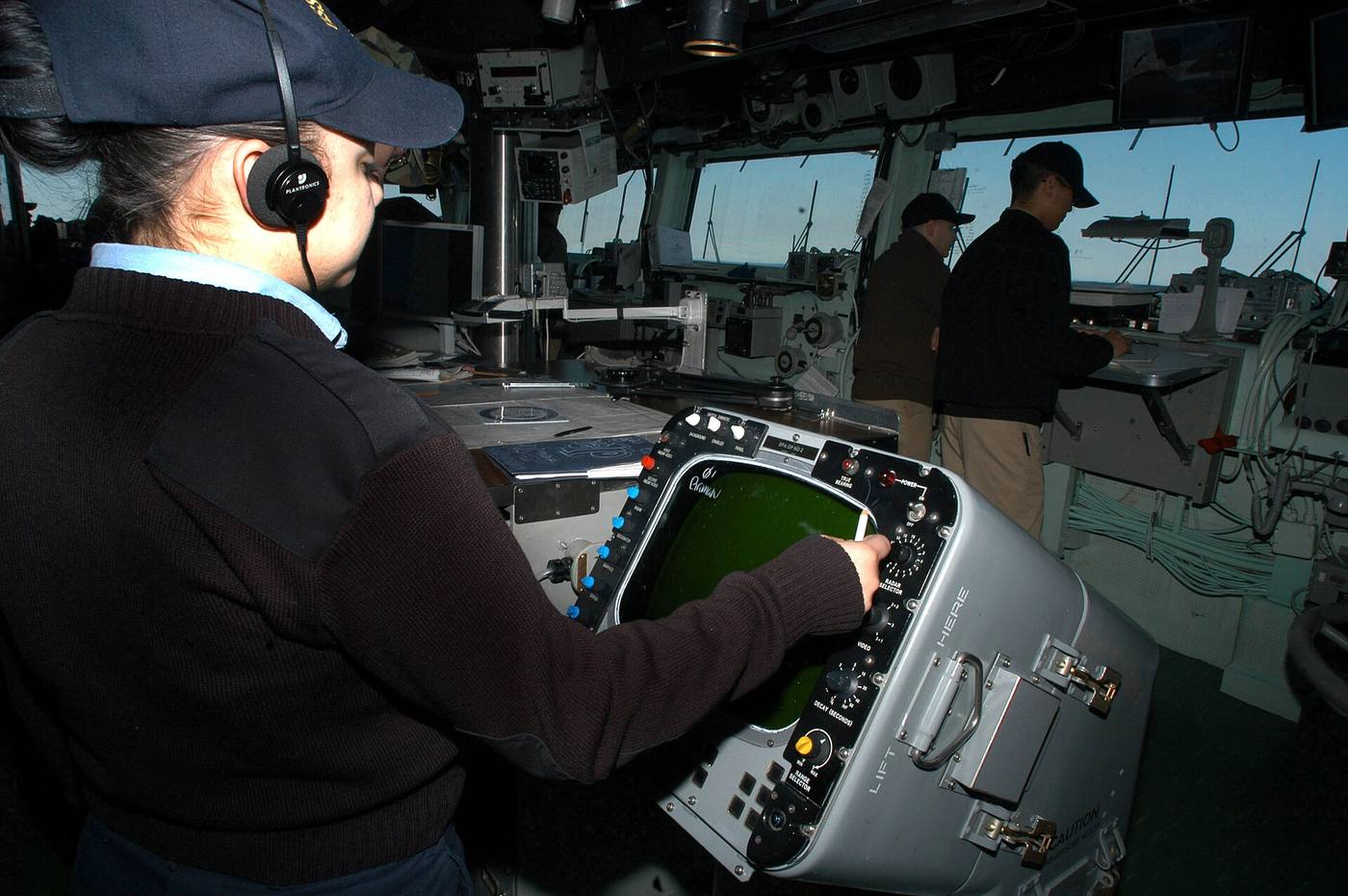
The radar screen is the maritime world's iconic display — the PPI scope with its sweeping returns, target trails, vectors, and clutter — and reading it is a learned skill that separates the experienced watchkeeper from the novice. So the natural question for multimodal AI: show a vision-language model a radar screen and ask it to explain what it sees.
It's the perfect test of maritime AI understanding — because there's a canyon between 'a circular display with bright spots' (image captioning) and 'three contacts, one crossing port-to-starboard on a closing bearing, CPA 0.8nm, trail suggests slow-moving vessel' (interpretation). The difference is the whole product.
Key findings
- Radar interpretation is a learned skill — the PPI display encodes contacts, motion, and risk in a specialized visual language. Established
- VLMs can describe the display but genuine interpretation — reading the contacts' tactical meaning — is the harder test. Research demonstration
- The value proposition is the second pair of eyes — an assistant that calls attention to the developing contact the watchkeeper hasn't prioritized. Research demonstration
- Hallucination is the safety risk — a VLM that 'reads' a clear screen as congested, or vice versa, is worse than no assist. Established
- The honest architecture is assistive — the VLM explains, the watchkeeper interprets; the model doesn't make the call. Maritime-GPT analysis
The language of echoes
A radar PPI encodes tactical information in visual form — a contact's position is its bearing and range, its trail shows its motion history, the vector shows its projected track, and the clutter (sea return, rain, interference) is the noise the skilled eye filters. Reading the screen is reading a language — the contact that's closing on a steady bearing is the collision risk, the contact in the clutter might be a small vessel, the vector that crosses yours is the developing situation. An AI that 'sees' the screen without this language is a camera, not a watchkeeper. Established
Caption vs. interpret
The multimodal test: show a VLM the screen and ask what's there. A captioner says 'a radar display with bright spots and a sweep line'; an interpreter says 'a head-on contact at 4nm, a crossing contact showing port aspect, sea clutter to windward'. The difference is whether the model learned the display's semantics — what a vector means, what a trail implies, what the clutter is — or just learned to describe images. Genuine interpretation requires maritime training data that connects the visual display to its navigational meaning. Research demonstration
The assistive sweet spot
Where radar-screen AI is genuinely useful isn't replacing the watchkeeper — it's the second pair of eyes that never gets tired, the assistant that notes 'the contact at bearing 045 has halved its range in ten minutes' and draws attention to what the watchkeeper's attention missed. The VLM's value is vigilance and articulation — catching the developing contact, narrating the picture for the record, flagging the anomaly — while the interpretation and the call stay with the human. Research demonstration
The hallucination hazard
A VLM that confidently 'reads' the screen is a hallucination risk — it might report a contact that isn't there, miss one that is, or misread a vector's meaning, and it will do so fluently. On the bridge that's dangerous precisely because the output sounds authoritative — 'contact at 3nm, CPA clear' said confidently is a false reassurance. The discipline is the same as everywhere: the AI assists, the human verifies, and a model that can't show its reasoning isn't a watchkeeping tool. Established
What we know
- Radar PPI is a specialized visual language; interpreting it is a learned skill.
- The gap between captioning and interpretation is the product-defining test.
- Hallucination risk makes confident unverified reads dangerous on the bridge.
What we don't
- Validated VLM accuracy on live tactical radar interpretation.
- Whether radar-screen AI measurably improves watchkeeper detection.
- How to certify an interpretive display assistant.
Being tested
- VLMs fine-tuned on radar/ECDIS display corpora.
- Second-pair-of-eyes alerting from screen interpretation.
- VLM hallucination rates on ambiguous radar scenes.
Maritime-GPT analysis
The radar-screen test is the honest measure of maritime VLM maturity — captioning the display is easy, interpreting the contacts is the product. The deployment answer is assistive, not authoritative: the model narrates and flags, the watchkeeper interprets and decides. Because on the bridge, a fluently hallucinated contact list is worse than no AI at all — the VLM's confidence must be earned with maritime training data, not assumed from general vision. Maritime-GPT analysis
This is a research feature, not operational guidance. Simulation results are reported as simulation; demonstrations are not deployments; company claims are attributed as such. Verify safety-critical decisions against official nautical publications and flag-state requirements.
Sources & evidence
The multimodal-interpretation research direction.