
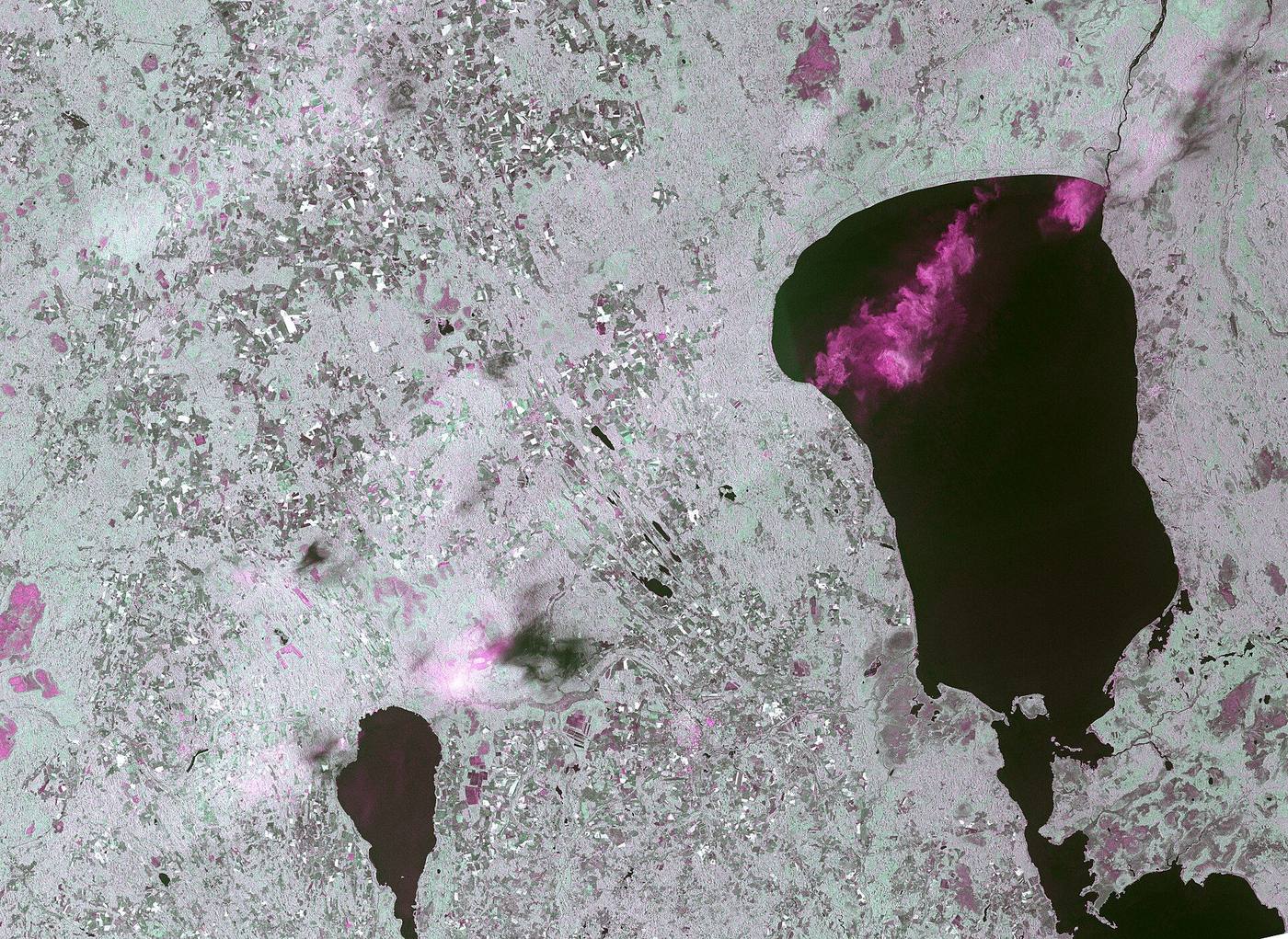
Every sensor on a bridge has a characteristic way of being wrong. AIS says what a shipclaims to be — and claims can be off, wrong, or fabricated. Radar sees returns — sea clutter and rain echo alongside hulls. A camera sees what's lit and unobscured — useless in fog, darkness, and glare. The single-sensor maritime AI is a system with a built-in blind spot the size of the ocean. Maritime-GPT analysis
Multimodal fusion is the answer the perception literature has converged on: combine the sensors so their errors don't align. The 2026 review wave — bibliometric surveys of AIS, SAR and optical fusion — documents the field moving decisively from single-modality to fused systems, with AIS+SAR emerging as the strongest pairing for detection and anomaly identification. Established
Key findings
- Fusion is now the dominant research direction — 2016–2025 reviews show a clear shift from single-sensor to fused perception. Established
- AIS + SAR is the standout pairing — SAR finds the dark/non-cooperative vessel, AIS names the cooperative one; the disagreement is the anomaly signal. Established
- Fusion methods span classical (Kalman/particle, Dempster-Shafer) to learned (deep fusion) — the field hasn't settled, which is itself evidence of immaturity. Established
- Maritime fusion lags autonomous-vehicle fusion — harder environment, sparser labelled data, less operational validation. Established
- The valuable output isn't detection, it's disagreement — a radar track with no AIS, an AIS position with no return — that's where dark vessels and spoofing show up. Maritime-GPT analysis
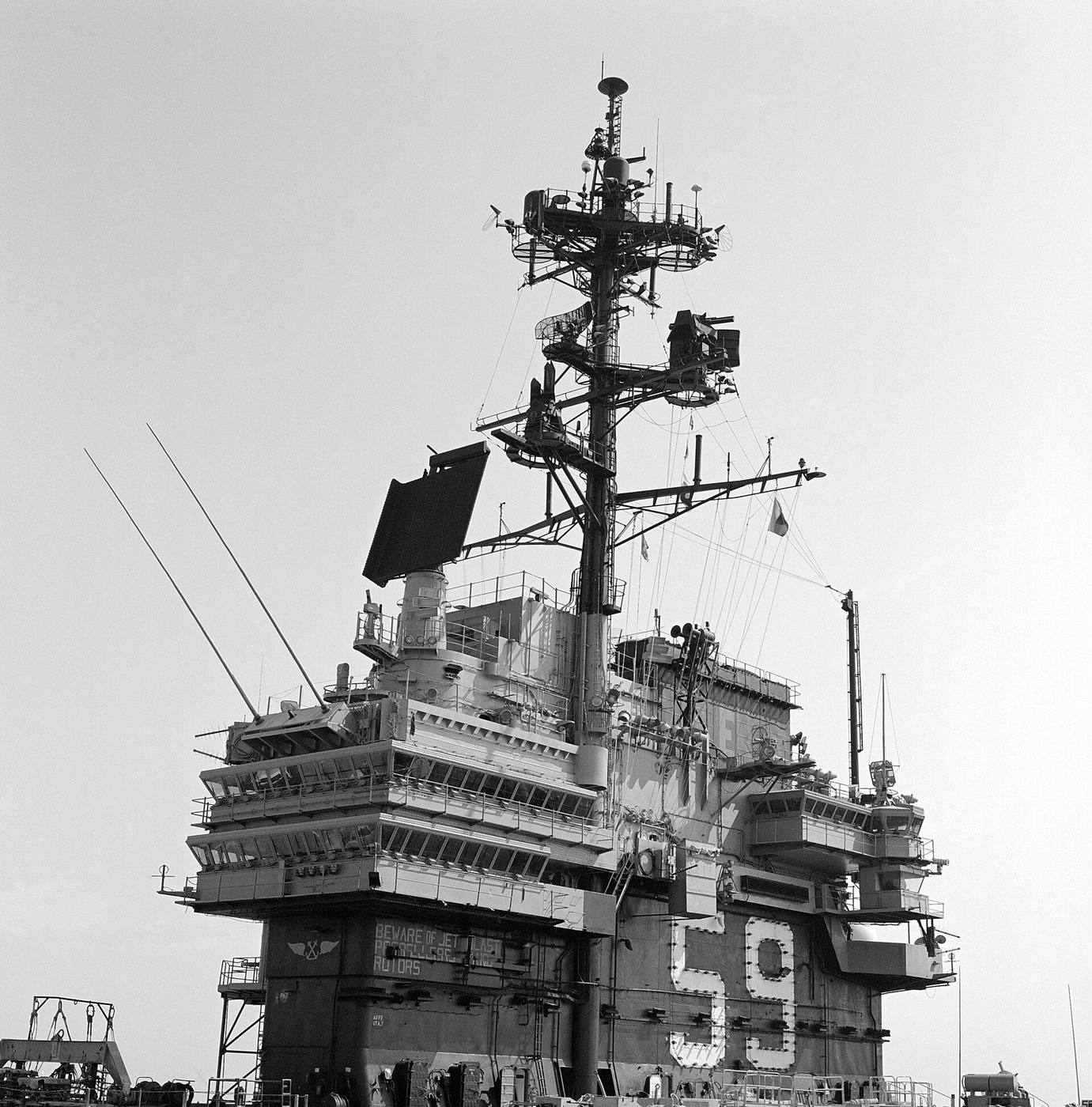
What each sensor brings — and hides
| Sensor | Sees | Blind to | Deceivable by |
|---|---|---|---|
| AIS | Identity, intent, position (self-reported) | Non-transmitting vessels | Spoofing, switch-off, wrong data |
| Radar | Physical returns, all weather, day/night | Identity; small/stealthy targets | Sea clutter, stealth shaping |
| Optical/IR camera | Appearance, lights, detail | Fog, dark, glare, occlusion | Camouflage, light imitation |
| SAR (satellite) | Wide-area physical presence | Real-time tracking (revisit-limited) | Jamming, decoys |
No row covers all the columns — which is precisely the argument. A vessel dark on AIS but present on SAR is a dark vessel. An AIS position with no corresponding radar return is a possible spoof. The fusion isn't averaging the sensors into one answer; it's cross-examining them against each other. Maritime-GPT analysis
Maritime-GPT synthesis — the fusion architecture common to the reviewed literature. Maritime-GPT analysis
Where fusion still fails
The reviews are consistent about the open problems. Established
- Heterogeneity. AIS is a periodic message, radar a sweep, camera a frame, SAR a revisit — aligning them in space and time is the unglamorous hard part, not the clever model.
- Labelled data. Ocean-aware detection reviews repeatedly name annotation scarcity — you can't train what you can't label, and labelled multi-sensor maritime sets are rare.
- Association ambiguity. In dense traffic, deciding which radar return belongs to which AIS track is itself an unsolved problem — wrong association creates ghosts.
- Real-time deployment. Fusion across several high-rate sensors is compute-hungry; doing it aboard, at watchkeeping latency, is the engineering frontier.
What we know / don't / being tested
What we know
- Fused perception beats any single sensor for detection and anomaly identification.
- AIS+SAR disagreement is a proven dark-vessel/spoofing signal.
- The bottleneck is data association and alignment, not model sophistication.
What we don't know
- Performance under adversarial attack — deliberate simultaneous deception across sensors.
- Whether learned fusion outperforms classical filtering enough to justify its opacity.
- Behaviour at the edge — fog + clutter + dense traffic + partial sensor failure together.
Being tested
- SAR–optical–AIS fusion for wide-area surveillance.
- Ocean-aware detection architectures robust to sea clutter and small targets.
- Edge-resident fusion — onboard multi-sensor within ship power envelopes.
Maritime-GPT analysis
Sell the disagreement, not the detection. The fusion product that earns its place on a bridge isn't the one that finds ships slightly better than radar — it's the one that surfaces where the sensors argue: the dark target, the impossible AIS jump, the return with no identity. That's an anomaly detector wearing a fusion architecture, and it's the part that catches the threats single sensors structurally cannot. Maritime-GPT analysis
Open research problems
- Cross-sensor association in dense traffic — the ghost-track problem.
- Labelled multi-sensor maritime datasets — the field's scarcest resource.
- Adversarial fusion — resilience when an attacker deceives multiple sensors coherently.
- Fused uncertainty — a picture that shows what the sensors don't agree on, not just what they do.
Evidence scorecard
| Dimension | Rating | Basis |
|---|---|---|
| Evidence strength | High | Multiple 2026 systematic reviews; direction of benefit not in doubt. |
| Research maturity | Field trial | Fusion deployed in surveillance; onboard real-time still maturing. |
| Maritime deployment | Limited | Operational in shore surveillance; integrated shipboard use thinner. |
| Confidence in conclusions | High | Grounded in systematic reviews; analysis labelled. |
Related tools & reading
Sources
- A comprehensive review of multimodal AI techniques in maritime surveillance using AIS, SAR, and optical data fusion — Array (journal), 2026Peer-reviewed review (2026)
2016–2025 bibliometric review: finds AIS+SAR the most promising fusion paradigm for vessel detection and anomaly identification; names data heterogeneity and interpretability as open issues. - Multi-sensor data fusion in maritime surveillance: a review on methods and applications — PeerJ Computer Science (2026)Peer-reviewed review
Maps the fusion methods — Kalman/particle filters, Dempster-Shafer, ML/DL — across radar, AIS, LiDAR and optical; documents maritime lag behind autonomous-vehicle fusion. - Ocean-aware deep learning for civilian maritime object detection and tracking: a comprehensive review — Frontiers in Marine Science (2026)Peer-reviewed review
The perception side — optical, IR, SAR, AIS fusion for detection/tracking; names sea clutter, small targets, annotation scarcity and real-time deployment as limits.
Findings synthesised from the cited systematic reviews; accessed 5 October 2026. Editorial analysis only.