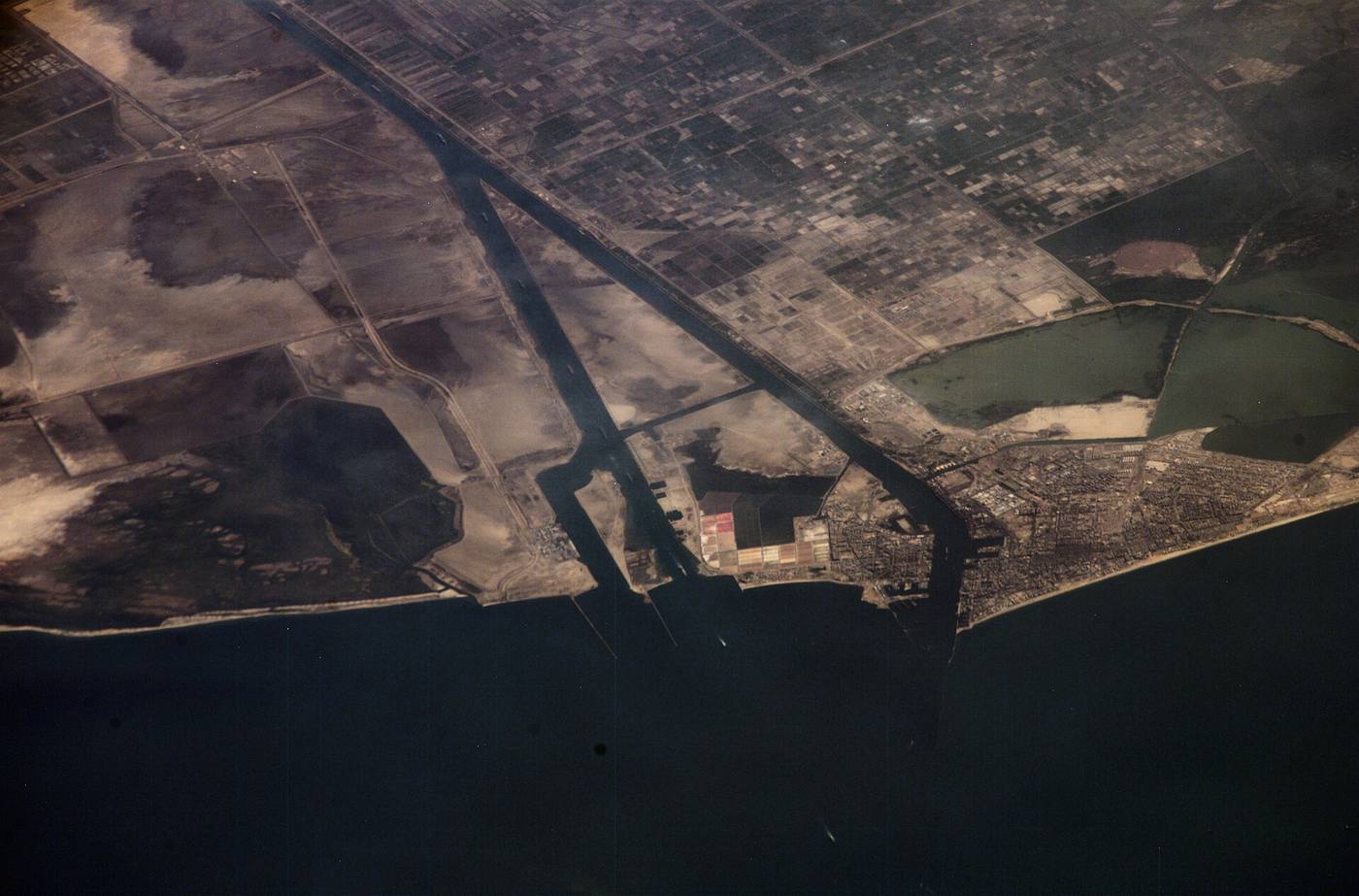
The open-sea collision problem is geometrical — relative motion between two vessels. The confined-water problem is hydrodynamical — the channel itself acts on the hull. Bank effect pulls a ship toward the bank as it passes; squat sinks the hull bodily as speed builds; two ships passing close exchange pressure fields that can pull them together. These effects are absent from the standard collision-avoidance literature because they are absent from the simulator it was built in.
This is the least-researched corner of AI navigation — and the one that most directly determines whether autonomy can ever run the Suez, the Panama locks, or a dredged harbour approach.
Key findings
- Bank effect, squat and ship-interaction are first-order forces in confined water — absent from the simulators the AI literature trains on. Established
- Confined-water manoeuvring models exist in ship-handling science, but their integration into AI navigation systems is barely studied. Established
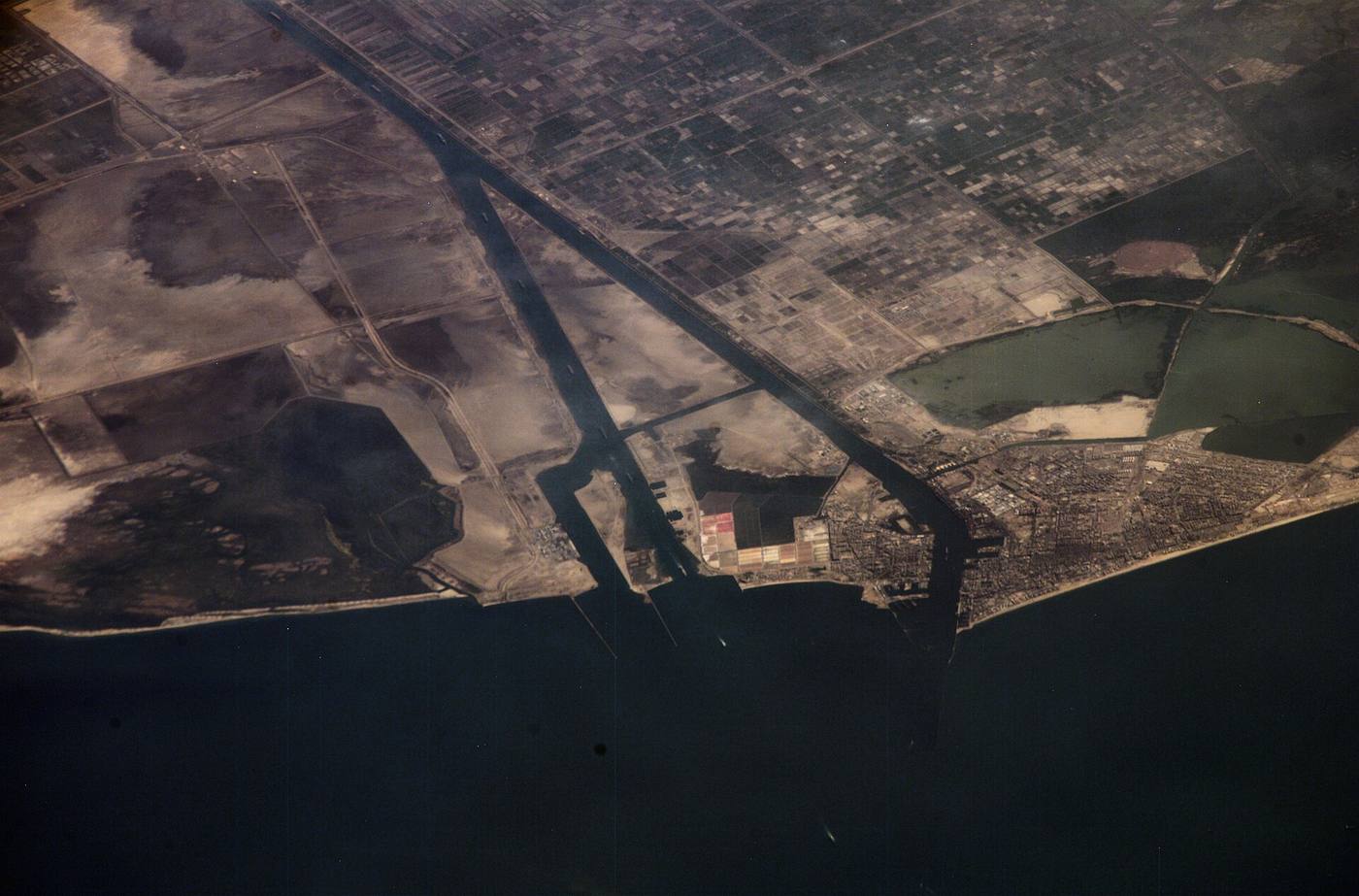
- The Suez Canal blockage (Ever Given, 2021) is the canonical demonstration that confined-water physics can defeat even crewed, piloted navigation. Established
- Depth, draught and under-keel clearance are hard geometric constraints the open-water models treat as free space. Maritime-GPT analysis
- No credible research demonstrates autonomous confined-water transit at commercial scale; pilots and tug assistance remain the standard. Established
The physics the model omits
- <strong>Bank effect.</strong> Water displaced between hull and bank lowers pressure, pulling the bow toward the bank — the steering must counteract a force that grows with speed and proximity. Established
- <strong>Squat.</strong> A moving hull in shallow water sinks bodily — under-keel clearance shrinks by metres at transit speed, turning a charted depth into a moving constraint. Established
- <strong>Ship interaction.</strong> Two vessels passing close exchange pressure fields; in confined water the effect can pull them together faster than rudder can correct. Established
- <strong>Wind + channel.</strong> A high-sided containership in a narrow channel is a sail the hydrodynamics amplify — the Ever Given case in one sentence. Research demonstration
Why the AI stack isn't built for it
The published avoidance models — RL, optimization, COLREGS encoders — treat the environment as flat geometry with targets. Confined water is a dynamical system with state (depth profile, flow, bank shape) that acts on the hull continuously. Getting that physics into the model requires a channel-specific hydrodynamic layer the general-purpose simulators don't have — and validating it requires instrumented transits the research community mostly doesn't have access to. Maritime-GPT analysis
What exists and what doesn't
Ship-handling simulators and manoeuvring models do encode confined-water physics — the tools exist in pilotage training, not in the AI stack. The gap is the interface: the AI's world model doesn't know the bank is pulling. The near-term path is not autonomy but instrumentation — decision support that shows the pilot the under-keel margin, the bank-effect prediction, the interaction zone — the human still closes the loop. Maritime-GPT analysis
What we know
- Bank effect, squat and interaction are real, modelled hydrodynamics in ship-handling science.
- They are absent from the AI collision-avoidance literature's simulators.
- Confined-water transit is the domain of pilots and tugs today.
What we don't
- A validated AI navigation system through a dredged channel or canal.
- Whether RL can be trained on high-fidelity confined-water simulators.
- The safe envelope under which autonomy could enter confined water.
Being tested
- Pilot-decision-support tools with under-keel and bank-effect displays.
- Confined-water simulator training for RL agents.
- Instrumented transits to capture real hydrodynamic data.
Maritime-GPT analysis
Confined water is where the AI navigation problem stops being about rules and becomes about physics. The model that reads COLREGS perfectly still doesn't know the bank is pulling it in. Until the simulators carry hydrodynamics and the training data carries transits, narrow-channel autonomy is a demonstration, not a capability — and the pilot remains the system of record. Maritime-GPT analysis
This is a research feature, not operational guidance. Simulation results are reported as simulation; demonstrations are not deployments; company claims are attributed as such. Verify safety-critical decisions against official nautical publications and flag-state requirements.
Sources & evidence
The canonical demonstration that confined-water physics defeats piloted navigation.
Documents the open-water simulator bias that excludes hydrodynamics.
The density side of the same confined-water problem.