
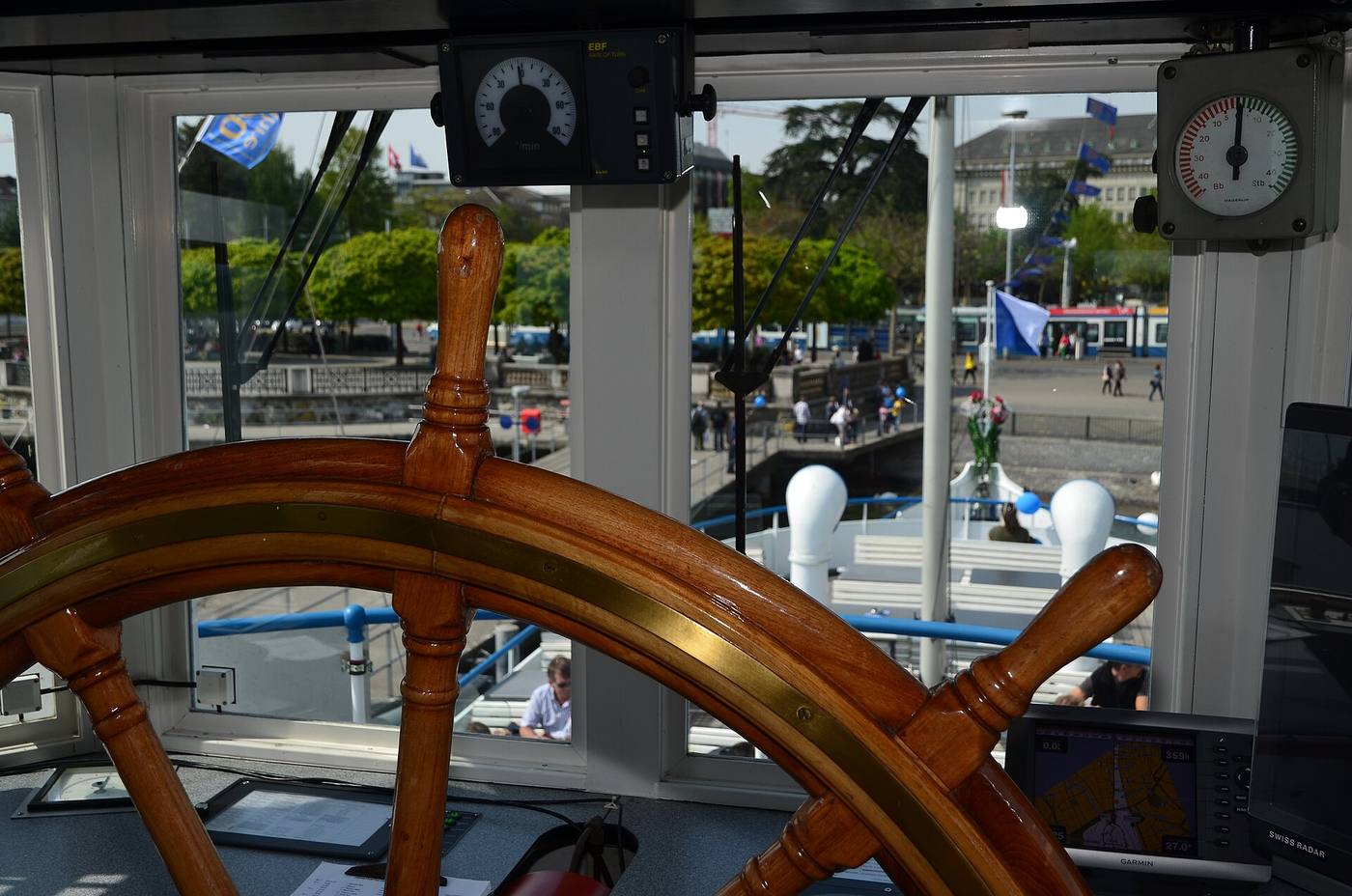
The master's job compresses everything: the weather and the crew, the cargo and the charter, the rules and the route, the port and the politics — a decision made under fatigue, pressure and incomplete information. The case for an AI copilot aboard is not that the machine knows better; it's that the machine can hold the whole picture steadily while the human holds the judgement.
This is also the most delicate application in the catalogue — the one where the advisory/authority line is sharpest, where automation bias is the named hazard, and where the difference between a tool and a threat is a single design choice. This article is about where that line is.
Key findings
- The evidence supports copilots that <em>surface information and options</em> — not copilots that recommend a single action. Established
- Automation bias — deferring to the machine's output — is the documented failure mode that defines the copilot's safe form. Established
- A copilot's value is in situation assembly: fusing weather, traffic, rules, schedule and vessel state into one legible picture the master then judges. Maritime-GPT analysis
- The MASS Code and human-factors literature both point the same way: the human keeps command; the machine's contribution is bounded and explainable. Established
- The risk that isn't solved is the confident wrong recommendation — a copilot that advises badly and is believed. Maritime-GPT analysis
What a copilot is — and isn't
A copilot is not a decision-maker and not a recommender in the strong sense. It is a situation assembler and an option layer: it reads the AIS picture, the forecast, the rules in force, the cargo and schedule constraints, and lays out what the master could do — with the reasoning visible. The useful analogue is the airline's EFB or the physician's CDSS: a system that makes the options and their consequences legible, not one that chooses between them. Maritime-GPT analysis
The tasks it can honestly carry
- <strong>Situation synthesis.</strong> One picture from the dozen feeds the bridge already has — traffic, weather, chart, machinery, schedule. Research demonstration
- <strong>Option enumeration.</strong> 'At current speed you arrive after the tide; at +1kt you make it; at 12kt you burn X extra fuel' — the comparison the master would have to compute. Research demonstration
- <strong>Risk flagging.</strong> 'The forecast for the next 24h includes conditions outside this vessel's stated limits' — the alert the watchkeeper might miss. Maritime-GPT analysis
- <strong>Procedural recall.</strong> 'The reporting requirement for this TSS is…' — retrieval of the rule the master knows exists but can't quote from memory. Research demonstration
The line it must not cross
The failure mode is the recommendation. The moment the copilot says 'alter course to X' it becomes the decision-maker in effect — and the human-factors literature is unambiguous that the human then follows the machine even when the machine is wrong. The design safeguard is structural: the copilot presents options and their consequences; it does not rank them into a prescription; it does not execute; and its confidence is shown as uncertainty, not certainty. The system stays honest by staying humble. Established
Why this is what Voyage Intel Pro is for
The copilot concept is the one Voyage Intel Pro's positioning already describes: decision support, human authority retained. The product's honest value is the situation assembly and option surfacing — not the autonomous choice. That alignment between what the research says is safe and what the product claims to be is not a coincidence; it's the architecture the evidence supports. Maritime-GPT analysis
What we know
- Copilots that assemble the picture and surface options are the demonstrated safe form.
- Automation bias — deference to machine output — is the documented hazard.
- The human retains command; the machine's contribution must be legible and bounded.
What we don't
- The point where option-surfacing becomes de facto recommendation in practice.
- How to measure and bound a copilot's influence on a master's decision.
- Whether copilots reduce fatigue enough to offset the deskilling risk.
Being tested
- Option-presentation interfaces vs recommendation interfaces.
- Copilot influence on watchkeeper workload and situation awareness.
- Confidence/uncertainty display for decision-support outputs.
Maritime-GPT analysis
The copilot is the right form — and the hardest to keep honest. A tool that reads the situation and lays out the options is genuinely valuable aboard; a tool that tells the master what to do is a latent accident. The whole design question is keeping the machine's contribution visible as input to a decision, never as the decision itself. Build the assembler, not the advisor — and make the options legible, not the recommendation. Maritime-GPT analysis
This is a research feature, not operational guidance. Simulation results are reported as simulation; demonstrations are not deployments; company claims are attributed as such. Verify safety-critical decisions against official nautical publications and flag-state requirements.
Sources & evidence
The regulatory frame that keeps the human in command.
The supervision/automation-bias literature that bounds the copilot's form.
Why the copilot's confident output is never sufficient alone.