
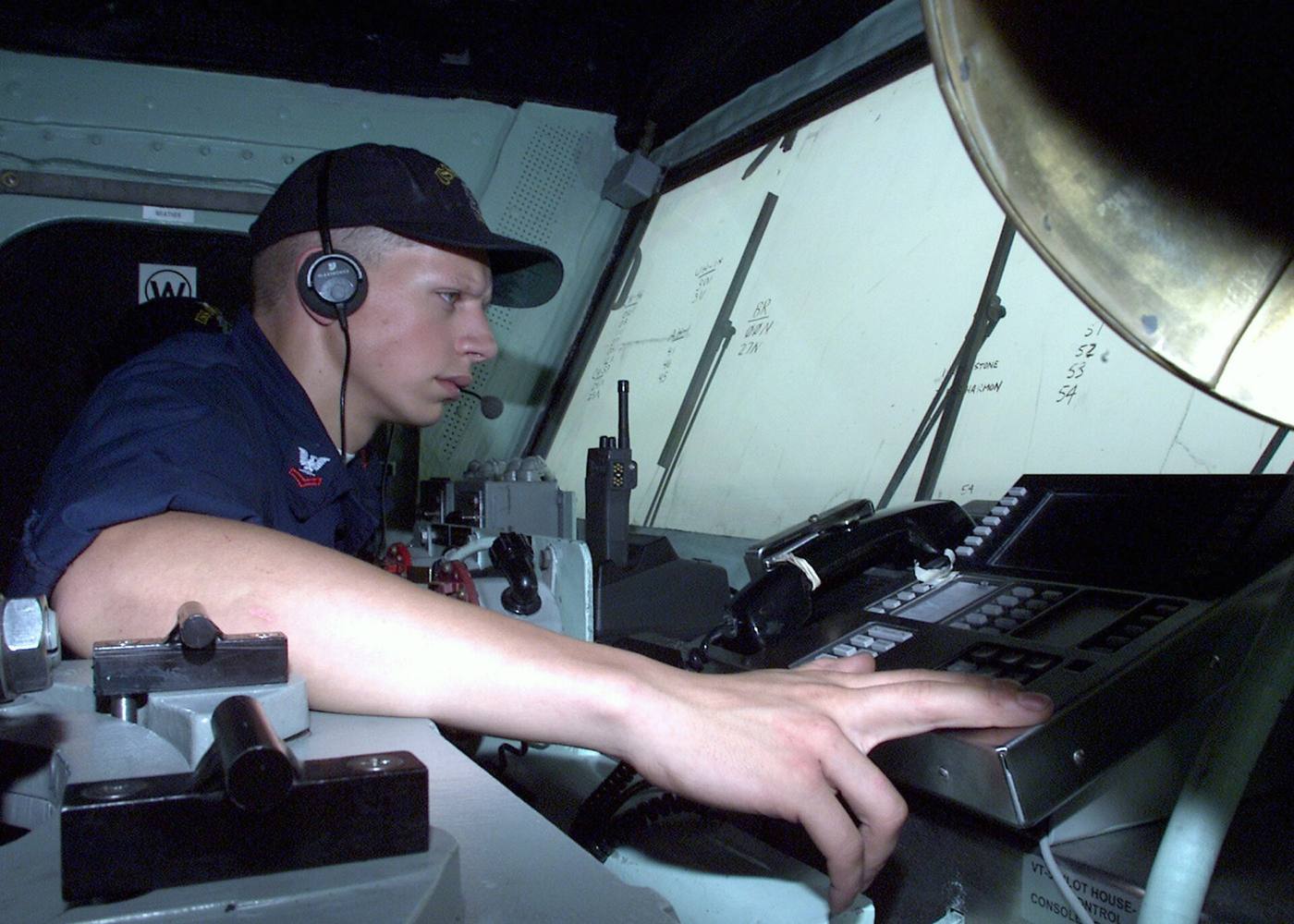
The bridge watch is the oldest continuous safety practice at sea — one person, awake, watching, accountable. AI-assisted watchkeeping is the application where the augmentation case is strongest and the replacement case weakest: a system that extends the watchkeeper's attention without taking it away.
The design space is narrow and important. The assisted watch that works adds coverage the human lacks; the assisted watch that fails makes the human's watch worse by offering the illusion of coverage.
Key findings
- The genuine assist is augmentation: the system sees more, flags earlier, and never assumes the human saw it too. Established
- The failure mode is out-of-the-loop deskilling — a watchkeeper who trusts the system stops watching. Established
- COLREGS Rule 5's lookout obligation stays on the human regardless of the assistive tooling aboard. Established
- The honest alert is a prompt for the watchkeeper's judgement — 'target at bearing X, CPA Y' — not a verdict. Maritime-GPT analysis
- Alert fatigue is the real limit — a watch assistant that cries wolf is worse than none. Research demonstration
What the assist actually is
- <strong>Extended horizon.</strong> The camera and radar fusion sees beyond the unaided eye — the assist's clearest value is range. Research demonstration
- <strong>Unblinking coverage.</strong> The machine doesn't blink, doesn't fatigue, doesn't look away — the second pair of eyes the watchkeeper lacks. Established
- <strong>Contact flagging.</strong> 'New contact at bearing 045, closing, CPA 0.4nm' — the prompt that directs attention, not the answer. Maritime-GPT analysis
- <strong>Cross-check.</strong> 'The contact you marked is converging' — the confirmation the single watchkeeper misses alone. Research demonstration
The deskilling trap
The assist is only safe if the watchkeeper still does the watching. A system that reliably flags contacts teaches the human to wait for the flag — and when it misses one (it will), the human who stopped scanning doesn't catch it. The failure is not in the tool but in the human's relationship to it — the out-of-the-loop problem our human-factors piece covers. The design must keep the watchkeeper as the primary lookout; the AI is the spotter, not the watcher. Established
The Rule 5 frame
COLREGS Rule 5 doesn't distinguish between a human lookout assisted by sensors and a human lookout alone — the obligation is the lookout, and the assistive system is additional to it, not a replacement for it. A vessel that relies on the assist in a way that degrades the human's watch has not satisfied Rule 5 — the technology is measured by whether it makes the lookout better, not by whether it substitutes for one. Established
What we know
- The assist's value is extended coverage and early flagging — attention, not authority.
- Out-of-the-loop deskilling is the documented failure mode.
- Rule 5 keeps the lookout human regardless of the assist.
What we don't
- How to design alerts that keep the watchkeeper scanning rather than waiting.
- The right alert-precision threshold to avoid fatigue without missing contacts.
- Whether an assisted watch measurably improves safety outcomes.
Being tested
- Alert designs that prompt scanning rather than reassure.
- Fatigue-monitoring integration with the assist.
- Watch-assist trials measuring lookout quality, not just coverage.
Maritime-GPT analysis
The assisted watch is the purest form of the decision-support argument: the machine extends the human's senses, the human keeps the watch. It's also the sharpest test of the automation-bias literature — an assist that makes the human complacent has made the watch worse, not better. The honest version augments the lookout; the dangerous version quietly becomes it. Build the spotter, not the watcher. Maritime-GPT analysis
This is a research feature, not operational guidance. Simulation results are reported as simulation; demonstrations are not deployments; company claims are attributed as such. Verify safety-critical decisions against official nautical publications and flag-state requirements.
Sources & evidence
The out-of-the-loop literature that bounds the assist.