
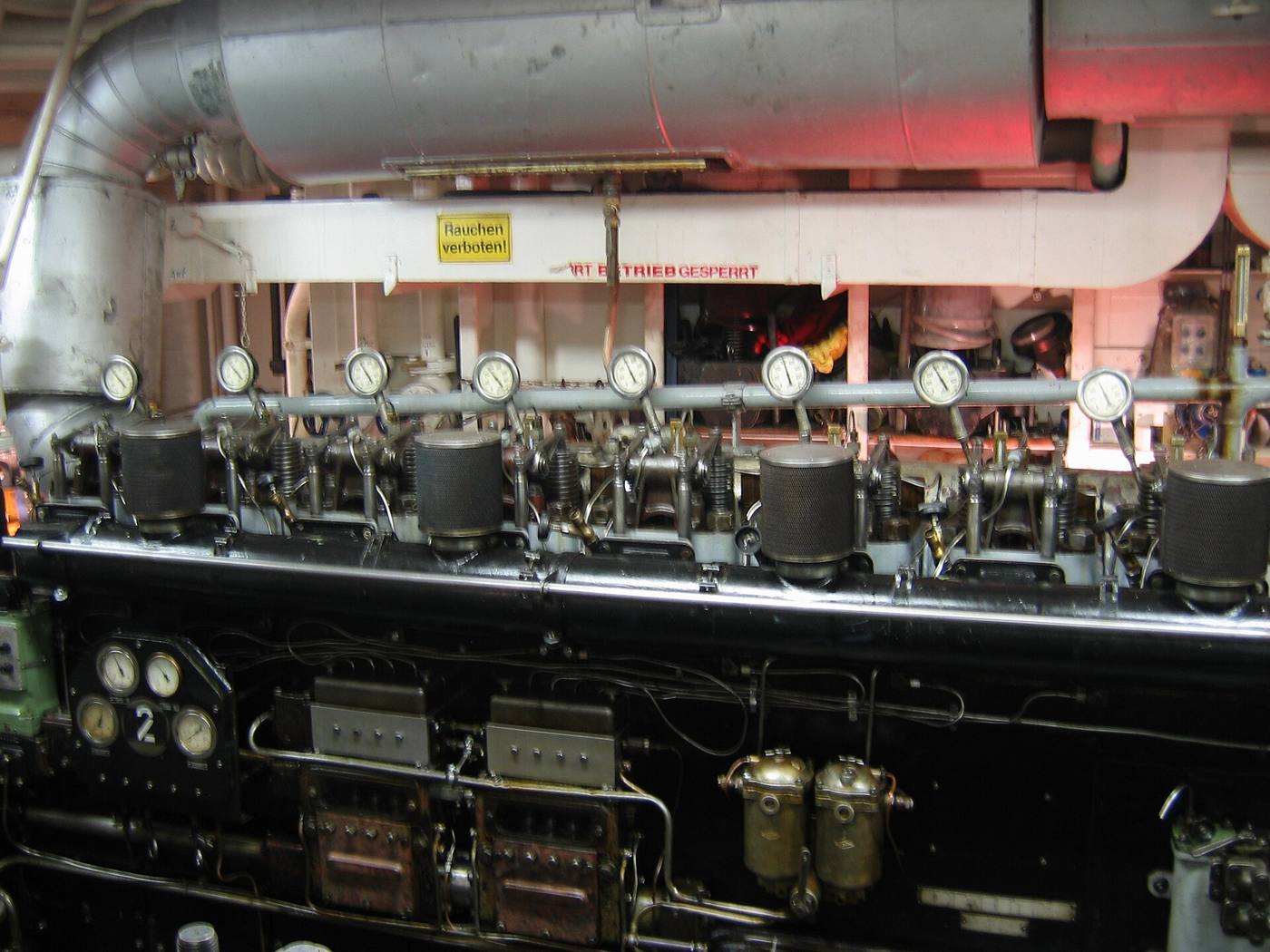
The main engine gets the attention — the big monitoring budget, the maker's service contract, the fancy analytics. But walk through the casualty statistics and the auxiliaries dominate: the generator that trips and blacks out the ship, the pump that fails mid-cargo, the compressor that grounds a departure. The unglamorous machinery is where the downtime actually lives.
Extending AI monitoring to the auxiliary plant is less glamorous than the main-engine case — but arguably more valuable, because it's the layer nobody's watching.
Key findings
- Auxiliary machinery — generators, pumps, compressors, purifiers, separators — causes disproportionate downtime relative to its monitoring attention. Established
- The detection model is the same anomaly-detection pattern, applied to a wider and more heterogeneous equipment set. Established
- Auxiliary failures cascade — a generator trip becomes a blackout; a cooling-pump failure becomes a main-engine shutdown. Established
- Sparse instrumentation is the constraint — auxiliaries often lack the sensor density the main engine carries. Established
- The fleet-wide case: auxiliary-failure patterns across a fleet surface the systemic faults a single ship can't see. Research demonstration
The unmonitored majority
A ship's machinery space is mostly auxiliaries — the generators, pumps, compressors, boilers, purifiers and separators that keep the plant alive — and mostly unmonitored beyond the alarm thresholds. The main engine gets the sensor suite because it's expensive; the auxiliaries get gauges because they're 'simple'. The casualty record disagrees: auxiliary failures are frequent, cascading, and disproportionately responsible for downtime — the plant that isn't watched is the plant that fails. Established
Why they cascade
Auxiliary failures are rarely contained — the generator that trips puts the ship on emergency power; the cooling pump that fails takes the main engine with it; the steering-gear hydraulic pump that degrades is a navigation safety issue. The auxiliaries are the support system; when they fail, the failure doesn't stay local. Monitoring them isn't a maintenance nice-to-have — it's the early warning for the cascading casualty. Established
The instrumentation gap
The technical obstacle is sensor density: the main engine is instrumented for monitoring; the auxiliary plant often isn't. Extending AI monitoring to auxiliaries frequently means adding sensors — the retrofit cost that decides whether the coverage is worth it. The pragmatic answer is tiered: monitor the auxiliaries whose failure cascades (generators, critical pumps, steering hydraulics) and accept the alarms on the rest. Coverage follows consequence, not completeness. Established
The fleet pattern
The auxiliary-monitoring payoff compounds at fleet scale: a pump model that fails on one vessel is a single incident; the same pump model degrading across three vessels is a systemic fault the fleet office should catch. Cross-vessel auxiliary analytics is where the fleet learns its equipment's real reliability — the batch of compressors that wear early, the purifier model that clogs — and where the fleet-level insight exceeds anything a single ship could see. Research demonstration
What we know
- Auxiliary failures cause disproportionate downtime vs their monitoring attention.
- Auxiliary casualties cascade — generator, cooling, and hydraulics failures aren't contained.
- Fleet-wide auxiliary analytics surface systemic equipment faults.
What we don't
- Optimal sensor density for auxiliary monitoring (coverage vs cost).
- How to prioritize which auxiliaries get instrumentation retrofits.
- Whether fleet-level auxiliary patterns generalize across ship types.
Being tested
- Auxiliary anomaly-detection deployments on live plants.
- Fleet-level auxiliary-reliability analytics.
- Tiered instrumentation strategies by failure consequence.
Maritime-GPT analysis
Auxiliary machinery is where predictive-maintenance's marketing and reality diverge — the flagship product monitors the main engine; the downtime comes from the auxiliaries nobody instrumented. The honest deployment isn't comprehensive monitoring; it's consequence-ranked coverage — instrument the machines whose failure cascades, accept the alarms on the rest. The auxiliary plant is the real maintenance frontier because it's the layer the industry forgot to watch. Maritime-GPT analysis
This is a research feature, not operational guidance. Simulation results are reported as simulation; demonstrations are not deployments; company claims are attributed as such. Verify safety-critical decisions against official nautical publications and flag-state requirements.
Sources & evidence
The detection architecture that extends to auxiliary machinery.
The main-engine monitoring this extends beyond.
The watchkeeping context the auxiliary alerts feed.
The baseline model the auxiliary twin supplies.