
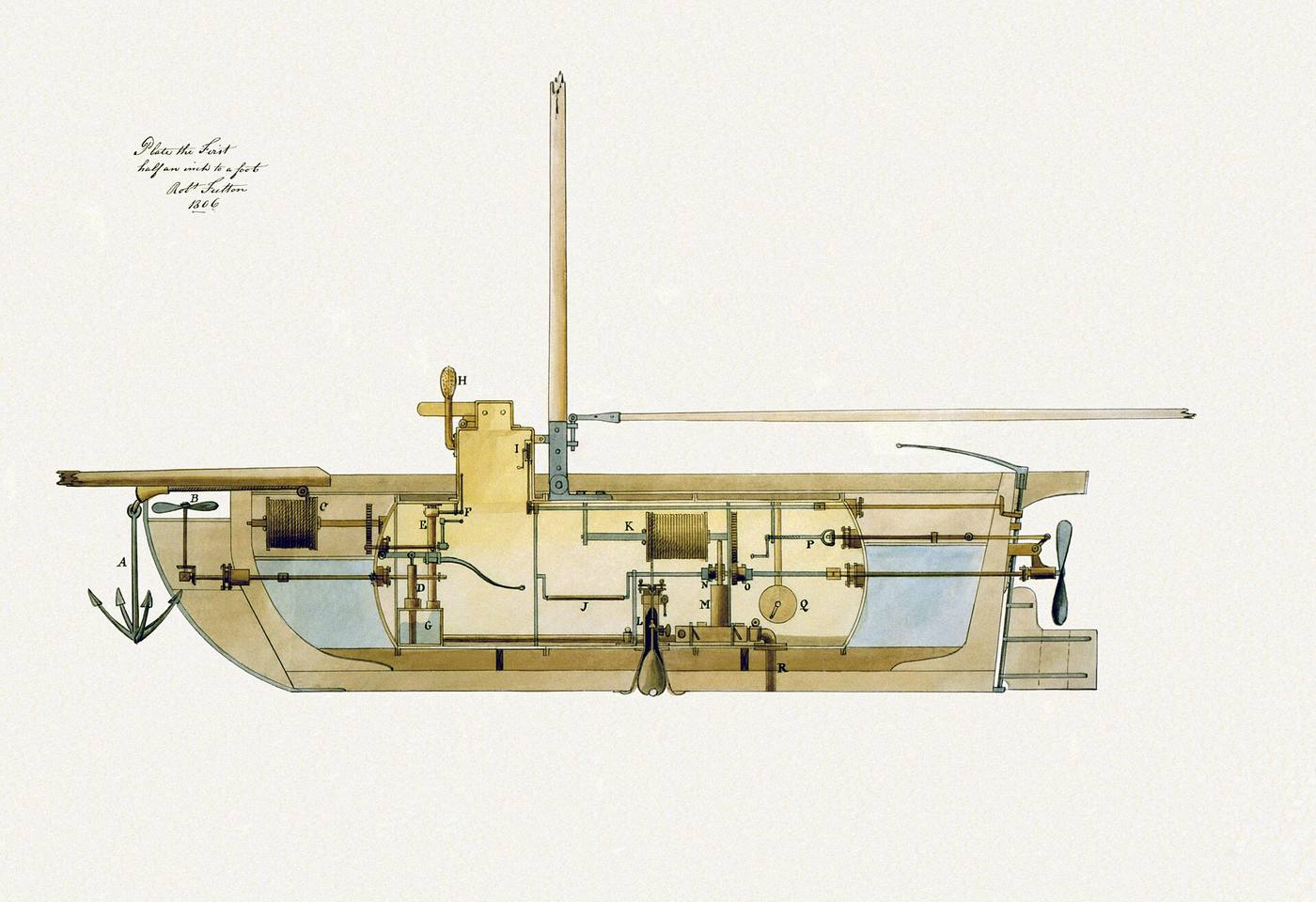
"Digital twin" has become maritime's most abused term — applied to everything from a genuine physics-synced model to a PowerBI dashboard with a ship graphic on it. The difference matters: a twin that isn't actually synchronised to the ship's current state isn't a twin; it's a model of a ship that no longer exists. The fidelity of the sync is what makes the twin useful — and what makes it hard.
This article is the definitional explainer the cluster needs: what a twin is, what it isn't, and why the distinction is load-bearing for everything downstream.
Key findings
- A digital twin is a live model synchronised to a specific physical asset — not a generic model of the asset's class. Established
- The distinguishing property is <em>bidirectional sync</em>: sensor data updates the model; the model's state reflects this hull, today, not a design baseline. Established
- Most maritime 'twins' are partial — a component twin (engine, hull) or a functional twin (manoeuvring, energy) — not whole-ship twins. Established
- Divergence is the failure mode: the twin that doesn't track the ship's changing condition (fouling, wear, refit) becomes progressively wrong. Established
- A dashboard or a static 3D model with telemetry is <em>not</em> a twin — the word is the problem, not the technology. Maritime-GPT analysis
The definition that holds
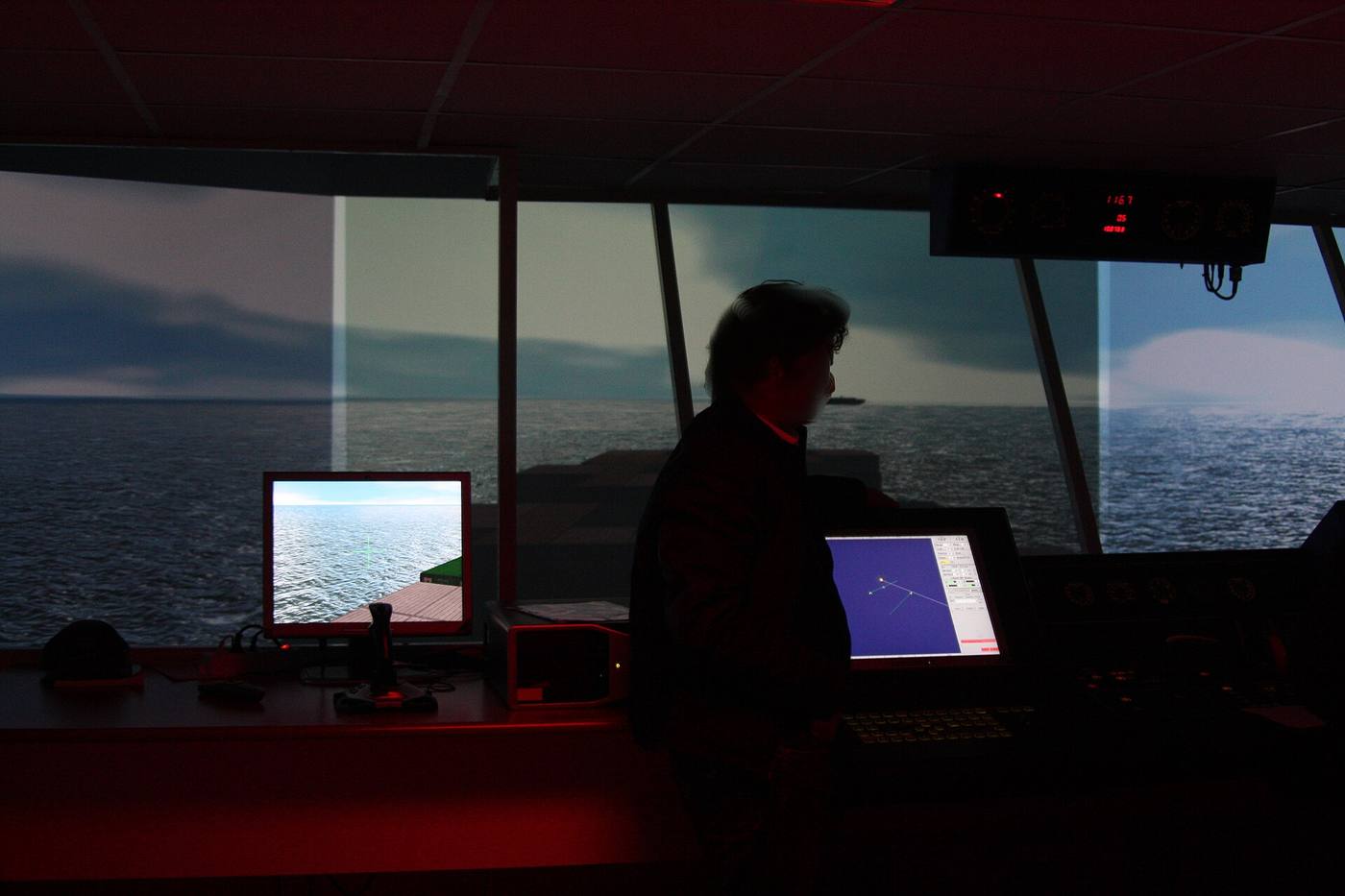
A digital twin is a computational model of a specific physical asset that stays in sync with it — fed by the asset's sensors, updated as the asset changes, and accurate enough to be queried for what the asset will do, not what its design said it would. The ship's twin isn't 'a bulk carrier'; it's <em>this bulk carrier</em>, with its fouling, its wear, its current loading. The specificity is the whole point — a generic model can simulate, but only a synced one can predict this ship's behaviour. Established
The impostors
- <strong>The dashboard.</strong> Telemetry on a 3D model is a monitoring interface, not a twin — it displays state but doesn't model behaviour. Maritime-GPT analysis
- <strong>The design model.</strong> The CAD/hydrodynamic model from build is a baseline — accurate at delivery, drifting ever since. Established
- <strong>The simulator.</strong> A model of the ship type, not the ship — useful for training, not for predicting this vessel's response. Established
- <strong>The analytics tool.</strong> A statistical model of sensor data is descriptive, not a twin — it finds patterns but doesn't mirror the asset. Maritime-GPT analysis
Why sync is the engineering problem
The twin's value decays the moment it diverges from the ship — and a ship diverges continuously: fouling, wear, cargo state, refit. Keeping the model in sync means recalibrating it against live telemetry, which is the same estimation problem as system identification — infer the model's parameters from the data. The research on twin synchronisation (RL/MPC for the tracking layer, Transformers for the dynamics) is specifically about this divergence problem. Research demonstration
The honest maturity map
| Twin type | Maturity | The reason |
|---|---|---|
| Component twins (engine, propulsion) | Field-demonstrated | Bounded physics, dense instrumentation |
| Manoeuvring twins | Demonstrated on real passages | Measurable inputs/outputs; the Ocean Eng work |
| Energy/efficiency twins | Operational on some fleets | Well-instrumented problem, clear payoff |
| Whole-ship twins | Research/federated | Composition of partial twins is the open problem |
| Fleet-level twins | Nascent | Aggregation across heterogeneous assets |
What we know
- A twin is a synced model of a specific asset, not a generic model or a dashboard.
- Component and functional twins are real; whole-ship twins are federated partial models.
- Divergence is the failure mode — the twin must be maintained to stay true.
What we don't
- A validated whole-ship twin that predicts performance across all functions.
- How to keep a twin synced through refit and equipment change.
- Whether twin fidelity can be certified the way the hardware can.
Being tested
- Online self-calibrating twins that track degradation.
- Federated twin composition for whole-ship models.
- Twin-as-certification-evidence for the MASS safety case.
Maritime-GPT analysis
The digital twin is real and useful — in pieces. The engine twin, the manoeuvring twin, the energy twin are demonstrated aboard real ships; the 'digital twin of the ship' as a single authoritative model is still a federation of partial models that drift apart. The word does damage when it sells a dashboard as a twin. The honest test is one question: 'does it track this ship's current state, or last year's design?' Maritime-GPT analysis
This is a research feature, not operational guidance. Simulation results are reported as simulation; demonstrations are not deployments; company claims are attributed as such. Verify safety-critical decisions against official nautical publications and flag-state requirements.
Sources & evidence
The demonstrated component twin — the benchmark the definition measures against.
The broader twin landscape this explainer anchors.