
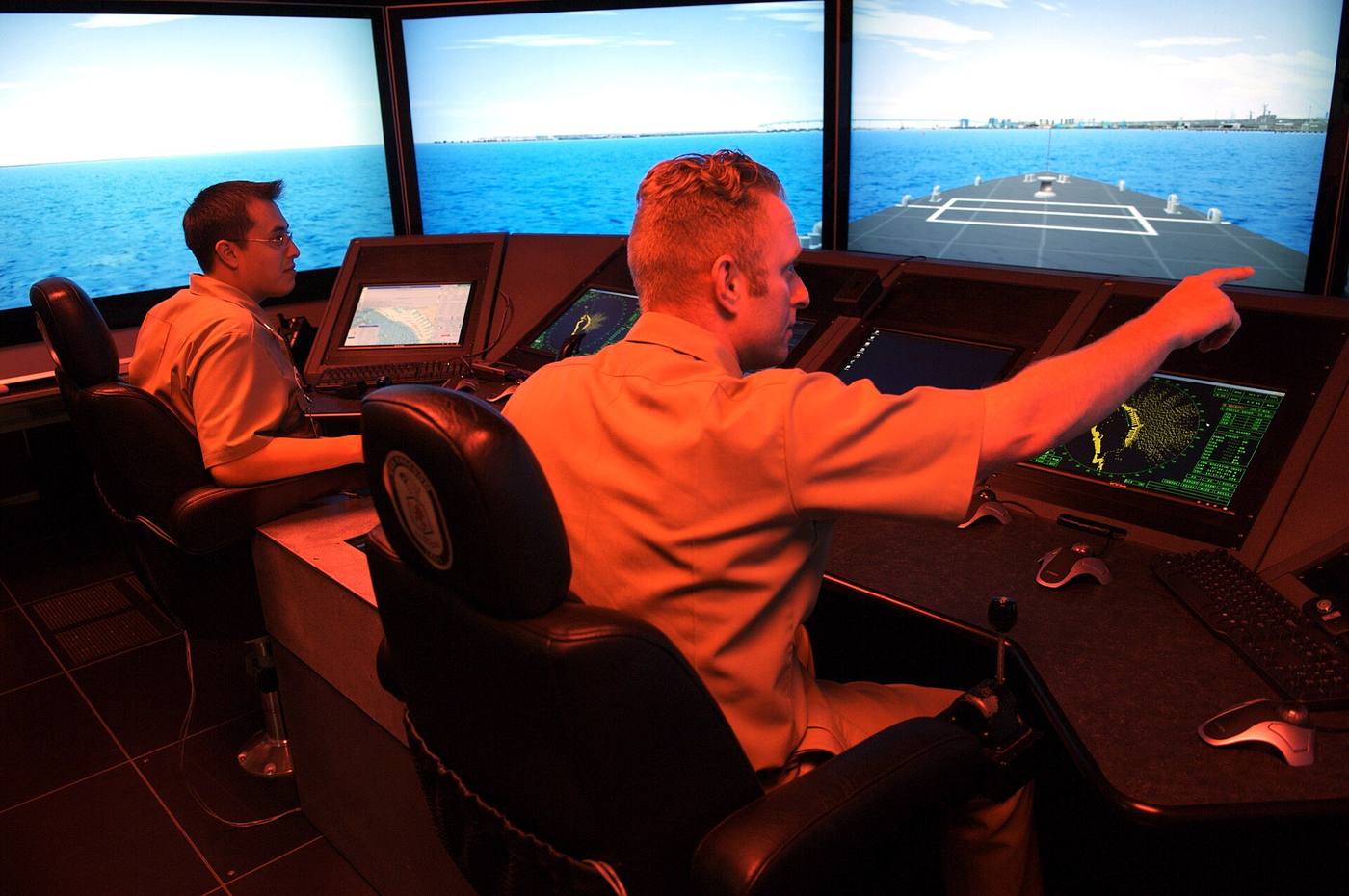
Here's the dirty secret of maritime digital twins: the people who most need the answers — masters, superintendents, fleet managers — are the people least able to extract them. A twin is a web of models, telemetry, IoT streams and simulation endpoints. Interrogating it means knowing which tool answers which question, how to call it, and how to read the result. The twin is intelligent; the interface is a wall. Maritime-GPT analysis
The 2025 AAAI demonstration "Agentic AI for Digital Twin" makes the case that language is the missing layer — and shows it working: an agentic LLM that takes a natural-language question, figures out which of the twin's tools and data streams answer it, calls them, and returns an answer in the asker's own terms. Research demonstration
Key findings
- An agentic LLM successfully serves as a universal interface to a shipping digital twin — decomposing queries, selecting tools, translating results — demonstrated at AAAI. Research demonstration
- The design is deliberately persona-aware: the same twin answers a technician and a fleet owner differently through the language layer. Research demonstration
- The twin underneath is itself getting good — Transformer manoeuvring twins now beat LSTM on real bulk-carrier data. The pieces mature at once. Research demonstration
- The LLM's role is orchestration and translation, not computation — the twin's models do the physics; the LLM does the access. Established
- The prize is scalability: one language interface replacing a different bespoke UI per persona per ship system. Maritime-GPT analysis
Why language is the right interface for a twin
A ship digital twin isn't one model — it's a federation: a manoeuvring model, a machinery model, a fuel model, a voyage model, live telemetry, maybe a port-call model. No human holds the whole map of which endpoint answers what. Traditional answers — dashboards — hardwire the questions in advance; anything unplanned needs a developer or a data scientist. Maritime-GPT analysis
The agentic result reframes it: the LLM holds the map instead. Asked "why is genset three trending hot," it doesn't answer from memory — it decomposes (which twin subsystem handles machinery? which tool returns thermal trends? which returns load balance?), calls those tools, reads structured results and synthesises. The demonstration is a workflow, not a chatbot — and the scalability claim is real: adding a new twin capability means registering a tool, not rebuilding a UI. Research demonstration
Maritime-GPT synthesis of the AAAI agentic-twin architecture. Maritime-GPT analysis
The twin underneath matters as much as the LLM on top
An LLM front-end is only as good as the twin it queries — and the twin side has quietly got strong. The Ocean Engineering Kamsarmax study trained a Transformer on real Brazil–China passage data and produced a 3-DOF manoeuvring twin that beat LSTM on surge and sway prediction while staying real-time-capable — exactly the kind of component the agent interrogates. Research demonstration The LLM isn't making the physics smarter; it's making good physics reachable. That distinction is the honest framing. Maritime-GPT analysis
It also keeps risk in its place: the twin's models are deterministic or bounded-ML; the LLM touches their outputs, never replaces them. Done right, this is LLM-as-librarian, not LLM-as-engineer — the same separation of concerns that made the collision-avoidance architectures credible. Maritime-GPT analysis
What we know / don't / being tested
What we know
- An LLM can orchestrate a shipping twin's tools end-to-end — published demo.
- Persona routing works — one twin, many audiences, one interface.
- The underlying twin components (manoeuvring, machinery) are real-time-capable on real data.
What we don't know
- How the agent behaves when the twin's tools disagree or return degraded data.
- Whether the pattern holds across many heterogeneous ships, not one demonstrated system.
- Latency and cost at fleet scale — a demonstration isn't a P&L.
Being tested
- Tool-orchestrated twins for condition monitoring — the same pattern applied to machinery health.
- Transformer twins for manoeuvring, sync and prediction on real passages.
- Persona-differentiated interfaces — technician vs master vs fleet ops.
Maritime-GPT analysis
The twin was the hard part; the LLM is the delivery mechanism. Fleets that already have twins get an interface for free; fleets without twins get no benefit from an LLM pointing at nothing. The investment order is: instrument and model the ship first, then let language unlock it — not the reverse. Operators evaluating "AI + digital twin" pitches should ask where the twin came from before admiring the chatbot in front of it. Maritime-GPT analysis
Open research problems
- Tool-grounding at scale — keeping an agent accurate across dozens of twin endpoints without drift.
- Twin fidelity under sparse data — divergence between model and vessel when telemetry is thin.
- Cross-ship generalisation — an interface agent that transfers across hulls, plants and fit-outs.
- Write-back authority — today the LLM reads the twin; letting it act through it is the unopened door.
Evidence scorecard
| Dimension | Rating | Basis |
|---|---|---|
| Evidence strength | Moderate | Peer-reviewed demo plus strong twin-component evidence. |
| Research maturity | Demo → early integration | Published working system; not yet fleet-deployed. |
| Maritime deployment | Limited | Twins deployed in industry; LLM-fronted twins are a demonstration. |
| Confidence in conclusions | High | Capability claims from named papers; analysis separated. |
Related tools & reading
- AI digital twins for merchant ships
- Agentic AI for autonomous ships
- Agentic engineering diagnostics
- Maritime GPT technology
Sources
- Agentic AI for Digital Twin — Timms, Langbridge et al. (IBM Research)Peer-reviewed demo (AAAI 2025)
The core result: an agentic LLM selects tools and data streams against a shipping digital twin, letting language serve as a universal interface across personas — technician to fleet manager. - A Transformer-based task execution digital twin of 3-DOF manoeuvring of a bulk carrier — Shehata, Zhang, Tsoulakos & Kujala — Ocean Engineering 341, art. 122797 (2025)Peer-reviewed — DOI 10.1016/j.oceaneng.2025.122797
The twin underneath: a Transformer trained on real Kamsarmax Brazil–China passage data beats LSTM on surge/sway prediction — the kind of model the LLM front-end interrogates. - Agentic AI for autonomous condition monitoring and predictive maintenance of marine vessels — Ocean Engineering 364, art. 127078 (2026)Peer-reviewed
The LLM-as-interrogator pattern applied to machinery state — the agent queries twin-like structured state rather than computing over it.
System behaviours from the cited publications; accessed 5 October 2026. Editorial analysis only.