
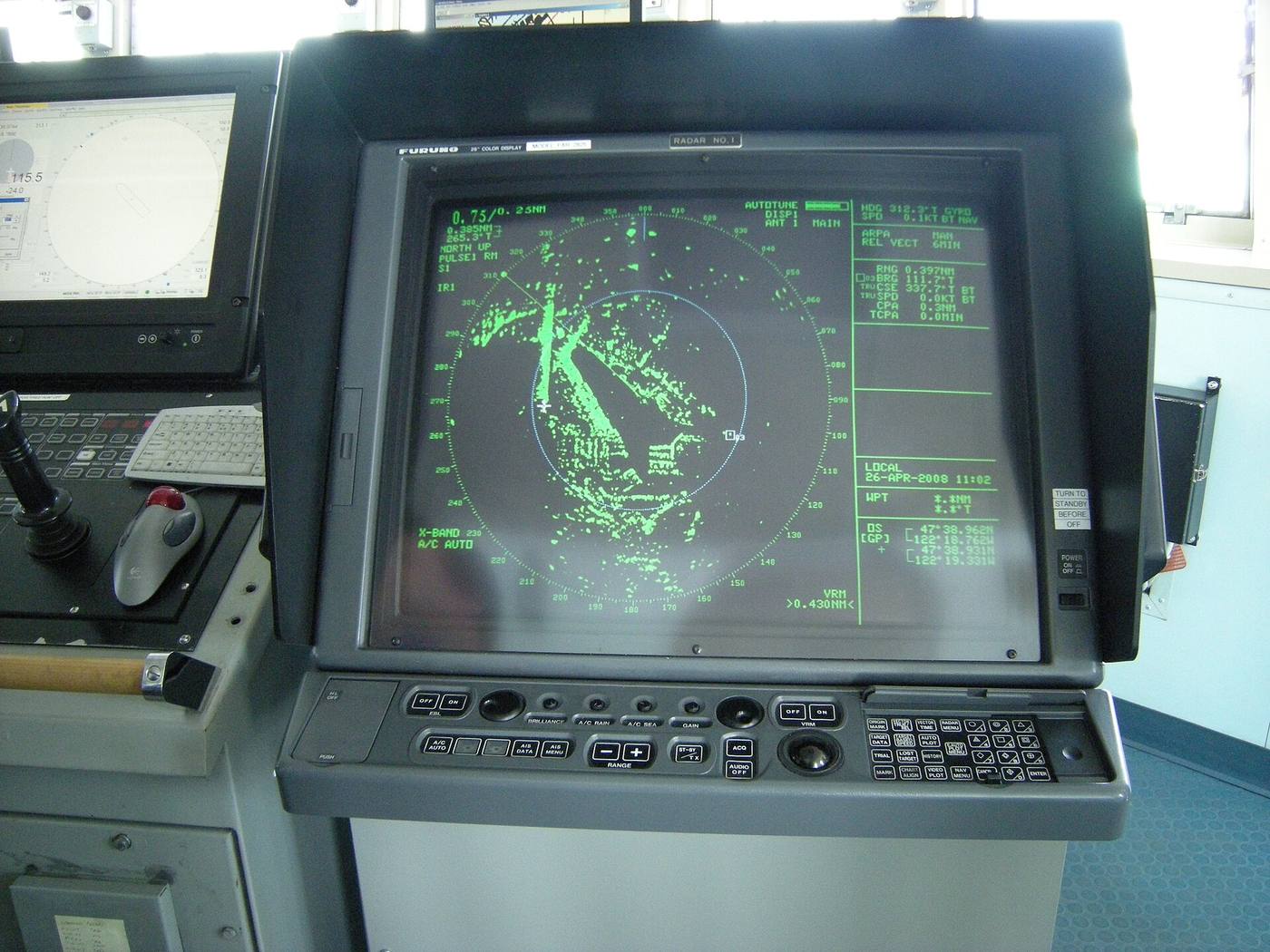
A digital twin is a promise: that the virtual vessel faithfully mirrors the physical one, so predictions made on the twin hold true on the ship. The promise depends entirely on synchronization — the sensor feeds, data pipelines, and model updates that keep the twin's state aligned with the ship's actual condition. The moment the sync drifts — a sensor degrades, a feed lags, the ship's condition changes — the twin becomes a fiction that still looks like a model.
Ship-to-twin synchronization is the digital twin's hardest engineering problem and its least visible failure mode — the twin doesn't tell you it's stale; it just keeps predicting confidently on an outdated picture of the ship.
Key findings
- The twin's value is bounded by its sync fidelity — a stale twin predicts confidently on an outdated ship model. Established
- Sync is multi-layered — sensor health, data latency, model-parameter updates, and drift detection. Established
- Maritime connectivity constrains sync — satellite bandwidth and dropouts limit how 'live' a shore twin can be. Established
- Drift detection is the safety feature — the twin must flag when it's lost sync, not just quietly degrade. Research demonstration
- Recent work uses RL/MPC for autonomous-vessel twin synchronization — the twin and ship co-adjust. Research demonstration
What 'sync' actually means
Twin sync isn't a single feed — it's layered. The sensors must be healthy (a drifting sensor poisons the twin), the data must flow (latency and dropouts age the twin's picture), and the model must update (the ship's hull fouls, the engine wears, the twin's parameters must track). Each layer can fail independently, and the failure is quiet — the twin keeps producing outputs that look like predictions but are computed on a ship that no longer exists. The sync isn't a feature of the twin; it IS the twin's validity. Established
The maritime constraint
Industrial twins assume connectivity; maritime twins can't. A ship on satellite bandwidth can't stream its full sensor telemetry to a shore twin — the sync has to be selective (the channels that matter), resilient (handle dropouts), or moved aboard (the edge twin we covered under onboard AI). The connectivity constraint isn't a bandwidth detail; it determines the twin's architecture — a shore twin that syncs on a delay is a different product than an onboard twin that's always current. Established
Drift is the dangerous failure
The worst twin failure isn't a crash — it's drift, the slow divergence between model and ship that produces confident wrong answers. The twin that thinks the hull is clean when it's fouled under-predicts fuel burn; the twin that thinks the bearing is healthy when it's wearing misses the failure. The honest twin has a sync-health flag — a measure of how confident it is that it still matches the ship — and degrades its predictions' confidence when the sync is stale. A twin that can't tell you it's stale is a liability, not a model. Research demonstration
Co-adaptation
The frontier approach is bidirectional sync — not just the ship updating the twin, but the twin informing the ship's control, in the RL/MPC synchronization work on autonomous vessels. The twin predicts, the ship acts, the sensors confirm, and the twin updates — a closed loop where the model and the vessel co-adapt. That's the full vision of the autonomous-vessel twin: not a dashboard copy, but a live model in the control loop. Research demonstration
What we know
- Twin value is bounded by sync fidelity — a stale twin predicts confidently on fiction.
- Sync is layered: sensor health, data latency, model-parameter updates, drift detection.
- Maritime connectivity forces the sync architecture (selective, resilient, or onboard).
What we don't
- Practical sync-fidelity metrics for operational twins.
- How twin staleness propagates into decision errors.
- Certification/assurance standards for twin sync under MASS.
Being tested
- RL/MPC ship-twin co-adaptation on autonomous vessels.
- Sync-health flags and confidence degradation.
- Bandwidth-efficient selective sync for satellite links.
Maritime-GPT analysis
Synchronization is the digital twin's integrity test — the twin that can't flag its own staleness is a prediction machine running on fiction. The honest architecture is layered sync plus a drift flag: sensor health, latency handling, parameter updates, and an explicit measure of how true the twin still is. In maritime the connectivity constraint makes this the design problem, not a detail — a twin that's only true when the satellite link holds is a twin that's only sometimes true. Maritime-GPT analysis
This is a research feature, not operational guidance. Simulation results are reported as simulation; demonstrations are not deployments; company claims are attributed as such. Verify safety-critical decisions against official nautical publications and flag-state requirements.