
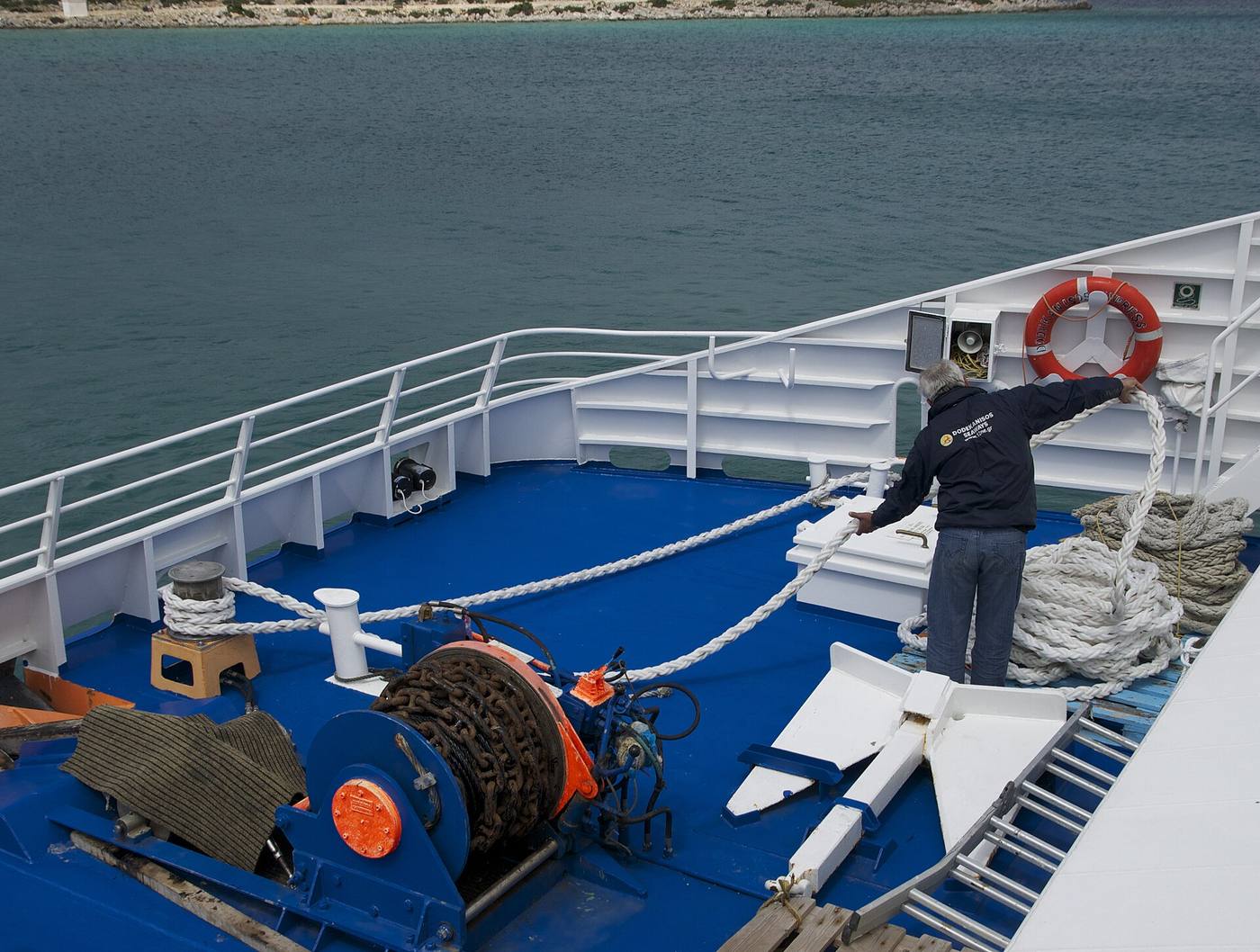
'Will AI replace seafarers' asks the wrong question — a seafarer isn't a task, it's a bundle of tasks: watchkeeping, paperwork, diagnostics, judgement calls, maintenance, improvisation in the absence of parts. The bundle doesn't automate; it unbundles. The honest analysis is function-by-function: which tasks are routine enough, observable enough and rule-bound enough to automate — and which aren't.
The pattern, when you read it honestly, is the same one that played out in every other industry: routine-information tasks automate first; judgement-and-liability tasks resist longest.
Key findings
- Routine, observable, rule-bound tasks automate first — reporting, log-keeping, monitoring. Established
- Judgement-under-uncertainty, improvisation, and accountability resist — the tasks that define the senior roles. Established
- The transition is a task-by-task deskilling followed by a role redesign — not a wholesale replacement. Maritime-GPT analysis
- Regulation fixes the floor: COLREGS, STCW and the MASS Code's human-in-command requirement cap how much automates legally. Established
- The workforce risk isn't replacement — it's a shortage of the senior skills the automated junior roles used to train. Maritime-GPT analysis
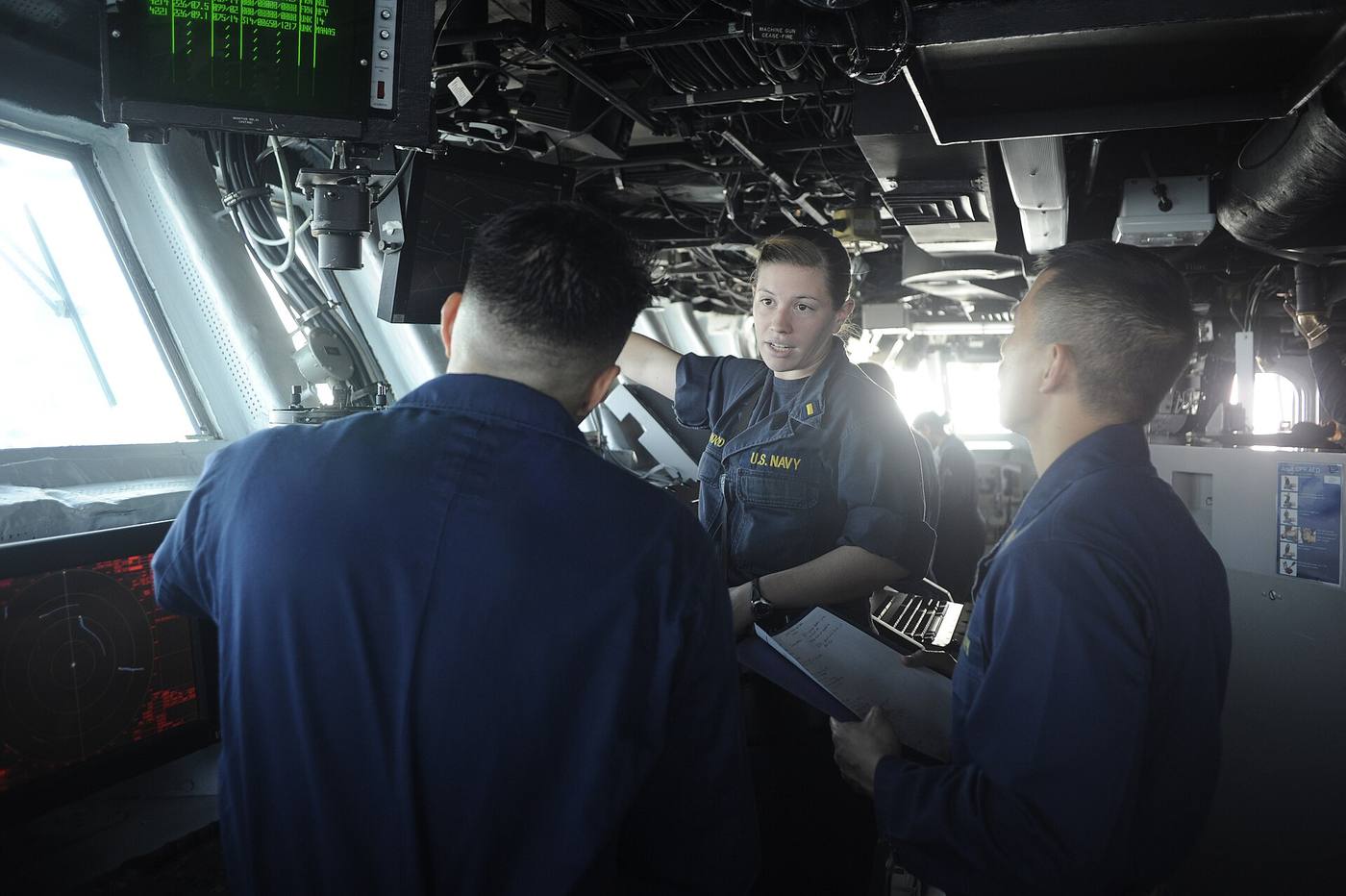
Automate first
- <strong>Information assembly.</strong> Log consolidation, reporting, position updates — the routine data flow a system demonstrably handles. Established
- <strong>Monitoring and alerting.</strong> Continuous watch over instruments and sensors — the always-on role the machine does better. Research demonstration
- <strong>Diagnostics assistance.</strong> Retrieval of manuals, fault history, procedures — the copilot role we covered for the engineer. Research demonstration
- <strong>Administrative watch.</strong> Routine record-keeping and compliance paperwork — the paperwork burden automation demonstrably relieves. Established
Resist longest
- <strong>Situational judgement.</strong> The ambiguous encounter, the novel fault, the weather that's not in the model — the call the human makes because the model's case isn't in its training. Established
- <strong>Improvised maintenance.</strong> Fix it with what's aboard — the task with no parts diagram that a human does anyway. Established
- <strong>Physical work.</strong> Mooring, manual handling, confined-space inspection — robotics, not software, is the bottleneck. Established
- <strong>Accountable authority.</strong> The master's statutory command — the role that exists because someone must answer to the law. Established
The deskilling trap
The long-term risk isn't that the jobs vanish — it's that the junior tasks that automated were also the ones that trained the senior judgement. A watchkeeper who never has to do the routine work never builds the pattern recognition the emergency needs. The workforce problem the industry is actually facing is a training-pipeline problem dressed as an automation question. Maritime-GPT analysis
What the regulation locks in
The MASS Code's human-in-command structure, COLREGS' lookout requirement and STCW's certification regime are not technical obstacles to be engineered around — they are the floor on how much can automate legally. The seafarer's role is protected not by the technology's limits but by the accountability the law assigns to a person. That floor is the reason 'which jobs automate' always ends at 'which jobs can't'. Established
What we know
- Routine-information tasks automate first; judgement and accountability resist.
- Regulation fixes the floor — the human role is statutory, not merely technical.
- The deskilling risk is the transition's real workforce problem.
What we don't
- Which specific tasks survive the transition in 10 years.
- Whether the trained-judgement pipeline can be replaced by simulation.
- How much the human role shrinks vs changes under MASS-scale autonomy.
Being tested
- Task-level analysis of watchkeeping and engineering roles.
- Simulator-based judgement training for automated roles.
- New certification tracks for remote/autonomous supervision.
Maritime-GPT analysis
The automation question is really a task question. The jobs that go aren't the jobs — they're the routine slices of the jobs, and what remains is the judgement the routine was training. The workforce challenge the industry actually faces is keeping the path from junior watchkeeper to senior master alive when the junior tasks are automated. Solve the pipeline, not the headcount. Maritime-GPT analysis
This is a research feature, not operational guidance. Simulation results are reported as simulation; demonstrations are not deployments; company claims are attributed as such. Verify safety-critical decisions against official nautical publications and flag-state requirements.
Sources & evidence
The certification structure that defines the human role.
The instrument that keeps the human in command.
The function-by-function analysis this article summarises.