
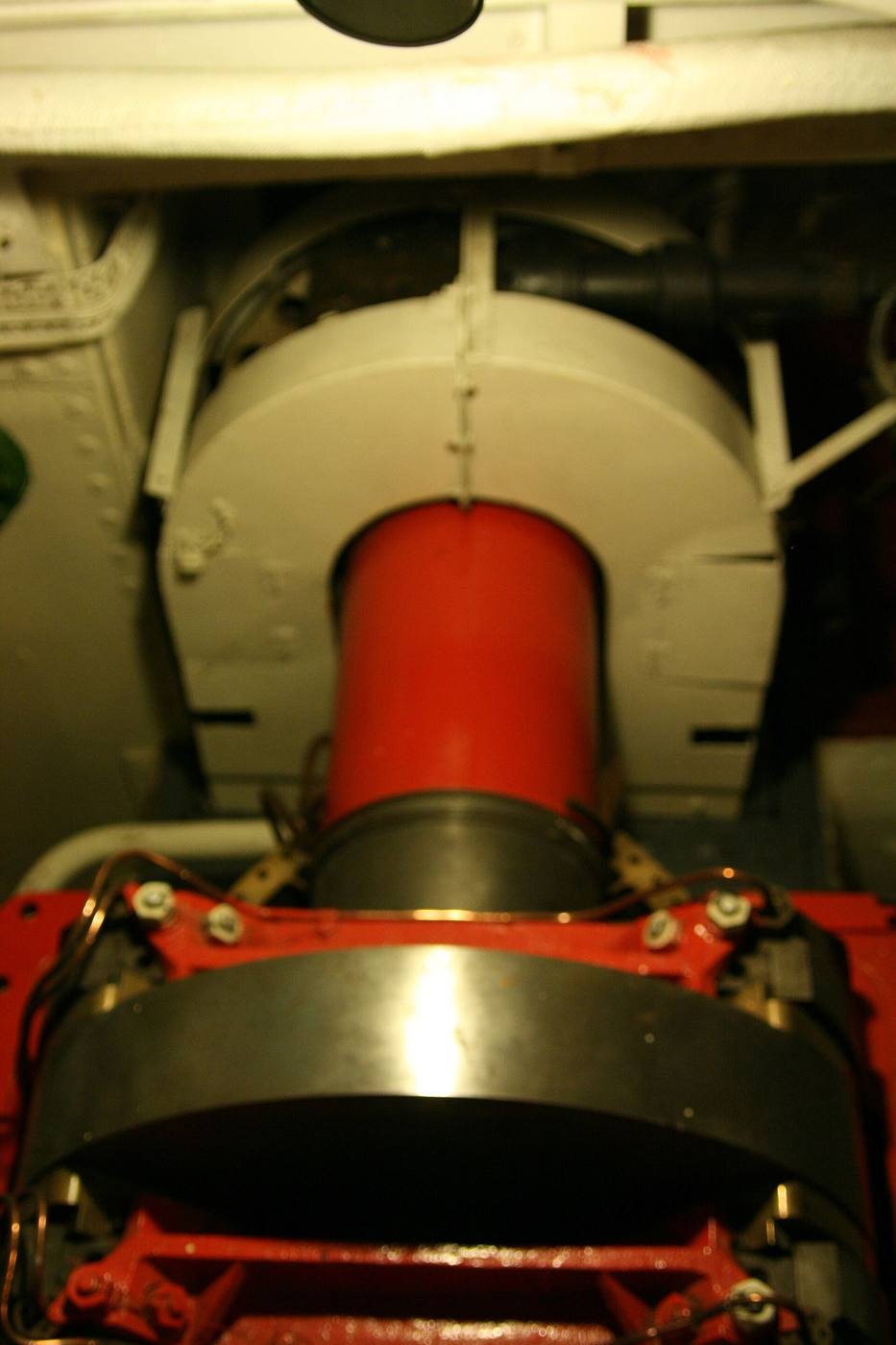
The ship's propulsion system — engine, shafting, propeller — is where digital twins stop being a promise and start being a product. It is the best-instrumented system aboard, the most mechanically bounded, and the one whose degradation directly costs fuel and uptime. If twin technology works anywhere, it works here first.
That makes it both the strongest case for the technology and the clearest lens on its limits. This article looks at what a working propulsion twin demonstrates — and what it can't yet extend to.
Key findings
- Propulsion is the first system where maritime twins demonstrably pay — bounded dynamics, instrumented, and with a clear fuel/maintenance ROI. Established
- Component twins succeed because the physics is closed: inputs (fuel, sea state, load), model (thermodynamics, hydrodynamics), outputs (power, efficiency, wear) are all measurable. Research demonstration
- The propulsion twin's real job is degradation tracking — watching efficiency and vibration for the drift that precedes failure. Established
- Scaling from the propulsion twin to the whole-ship twin is the unsolved step — the components compose, but the interactions don't trivially. Maritime-GPT analysis
- The twin that drifts from the ship is worse than no twin — a degraded model gives confident wrong predictions. Maritime-GPT analysis

Why propulsion is the beachhead
A twin needs three things: the asset must be instrumented, its physics must be tractable, and its failure must matter economically. Propulsion has all three — engine rooms carry dense sensor suites by default, the thermodynamic and shaft-dynamics models are mature, and fuel burn and downtime are the largest controllable costs aboard. It's the obvious place to build the first twin, which is why the literature and the deployments both concentrate there. Established
What the twin actually computes
- <strong>Performance baseline.</strong> What the propulsion train should deliver at this load, this draft, this fouling state — the reference the actual measurements are compared against. Research demonstration
- <strong>Degradation tracking.</strong> The drift between twin-predicted and measured efficiency — the leading indicator of fouling, wear or injector issues. Research demonstration
- <strong>Condition-based maintenance trigger.</strong> The signal that says 'service at this port', not 'service on schedule' — the predictive-maintenance case that pays for the instrumentation. Established
- <strong>What-if evaluation.</strong> 'If I burn this fuel profile on this route, what's the efficiency cost' — the operational twin answering the planner's question. Research demonstration
The sync problem, propulsion edition
Even a bounded propulsion twin fights divergence: fouling changes hull resistance which changes the load on the engine; wear changes the engine's efficiency; a blade repair changes the propeller's curve. A twin calibrated at delivery is wrong within months unless it's designed to recalibrate — and the propulsion twin is precisely the testbed for the self-calibrating twin the whole field needs. The solution emerging is the same as the general one: the twin as a living model that tracks its own drift against telemetry. Research demonstration
The limit it reveals
The propulsion twin's success is also its limit: it works because propulsion is bounded and instrumented. Scale it to the whole ship and the twin must include the hull (unbounded sea state), the electrical plant (partially instrumented), the cargo effects (varies by voyage), and the interaction between them — the composition problem that is the open research question. The propulsion twin proves the technology; it doesn't yet prove the whole-ship claim. Maritime-GPT analysis
What we know
- Propulsion twins work because the system is bounded, instrumented and economically important.
- The real payoff is degradation tracking and condition-based maintenance, not the model itself.
- The twin's value collapses without the sync that keeps it tracking the actual engine.
What we don't
- Published validation of propulsion twins across diverse fleets over multi-year horizons.
- How propulsion-twin outputs compose with hull/hotel/other twins into a whole-ship model.
- Whether twin-predicted degradation transfers across engine types and operators.
Being tested
- Self-calibrating twins on long deployments.
- Propulsion-twin integration with predictive-maintenance alerting.
- Whole-ship composition of component twins.
Maritime-GPT analysis
The propulsion twin is the honest success story — bounded enough to be true, instrumented enough to be live, valuable enough to be paid for. It's also the cautionary tale for the whole-ship claim: if the best-bounded system needs continuous recalibration to stay accurate, the ship-scale twin needs it more. Buy the component twin for the engine; be sceptical of the whole-ship twin until someone demonstrates it staying synced through a refit. Maritime-GPT analysis
This is a research feature, not operational guidance. Simulation results are reported as simulation; demonstrations are not deployments; company claims are attributed as such. Verify safety-critical decisions against official nautical publications and flag-state requirements.
Sources & evidence
The manoeuvring-side component twin — the propulsion twin's sibling.
The monitoring layer that sits on propulsion instrumentation.