

Not every threat arrives as an attack — some arrive as a pattern: a vessel circling where no vessel should, a track that deviates from its own history, a ship stopped in a lane where ships don't stop. Abnormal-behaviour detection is the AI that watches the traffic for the pattern that shouldn't be there — the smuggler's rendezvous, the distressed vessel's drift, the shadowing that precedes something worse.
This is the surveillance-and-safety layer that sits over the AIS-and-sensor data — the model that learns what normal looks like so it can flag what isn't.
Key findings
- Abnormal-behaviour detection learns the vessel-type-appropriate pattern and flags deviations — the track that shouldn't exist. Established
- The applications split into safety (distress, casualty, erratic navigation) and security (smuggling, sanctions evasion, shadowing). Established
- The model is only as good as the normal it learned — seasonal, regional, and type-specific variation must be captured. Established
- The false-alarm problem is the practical constraint — a flag that's usually wrong trains operators to ignore it. Established
- The signal's meaning needs context — 'abnormal' isn't 'malicious'; the anomaly is a prompt for investigation, not a verdict. Maritime-GPT analysis
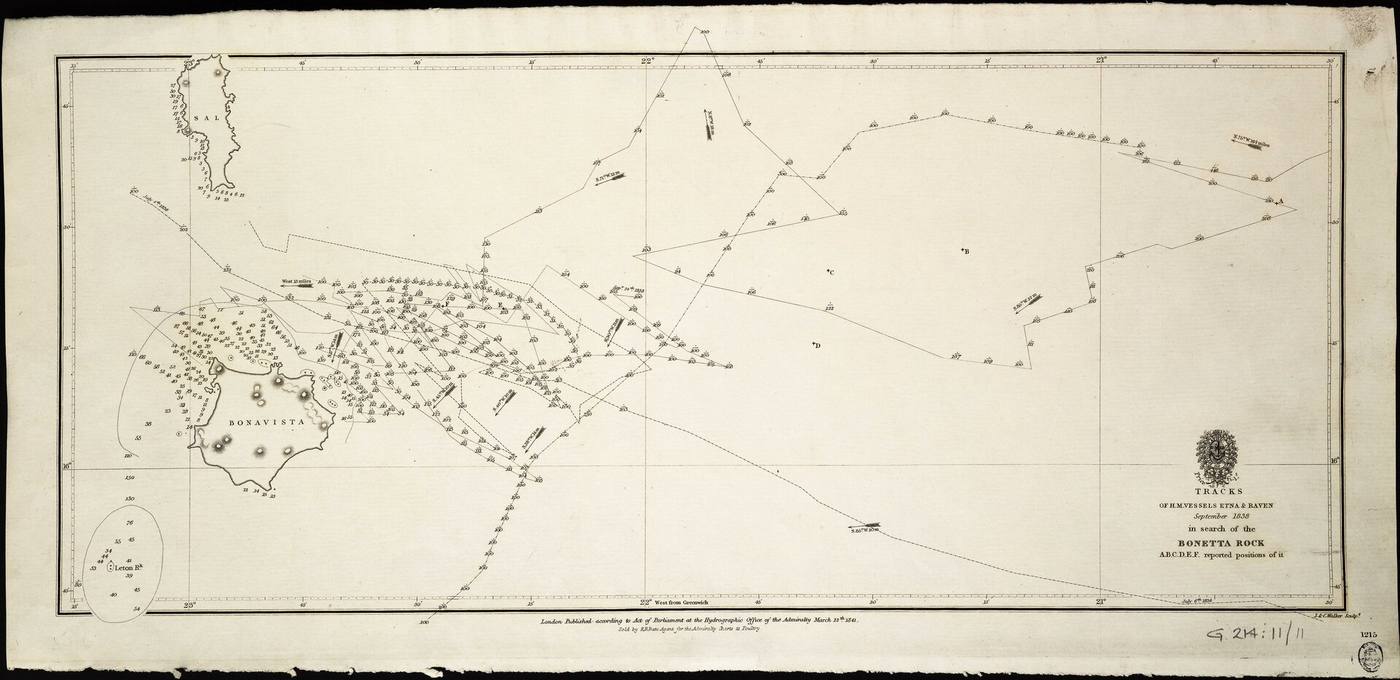
What 'abnormal' looks like
The abnormal-behaviour patterns are the ones a traffic operator learns to watch: the vessel circling a fixed point offshore (a rendezvous or a drift), the AIS track that jumps implausibly (spoofing or malfunction), the ship that deviates from the route its voyage should take, the loiter in a shipping lane. Each is a deviation from the learned normal — and the AI's job is to surface it before a human operator scrolling a screen would notice. Established
Safety versus security
- <strong>Safety anomalies.</strong> The drift of a vessel not under command, the erratic track of a casualty, the pattern that says 'this ship needs help'. Established
- <strong>Security anomalies.</strong> The offshore rendezvous, the AIS-off vessel reappearing elsewhere, the route that matches a smuggling pattern. Established
- <strong>Both are prompts.</strong> The anomaly says 'look here' — the investigation says what it means. Maritime-GPT analysis
The normal is specific
Abnormality is relative to context — a fishing vessel's meander is normal for a fisher and abnormal for a tanker; a summer route is normal in July and unusual in January. The model must learn the type- and season-specific normal, or its flags are meaningless. The training corpus is the AIS history the field has been building — the model learns the traffic's texture and flags the thread that doesn't belong. Established
The false-alarm tax
The operational constraint is the false-alarm rate — a system that flags too often trains the operators to ignore it, which makes the real anomaly invisible. The honest deployment keeps the precision high by ranking anomalies by severity and explaining why each was flagged ('deviated from route', 'loitered in lane', 'AIS gap then reappearance'), so the operator's attention goes to the ones that matter. An anomaly detector that cries wolf is worse than none — it's a trained blindness. Maritime-GPT analysis
What we know
- Abnormal-behaviour detection flags deviations from learned vessel-type patterns.
- Applications split into safety anomalies and security anomalies.
- The false-alarm rate is the operational constraint that makes or breaks it.
What we don't
- Whether anomaly flags reduce response times in live operations.
- How the detector handles novel-but-legitimate behaviour.
- The right balance between sensitivity and operator trust.
Being tested
- Type/season-aware anomaly models.
- Explainable anomaly flagging for operators.
- Integration with surveillance and SAR workflows.
Maritime-GPT analysis
Abnormal-behaviour detection is the surveillance stack's pattern layer — the AI that learns what the traffic should look like so it can point at what doesn't. The value is real and the trap is precision: an anomaly flag that's usually wrong is worse than no flag at all. The honest detector explains its reasoning and earns the operator's attention — because the anomaly that gets ignored is the one that mattered. Maritime-GPT analysis
This is a research feature, not operational guidance. Simulation results are reported as simulation; demonstrations are not deployments; company claims are attributed as such. Verify safety-critical decisions against official nautical publications and flag-state requirements.
Sources & evidence
The normal-pattern model the anomaly detection measures against.