

No single sensor watches the whole ocean. AIS hears the cooperative ship; SAR sees through the cloud and dark; optical resolves the hull in daylight. Alone, each has a blind spot; fused, they form the surveillance stack that maritime-security and fisheries-enforcement work actually runs on — the system that finds the vessel that turned its transponder off.
This is the multimodal fusion article at satellite scale — and the one where the evidence is strongest, because the surveillance problem has been a real operational need for years.
Key findings
- AIS+SAR+optical fusion is operationally mature — it's the stack fisheries enforcement and maritime-security agencies run. Established
- SAR is the always-on sensor — sees through cloud, dark, weather; the workhorse for detecting ships that don't report. Established
- Optical resolves the detail (class, activity, identifier) once SAR has found the contact. Established
- AIS is the cooperative layer — the honest ship identifies itself; the dark target is found by the other two. Established
- The fusion's output is the anomaly flag — a contact that exists in SAR but not in AIS is the target of interest. Research demonstration
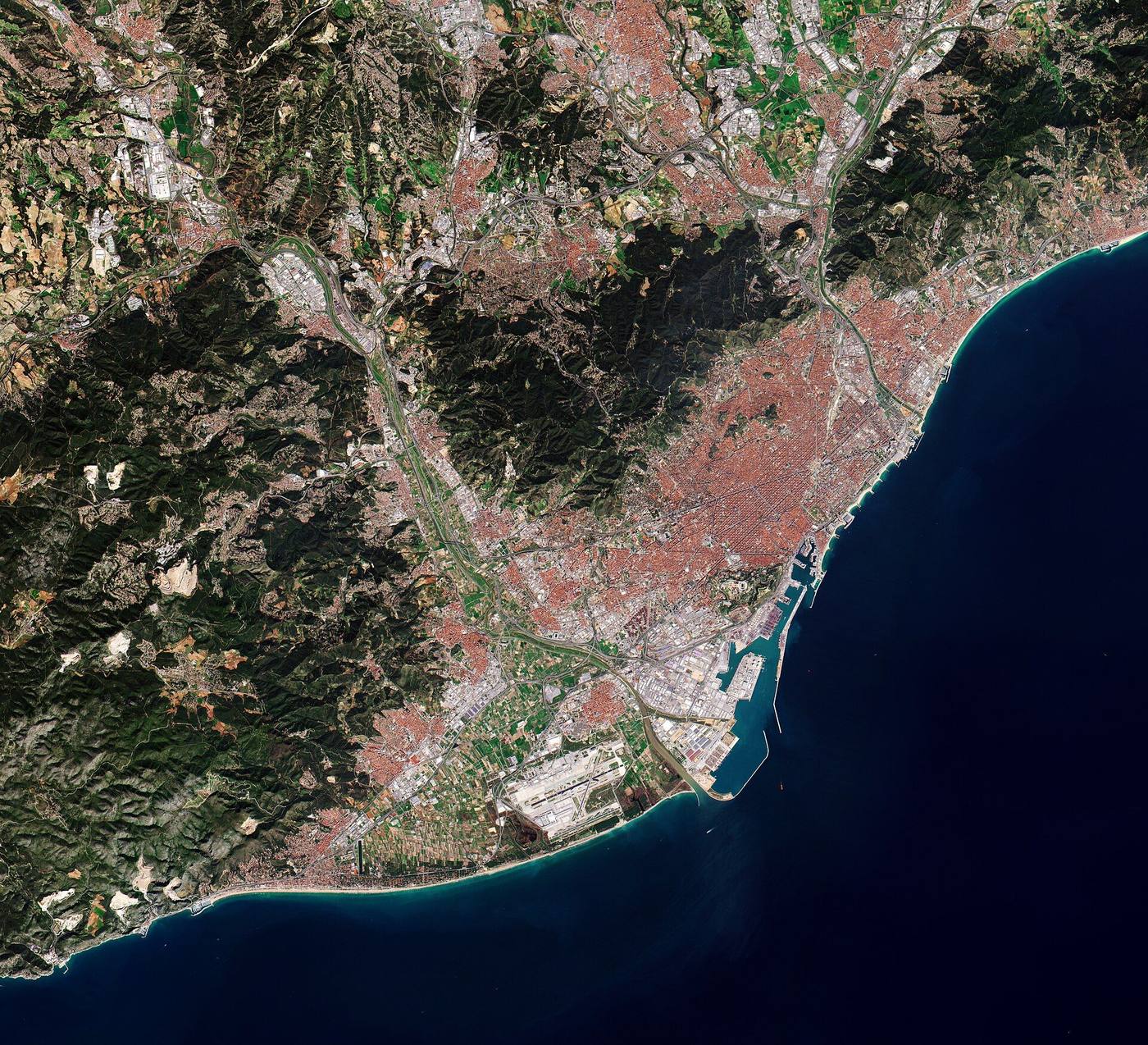
The three-layer stack
- <strong>AIS (the reported).</strong> Cooperative ships broadcast identity, position, course — cheap, dense, but only the honest fleet. Established
- <strong>SAR (the detected).</strong> Synthetic-aperture radar finds the hull by its radar return — through cloud, dark, weather — the detection layer. Established
- <strong>Optical (the resolved).</strong> Once detected, the optical pass reads class, activity, and sometimes the name on the hull — the identification layer. Established
The fusion's purpose: find the dark fleet
The stack exists to catch the vessel that doesn't want to be seen — the fishing boat that's turned off its transponder, the transshipment happening offshore, the smuggler's track. AIS alone sees only the honest; SAR sees the hull regardless; optical confirms what it is. The fusion flags the mismatch — 'SAR contact with no AIS' — which is the anomaly the enforcement layer is for. Established
Where it matters
- <strong>Fisheries enforcement.</strong> Illegal fishing by dark vessels — the IUU case the stack was largely built for. Established
- <strong>Maritime security.</strong> Smuggling, sanction-evasion, dark-fleet tracking — the geopolitical use. Established
- <strong>Search and rescue.</strong> SAR-detected vessels as assets or casualties in a search. Research demonstration
- <strong>Collision/traffic context.</strong> The wide-area picture that supplements a ship's local sensors. Maritime-GPT analysis
The limits
The stack is powerful but not magic — revisit rate, cloud-independent SAR resolution, and the fusion's own association errors are the constraints. A contact that exists briefly between passes may be missed; a cluster of contacts may be mis-associated; and the answer arrives with satellite latency, not in real time. The surveillance stack is a wide-area situational layer, not a tactical one — it tells you what was there, not always what is there now. Maritime-GPT analysis
What we know
- The three-layer fusion is the operational standard for wide-area maritime surveillance.
- SAR finds the hull; optical resolves it; AIS names it — the roles are complementary.
- The product is the anomaly flag, not the complete picture.
What we don't
- Real-time fusion at sub-hourly latency at scale.
- How reliably the association handles dense-traffic or clustered contacts.
- The commercial vs sovereign versions' comparative capability.
Being tested
- Faster SAR revisit and processing latency.
- ML-based association of contacts across modalities.
- Integration with the ship's onboard fusion stack.
Maritime-GPT analysis
The satellite fusion stack is the most mature multimodal maritime AI there is — because the need (find the dark fleet) was real before the AI was fashionable. Its lesson for the rest of the field is the architecture: three sensors covering each other's blindness, fused into an anomaly output rather than a confident picture. The shipboard version is the same logic at shorter range — radar for the honest sensor, camera for the unreported, AIS for the cooperative. Maritime-GPT analysis
This is a research feature, not operational guidance. Simulation results are reported as simulation; demonstrations are not deployments; company claims are attributed as such. Verify safety-critical decisions against official nautical publications and flag-state requirements.
Sources & evidence
The specific review this article's subject is drawn from.
The most visible production use of the AIS+SAR fusion stack.