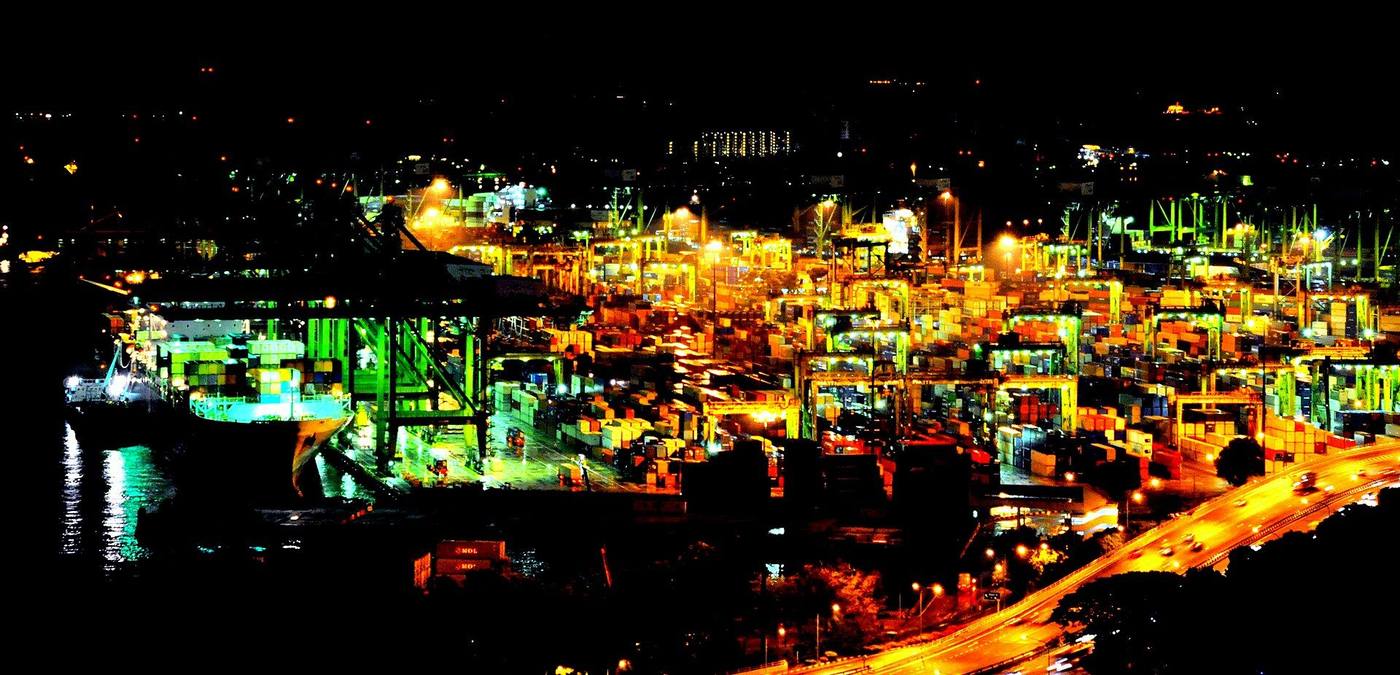
Of all maritime digital twins, the port's is the most mature — because a container terminal is the most tractable system in the industry. It's bounded (a fixed footprint), instrumented (cranes, gates, AGVs, sensors), repetitive (the same moves at scale), and throughput-sensitive (small gains compound into real money). If a twin works anywhere, it works here.
The port twin is where the concept has moved furthest from '3D model' to 'operational tool' — and where the AI layer is arriving first, because the simulation and the data are already there.
Key findings
- Ports are the most mature maritime twins — the system is bounded, instrumented, and economic returns are direct. Established
- The operational twin serves berth planning, yard optimization, gate scheduling, and equipment dispatch — planning, not just visualization. Research demonstration
- The twin's AI layer forecasts arrivals, congestion, and equipment demand from the operational stream. Research demonstration
- The twin is a what-if lab — test a crane split or a yard reshuffle in simulation before committing the real assets. Research demonstration
- The integration boundary is real — the twin must ingest the TOS, PCS, AIS, and equipment telemetry or it's a model of a port that isn't there. Established
Why the port twin leads
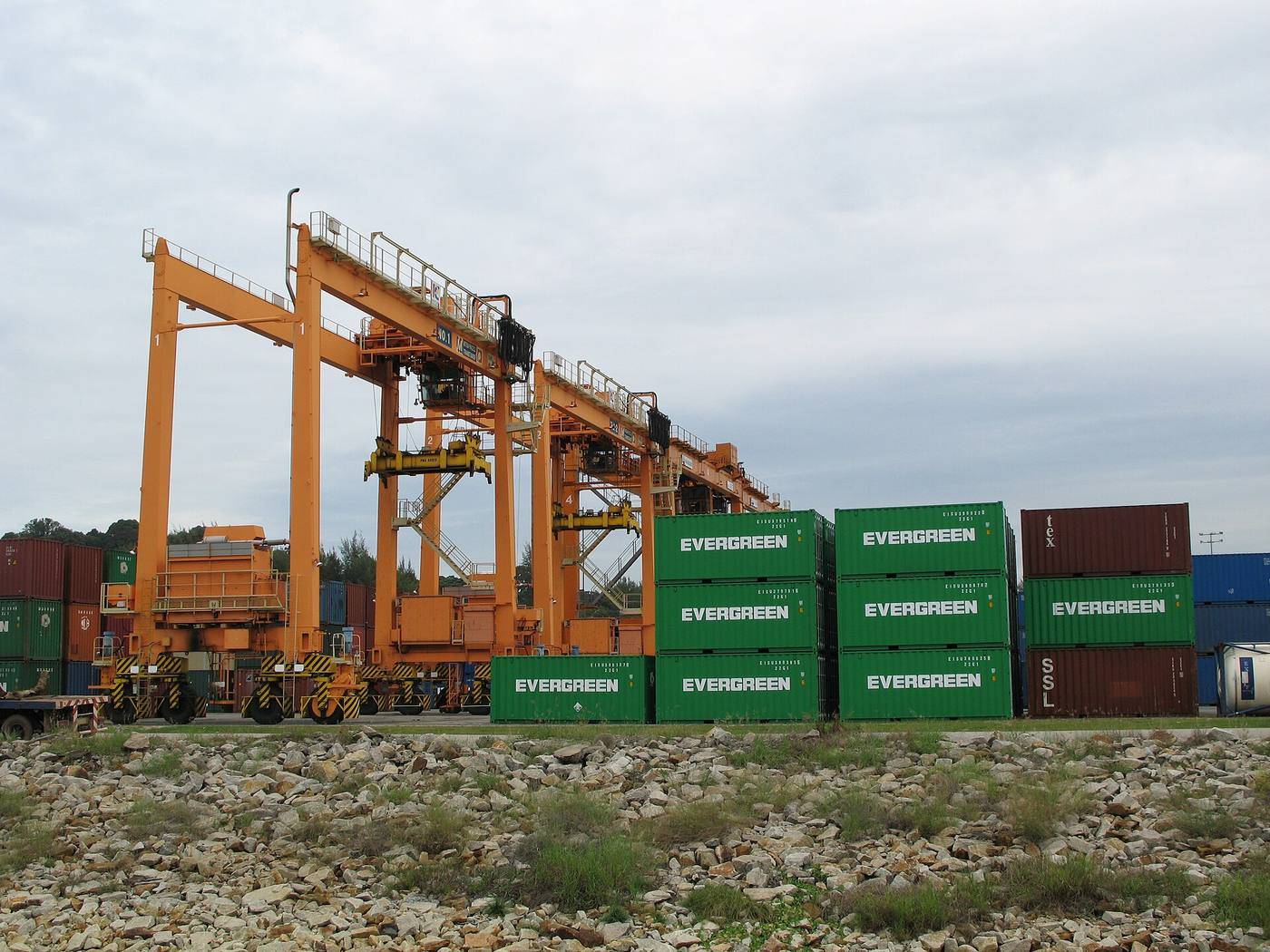
A ship is a moving system at the mercy of the sea; a terminal is a fixed system that owns its own physics. The cranes are where they're mounted, the yard is a grid, the gate lanes are lanes — the environment's state is instrumentable end-to-end and the dynamics are deterministic enough to simulate usefully. That's why port twins got to operational maturity first: the twin's biggest problem — knowing the state — is a solved problem here. Established
What the twin does
- <strong>Berth planning.</strong> Simulate which vessel goes where, when — against arrivals, crane availability, and stowage needs. Research demonstration
- <strong>Yard optimization.</strong> Model container placement and reshuffle cost to minimize the moves that cost crane time. Research demonstration
- <strong>Gate and landside.</strong> Forecast truck arrivals, smooth the gate peaks, size the drayage windows. Research demonstration
- <strong>Equipment dispatch.</strong> Simulate crane/AGV/straddle allocation under the day's call schedule. Research demonstration
- <strong>What-if.</strong> 'If the 14,000 TEU call arrives 6 hours late in the wind' — the twin rehearses the contingency. Research demonstration
Where the AI fits
The twin provides the physics; the AI provides the forecast — learned arrival-time distributions, equipment-failure probability, congestion prediction, demand patterns. The twin tells you what happens if; the AI tells you what's likely — and the combination is the planner's real instrument: a simulation grounded in the terminal's actual behaviour rather than its nominal one. The AAAI agentic-workflow work points at exactly this: the AI orchestrating queries over the twin for decision support. Research demonstration
The honest limits
The port twin's maturity doesn't exempt it from the twin problem — a terminal model is still a model, calibrated to the operating envelope it was validated in. A disruption outside that envelope (a crane collapse, a pandemic labour shock, a new vessel class) is where the twin's forecasts degrade — and where the human planner's experience outruns the simulation's. The twin optimizes the port as modeled; the operator runs the port as it is. Maritime-GPT analysis
What we know
- Port twins are operationally mature — berth, yard, gate, and equipment planning in simulation.
- The AI layer adds learned forecasts to the twin's physics.
- The twin is a what-if lab — plan changes rehearsed before commitment.
What we don't
- Cross-terminal twin standardization for port-network-level optimization.
- How twin-informed planning holds up under genuine disruption.
- Whether port twins can interoperate with ship twins at the interface.
Being tested
- AI-coupled port twins for predictive berth planning.
- Terminal-to-ship twin interfaces at the berth.
- Twin-driven resilience planning for disruption scenarios.
Maritime-GPT analysis
The port twin is the proof that the concept works — because the terminal is the one maritime system that can be fully instrumented and its physics fully modeled. Its lesson for the rest of the stack is the honesty constraint: the twin leads because the state is knowable, not because the visualization is pretty. Where the twin's model and the terminal's reality diverge — under the disruption the model never saw — the human planner is still the real instrument. Maritime-GPT analysis
This is a research feature, not operational guidance. Simulation results are reported as simulation; demonstrations are not deployments; company claims are attributed as such. Verify safety-critical decisions against official nautical publications and flag-state requirements.
Sources & evidence
The AI-orchestration-over-twins pattern this port case fits.