
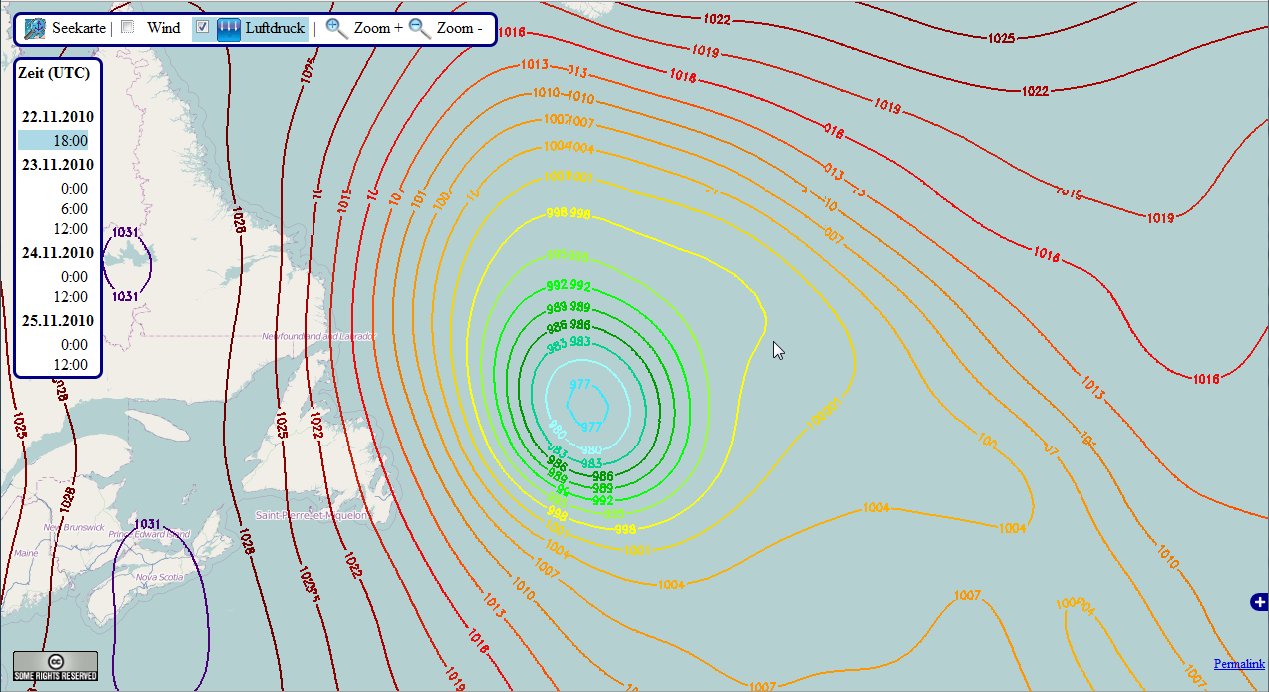
Weather routing has existed for decades — the shore-based router applies the ship's known performance curves to the forecast and recommends a course. The AI version is a different architecture: instead of applying a model of the ship, it learns one — from AIS tracks, noon reports, and sensor data — and routes against the learned behaviour.
The comparison isn't 'old vs new' — it's physics-model vs learned-model — and each has real advantages the other lacks. Understanding which does what is the difference between buying an improvement and buying a label.
Key findings
- Traditional routing uses a physics model — the ship's known speed-power-seakeeping curves applied to the forecast. Established
- ML routing learns the ship's actual behaviour — from sailed voyages, not sea-trial specs. Established
- The traditional model is interpretable but nominal; the ML model is calibrated but opaque. Established
- ML excels at capturing degradation and fouling — the real-world drag a spec sheet misses. Research demonstration
- Traditional excels at the novel case — the route or condition the training data never saw. Maritime-GPT analysis
The traditional architecture
Conventional weather routing applies a model of the ship — her speed-power curve, seakeeping limits, comfort criteria — to the forecast, and optimizes the course and speed against it. The model is physics-based and interpretable: the router can say 'this route because the wave height exceeds the limit there'. Its weakness is that the model is nominal — the ship as designed, not as she is after a year of fouling. Established
The ML alternative
ML routing learns the ship's behaviour from data — the actual consumption at actual speeds in actual seas — and optimizes against the learned model. The advantage is calibration: the model reflects the ship as she is, not as she was specified. The disadvantage is opacity — the learned model can't explain its reasoning the way a physics model can, and it can't extrapolate to conditions outside its training data. Established
Where each wins
- <strong>ML wins:</strong> the routine voyage — a ship whose real performance (fouling, wear, load) differs from spec, on routes the data has covered. Research demonstration
- <strong>Traditional wins:</strong> the novel case — an unusual route, an extreme condition, a new vessel — where the ML's training data is thin. Established
- <strong>ML wins:</strong> fuel-precision — the calibrated model catches consumption differences the nominal one misses. Research demonstration
- <strong>Traditional wins:</strong> explainability — 'the route avoids wave height X' is a defensible answer to a safety question. Established
The honest hybrid
The practical answer is both: the physics model for the structural constraints (seakeeping limits, structural limits, rule compliance) and the ML model for the performance prediction (the actual consumption and speed the ship will deliver). The physics keeps the route safe and explainable; the ML keeps it calibrated. A routing system that's all-ML is optimizing a model it can't explain; all-physics is optimizing a model that's out of date — the honest system is the hybrid. Maritime-GPT analysis
What we know
- Traditional routing is physics-model-based; ML routing is learned-model-based.
- ML captures real-world degradation; physics captures the nominal and the novel.
- The hybrid — physics constraints + learned performance — is the honest architecture.
What we don't
- Head-to-head fuel/safety outcomes of ML vs physics routing at fleet scale.
- Whether learned models generalize to climate-shifted weather patterns.
- The certification path for a learned ship-performance model.
Being tested
- Hybrid physics+ML route optimizers.
- Ensemble validation of learned performance models.
- Benchmarking routing outcomes on identical voyages.
Maritime-GPT analysis
The ML-vs-traditional routing question resolves to calibration vs interpretability — the learned model knows the ship better, the physics model explains the route better. The honest product doesn't choose: it uses physics for the safety constraints that must be defensible and ML for the performance layer that must be accurate. A routing decision you can't explain is dangerous; a model that doesn't reflect the ship is useless — the hybrid is the only one that's neither. Maritime-GPT analysis
This is a research feature, not operational guidance. Simulation results are reported as simulation; demonstrations are not deployments; company claims are attributed as such. Verify safety-critical decisions against official nautical publications and flag-state requirements.
Sources & evidence
Recent research combining weather optimization approaches.
The calibrated-model pattern the ML approach extends.