
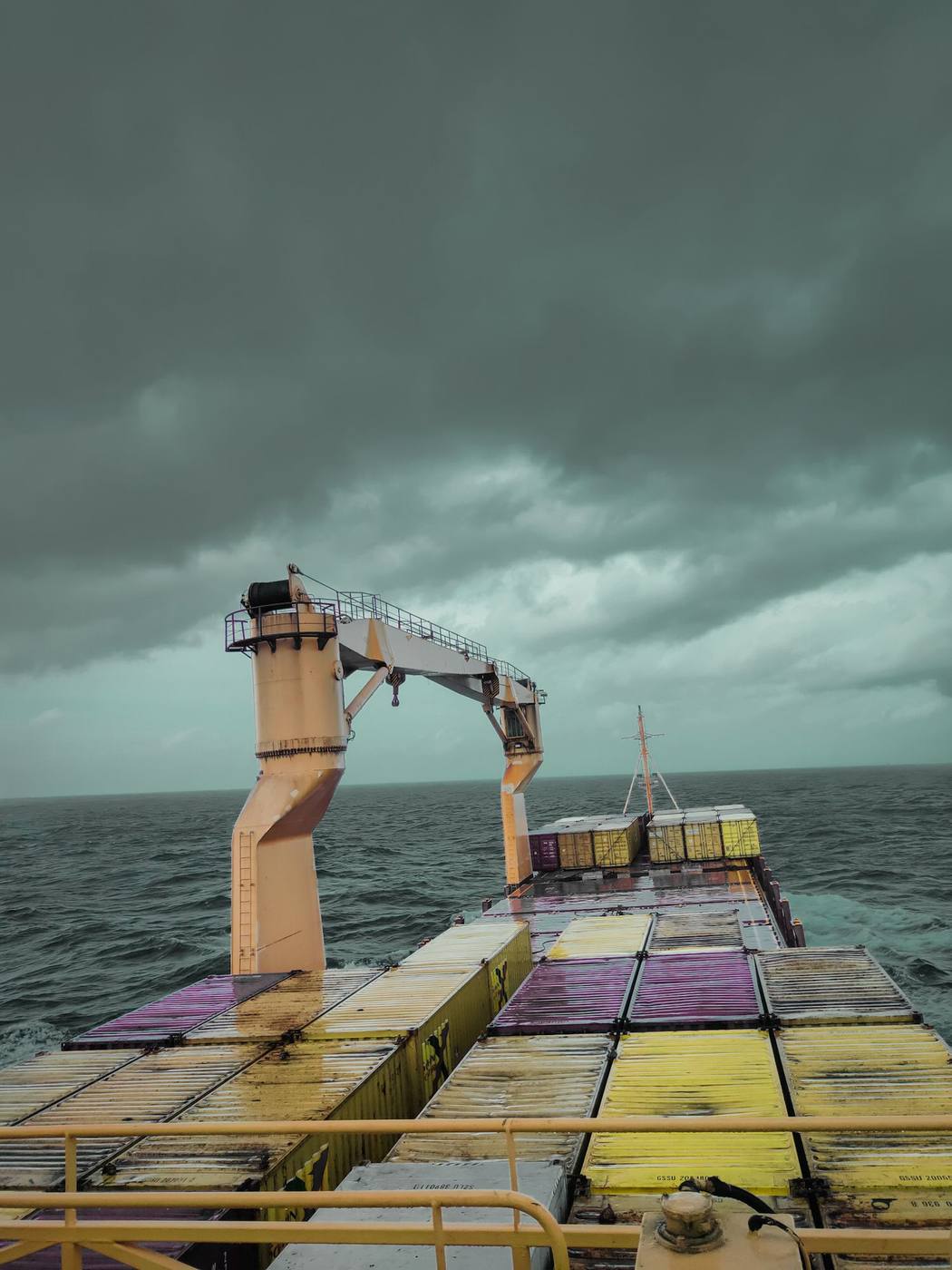
The weather-routing problem is a prediction problem: what will the sea be like where the ship will be, and how will this hull — at this loading, in this condition — actually perform in it? The digital twin's contribution is the second half: a model of the ship's real performance that a route optimizer can test against, so the 'optimal' route is computed for this vessel as she is, not as her sea-trial report once said she was.
That changes the character of voyage optimization — from a generic speed-and-heading calculation to a rehearsal on a calibrated copy of the ship herself.
Key findings
- The voyage twin's value is a calibrated ship model — the optimizer plans against the hull's actual (not nominal) performance. Research demonstration
- The rehearsal loop is the workflow: sync the twin with current ship state, run the candidate routes on it, choose the one the twin predicts best. Maritime-GPT analysis
- The twin captures degradation — fouling, engine wear, draft changes — that a nominal model misses; the route it picks reflects the ship as she is. Established
- The honest constraint is forecast uncertainty — the twin can only optimize against the forecast it's fed, and ensembles are the tool for that. Established
- The twin's output remains advisory — a recommended route the master accepts or overrides. Established
The calibrated-ship advantage
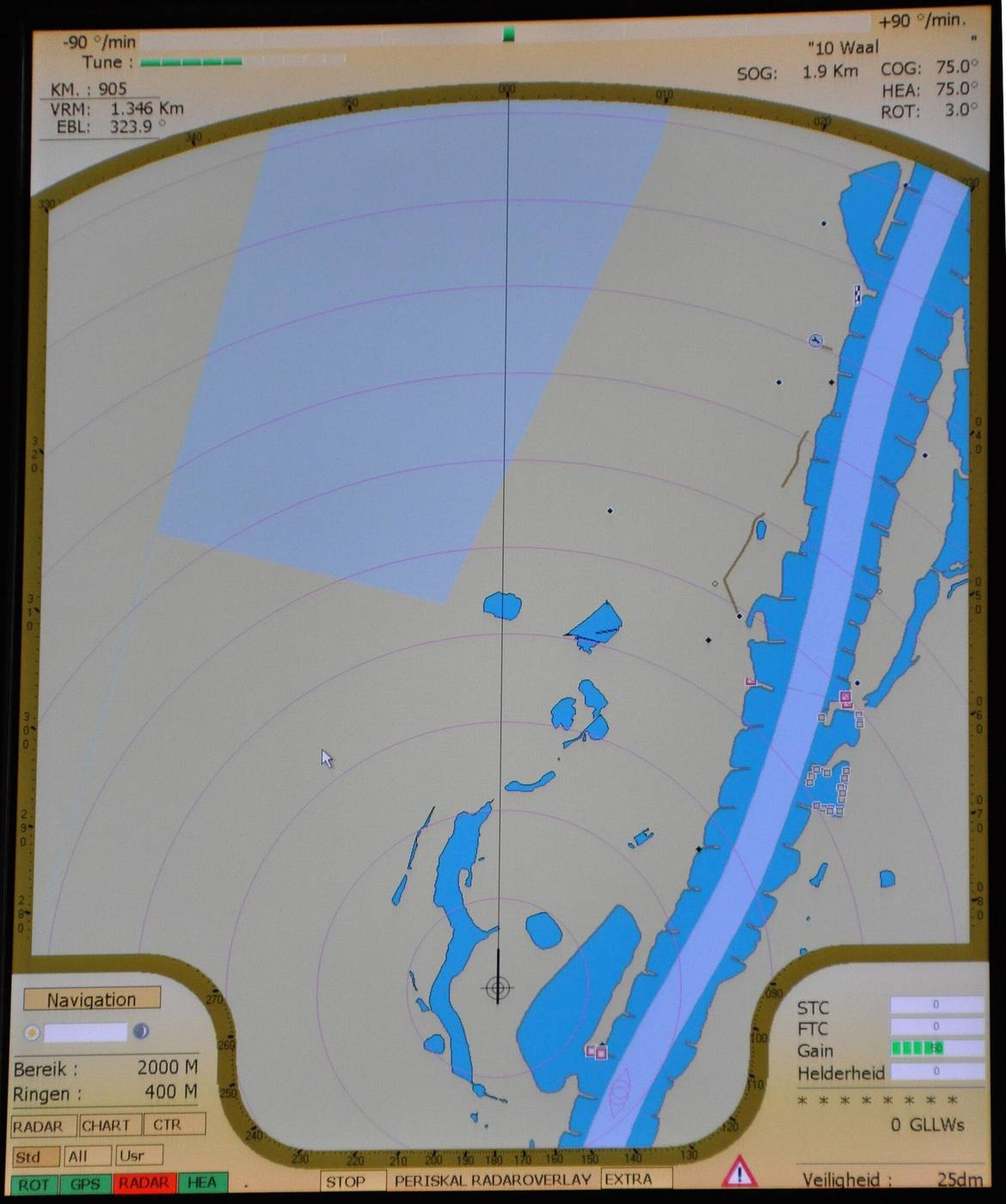
A nominal routing model assumes the ship performs to spec — speed, consumption, seakeeping. A fouled hull doesn't. The voyage twin carries the ship's actual state — current draft, measured consumption curve, observed seakeeping, machinery condition — so the optimizer tests candidate routes against the vessel as she is, not as she was designed. The difference between the twin-informed route and the nominal route is the difference between theory and the actual fuel bill. Research demonstration
The rehearsal loop
The workflow is a closed loop: the twin syncs with the ship's live state; the optimizer generates candidate routes; the twin evaluates each against the forecast — fuel, time, comfort, safety margin; the recommendation goes to the bridge; the master decides; the ship sails; the twin updates from the new telemetry and the loop repeats. The optimization is continuous, not a one-time plan — the twin keeps rehearsing the rest of the voyage as the sea keeps changing. Maritime-GPT analysis
Where the uncertainty lives
The twin is only as good as the forecast it optimizes against — and weather forecasts degrade with lead time. The honest twin workflow runs against the forecast ensemble (many weather futures, not one) and reports a route's robustness — good in most scenarios — rather than its optimality in the mean one. A twin that predicts a single optimal route against a single forecast is solving the wrong problem; the useful one finds the route that's safe across the plausible futures. Established
The human in the loop
The master's authority is the design constraint the twin must respect: the recommendation is an input to judgement, not an instruction. The twin's value is that it makes the trade-offs visible — 'route A is 4% cheaper but adds 6 hours in heavy weather; route B is slower but keeps the GM margin' — so the master's decision is informed rather than displaced. A twin that hides the trade-off behind a single 'optimal' answer is a worse tool than one that shows it. Established
What we know
- The twin provides a calibrated ship model for route optimization.
- The rehearsal loop is continuous — the voyage re-optimizes as forecasts update.
- Ensemble-forecast robustness is the honest objective, not mean-forecast optimality.
What we don't
- Whether twin-informed routing measurably outperforms nominal in production fleets.
- How much twin fidelity the optimization actually needs (marginal returns).
- The certification path for twin-driven routing advice under MASS.
Being tested
- Twin-coupled voyage optimizers on live vessels.
- Ensemble-forecast route robustness metrics.
- Continuous re-optimization workflows aboard operating ships.
Maritime-GPT analysis
The voyage twin's real contribution isn't better routing — it's honest routing: the optimization runs against the ship as she is and the weather as the ensemble admits it might be. A nominal model produces a confident route; a twin produces a tested one. The twin's honest output isn't 'this is optimal', it's 'this is what the rehearsal showed' — which is the difference between a forecast and an experiment. Maritime-GPT analysis
This is a research feature, not operational guidance. Simulation results are reported as simulation; demonstrations are not deployments; company claims are attributed as such. Verify safety-critical decisions against official nautical publications and flag-state requirements.
Sources & evidence
Recent research combining weather uncertainty with vessel-constraint routing.