In maritime tech marketing, 'digital twin' and 'AI model' are used interchangeably — and they're not the same thing. A digital twin is a model of a specific asset that stays synchronized with it; an AI model is a learned function that generalizes across many assets. The twin answers 'what is this ship doing now'; the model answers 'what do ships like this do'.
The confusion isn't pedantic — it produces architecture errors, because the two have different inputs, different purposes, and different failure modes. This article is about drawing the line clearly.
Key findings
- A twin is asset-specific and synchronized — it models this ship, kept current by its telemetry. Established
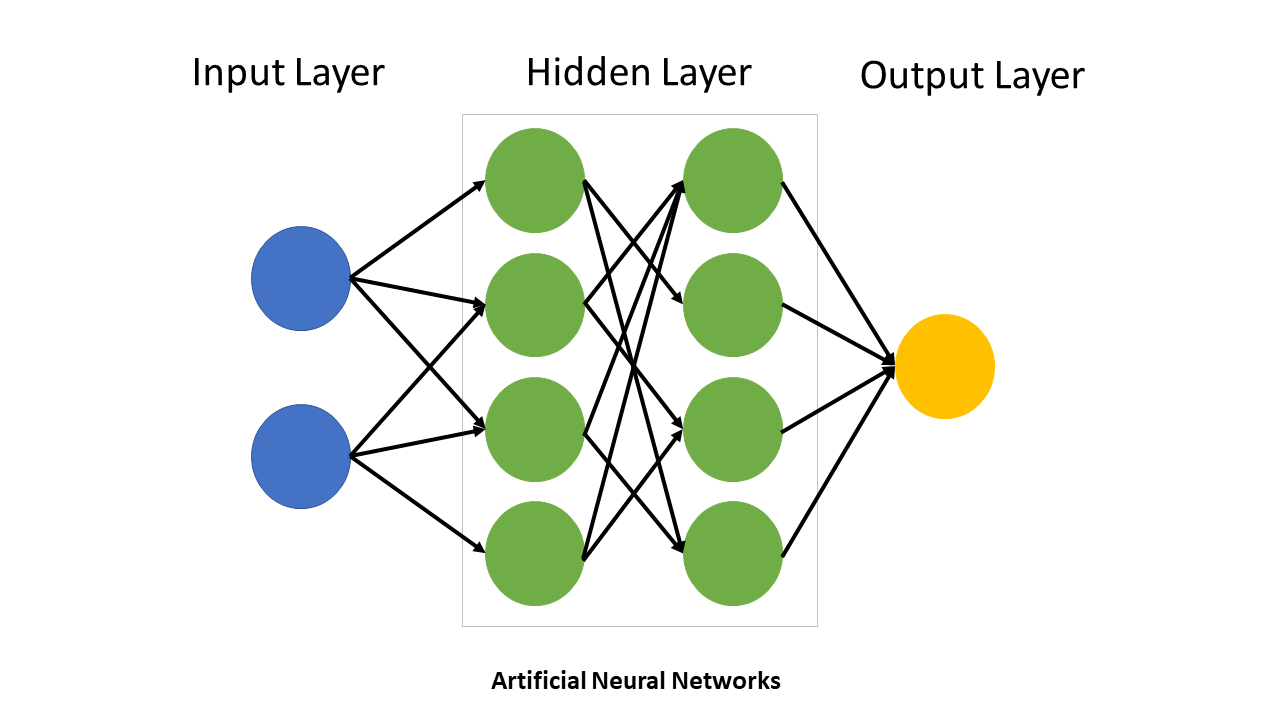
- An AI model is population-learned — it generalizes a pattern across many assets, and doesn't know any one ship. Established
- The twin simulates forward — 'what happens if'; the model infers — 'what does this reading mean'. Established
- The two complement: a twin provides the baseline an anomaly-detection AI measures against. Research demonstration
- Confusing them produces the wrong deployment — a model where a twin was needed, or a twin where statistics would do. Maritime-GPT analysis
The definitional difference
A digital twin is a virtual representation bound to a physical asset — a model of <em>this</em> ship's engine, hull, or voyage, kept synchronized with it by live data. An AI model is a learned function — a pattern extracted from many examples, applied to new inputs. The twin is about a specific thing's state; the model is about a general pattern. The difference is identity: the twin knows which ship it's modeling; the model knows which class of ships it's learned from. Established
What each answers
- <strong>Twin:</strong> 'What is this ship doing now, and what happens if we do X?' — simulation forward on the specific asset. Established
- <strong>Model:</strong> 'What does this pattern mean, and what's the likely outcome?' — inference across the population. Established
- <strong>Twin failure mode:</strong> divergence from the asset it mirrors — a twin that's out of sync is a model of a ship that isn't there. Established
- <strong>Model failure mode:</strong> misapplication to the out-of-distribution case — a pattern that doesn't fit this asset. Established
How they work together
The strongest architectures use both — the twin provides the calibrated baseline ('what should this engine be doing') and the AI model provides the inference ('is the divergence anomalous'). The twin keeps the model honest by giving it a specific reference; the model keeps the twin useful by interpreting its divergence. A predictive-maintenance stack is usually both: the twin knows the asset, the model knows the fault pattern. Research demonstration
The confusion's cost
The marketing conflation produces real architecture errors — a 'digital twin' that's actually just a trained regression, or an 'AI' that's just a synchronized simulation. The distinction matters for the buyer because the two have different deliverables: a twin must be maintained (synced, calibrated, re-anchored), while a model must be validated (tested, benchmarked, monitored for drift). Confusing them means buying the wrong maintenance obligation — and discovering it when the 'twin' turns out to be a static model of a ship that's moved on. Maritime-GPT analysis
What we know
- A twin is asset-specific and synchronized; a model is population-learned.
- The twin simulates forward; the model infers.
- The strongest stacks use both — twin for baseline, model for inference.
What we don't
- Whether 'hybrid twin-model' systems outperform either alone.
- Standard terminology to distinguish them in procurement.
- The maintenance burden of a twin vs a model over a vessel's life.
Being tested
- Twin-model hybrid architectures for maintenance and routing.
- Sync-fidelity metrics for twins vs drift metrics for models.
- Procurement standards that distinguish the deliverables.
Maritime-GPT analysis
The twin-vs-model confusion is the industry's most useful distinction to keep straight — because they solve different problems and demand different maintenance. A twin is a commitment (keep it synced or it's a lie); a model is an artifact (validate it or it's a guess). The strongest maritime AI uses both, each for what it's for — and the procurement question 'is this a twin or a model' is the one that separates real capability from a relabeled regression. Maritime-GPT analysis
This is a research feature, not operational guidance. Simulation results are reported as simulation; demonstrations are not deployments; company claims are attributed as such. Verify safety-critical decisions against official nautical publications and flag-state requirements.
Sources & evidence
Recent twin research showing the synchronization requirement.