
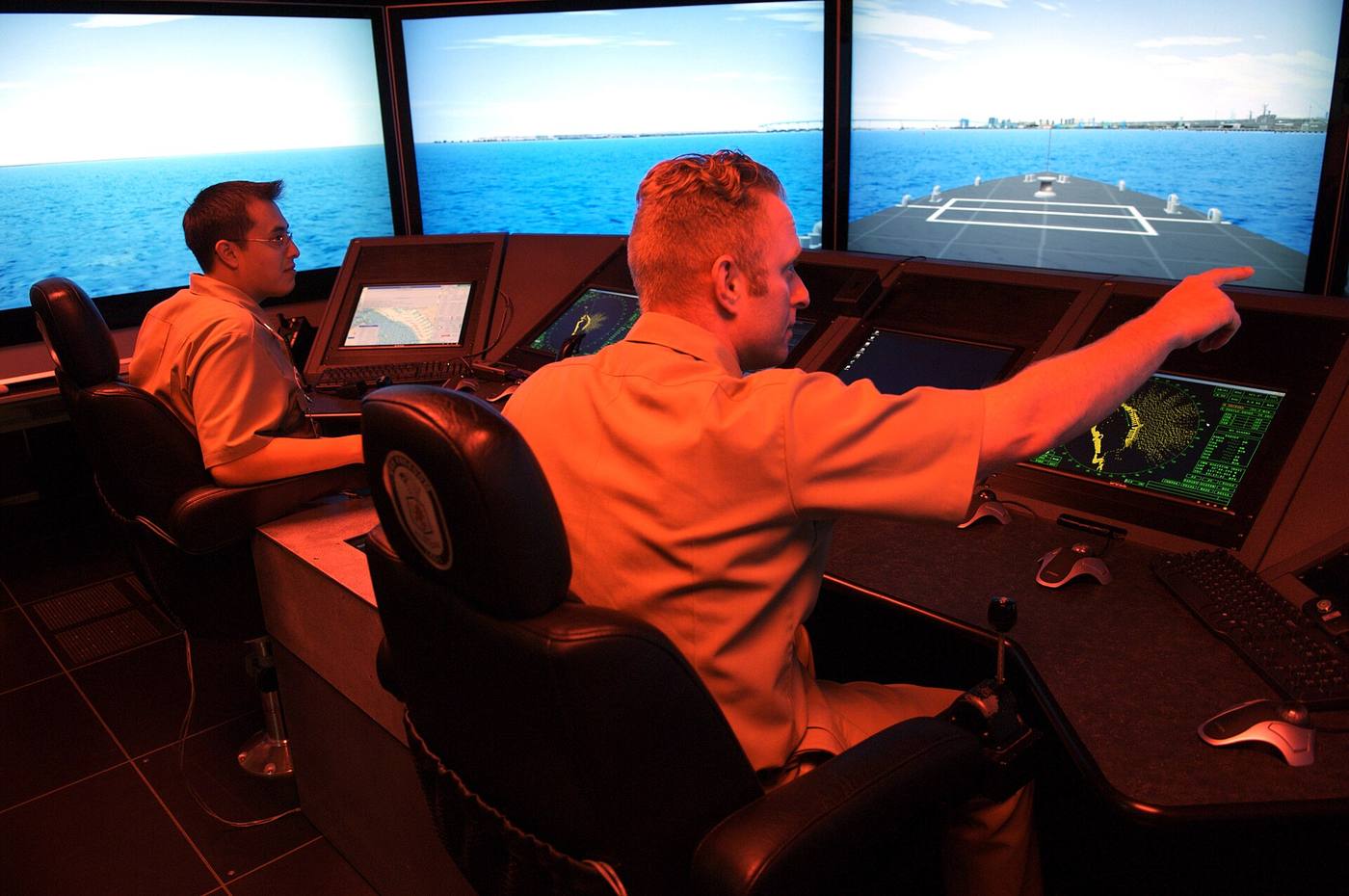
An autonomous ship cannot learn the way a cadet does — by making mistakes under supervision — because its mistakes carry hull, cargo, and lives. The digital twin is where the failure budget gets spent instead: the simulated sea where the policy can collide ten thousand times, learn, and arrive at the water already carrying its scars.
That is the twin's real role in autonomy — not a visualization, not a dashboard, but the training ground, the test harness, and the shadow that runs alongside the real ship comparing expected with actual.
Key findings
- The twin is autonomy's training ground — RL policies are trained in simulation because real-world collision learning is unaffordable. Established
- The sim-to-real gap is the central problem: a twin that's too clean teaches a policy that fails on a dirty sea. Established
- The twin doubles as the test harness — MASS-relevant verification runs thousands of edge-case scenarios no sea trial could cover. Research demonstration
- Post-deployment, the twin shadows the ship — divergence between predicted and actual behaviour is itself a health signal. Research demonstration
- Twin fidelity is the honest bottleneck: the policy is only as trustworthy as the model of the ship and sea it trained on. Maritime-GPT analysis
The training ground
Reinforcement learning for collision avoidance — the DQN/PPO work we covered — lives almost entirely inside simulation. The twin provides the ship-dynamics model, the traffic generator, and the collision scenarios the policy explores millions of times. The Cambridge Journal of Navigation's Navigation-GPT survey frames this architecture: the simulation is where the navigation agent earns its competence before it earns its authority. Established
The test harness
Beyond training, the twin is how autonomy gets verified: the edge-case suite (restricted visibility, dense traffic, mechanical degradation) run systematically against the candidate policy. A sea trial covers a handful of encounters; a twin-based test campaign covers the encounters that would take a lifetime to meet at sea — the ones that actually kill policies. This is the assurance function the MASS Code's safety case implicitly requires. Research demonstration
The sim-to-real gap
Every twin embeds a lie of omission — simplified hydrodynamics, idealized sensors, absent biofouling, a sea state drawn from a model rather than a storm. A policy that masters the twin may fail the sea. The honest mitigation is domain randomization and fidelity measurement: train across many twin variants, measure how performance degrades as fidelity increases, and treat the gap as an engineering parameter, not an afterthought. The twin that claims realism it doesn't have is the one that ships the dangerous policy. Established
The shadow in service
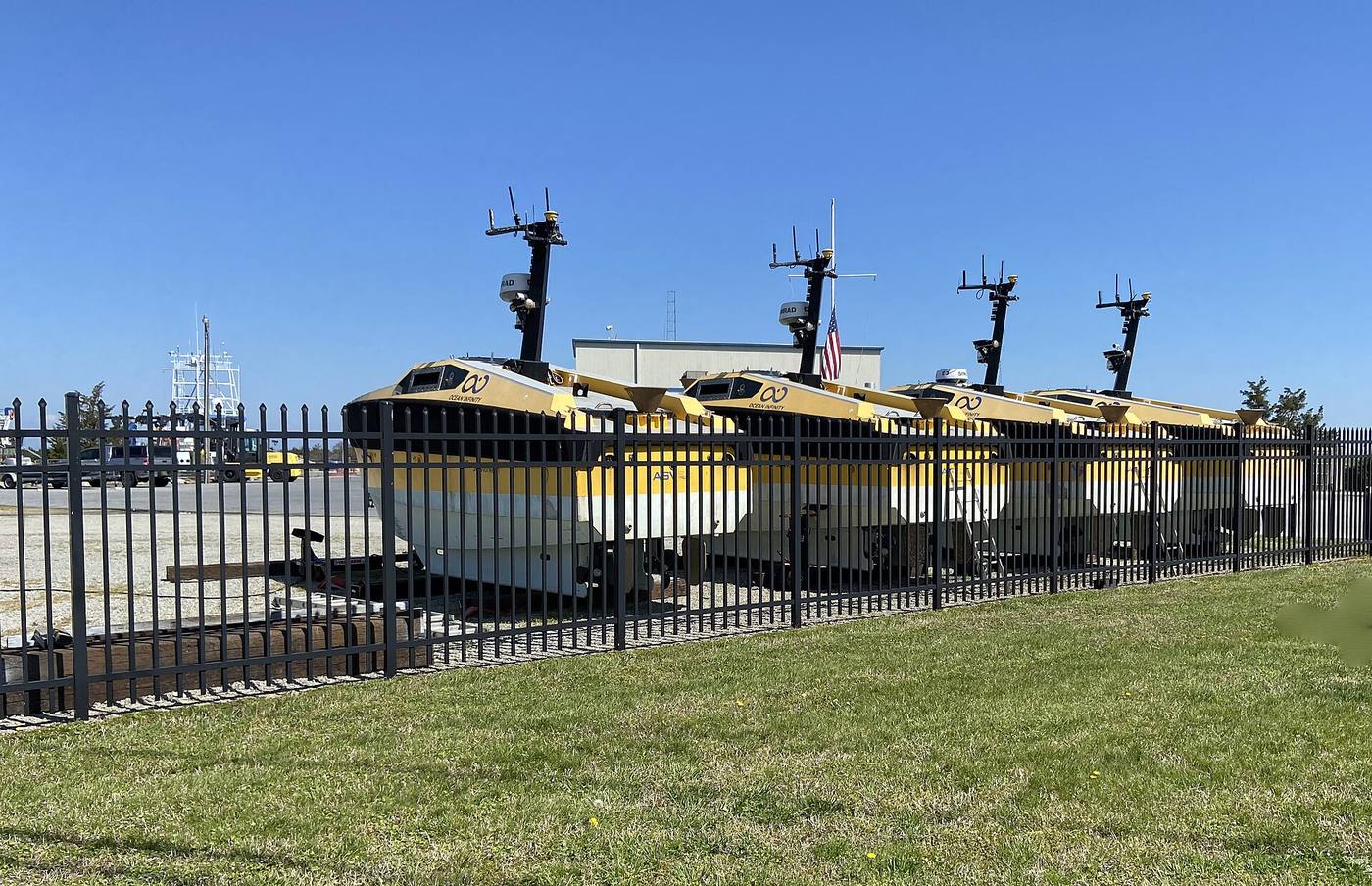
Once deployed, the twin keeps working — running alongside the real vessel, predicting the manoeuvres the ship should make, and flagging divergence between prediction and reality. A ship whose twin says it should turn 15° and is actually turning 8° has a degraded rudder or a fouled hull — the twin's disagreement is a diagnostic. This shadow-twin pattern is the autonomy version of the predictive-maintenance twin. Research demonstration
What we know
- RL navigation policies are trained in twin/simulation environments, not at sea.
- The twin also serves as the verification harness for edge-case coverage.
- Divergence between twin prediction and ship reality is a diagnostic signal.
What we don't
- How much twin fidelity is 'enough' for a policy to transfer safely.
- Whether simulation-verified policies hold up under real-sea assurance regimes.
- The compute and latency budget for a shipboard shadow twin.
Being tested
- Domain-randomized twin training with measured transfer.
- Twin-based test suites for MASS safety cases.
- Shadow-twin divergence monitoring on deployed autonomous systems.
Maritime-GPT analysis
The twin's role in autonomy is structural, not optional — it's the place where learning is cheap, where verification is thorough, and where the deployed ship's behaviour is continuously compared to expectation. But the twin is also where the danger concentrates: a policy verified against a poor twin is a verified failure. The fidelity question — how honest is the simulated sea — is the one that decides everything downstream of it. Maritime-GPT analysis
This is a research feature, not operational guidance. Simulation results are reported as simulation; demonstrations are not deployments; company claims are attributed as such. Verify safety-critical decisions against official nautical publications and flag-state requirements.
Sources & evidence
The architecture survey covering simulation-trained navigation agents.
Recent manoeuvring-twin evidence.