
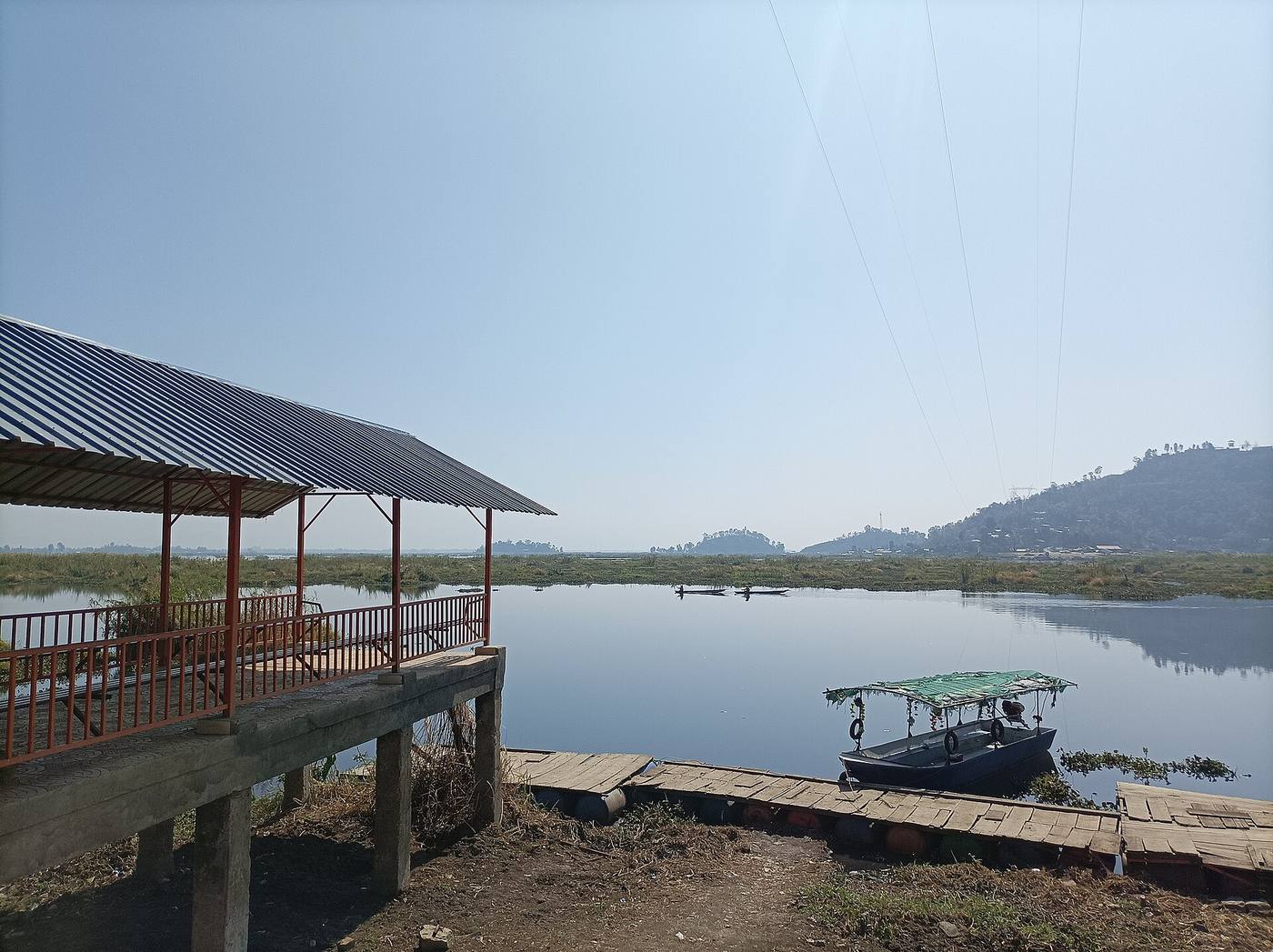
A bulk carrier at three miles is easy: thousands of pixels, slow relative motion, unmistakable silhouette. The detection problems that decide collisions are at the other end of the size axis — the kayak that will not turn, the fishing skiff lying to nets, the floating container that radar sees as clutter and the camera as a smudge. In maritime casualty reports, small craft and debris are disproportionately the object struck.
Small-object detection is the known weakest quadrant of every maritime vision benchmark. It is also the quadrant the rules most care about. This article explains why the gap exists and what would close it.
Key findings
- Small-object recall is the lowest-scoring class in every public maritime detection benchmark — by margin, not accident. Established
- The cause is structural: at collision-relevant range a kayak is tens of pixels, a smudge the feature pyramid discards as noise. Maritime-GPT analysis
- Class imbalance compounds it — big ships dominate the training data; rare, dangerous classes are rare in it. Established
- Sea-state noise specifically confuses small-target detection: whitecaps and wakes are decoy small objects at frame rate. Research demonstration
- Detecting a small vessel is different from classifying it — a detected blob that might be a buoy still has to be reasoned about. Maritime-GPT analysis
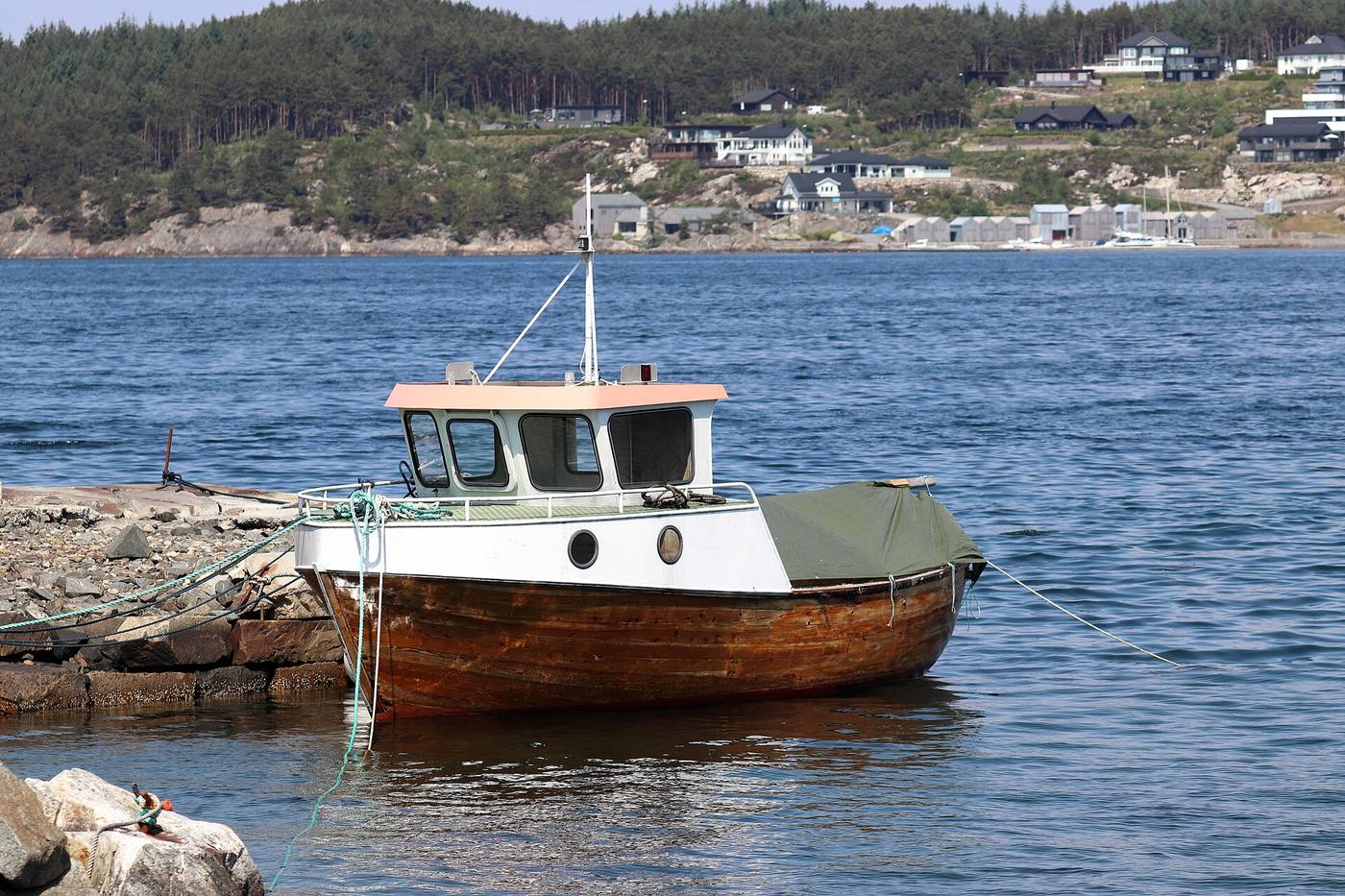
The size-versus-safety inversion
Detection systems are benchmarked on average precision — a metric weighted toward the classes that dominate the dataset. Ships dominate. The small craft that kill get averaged away. SeaDronesSee — built explicitly for person-sized open-water targets — exists precisely because the maritime-vision field recognised the small-object regime as underserved; its baseline results show the gap plainly. Established
Why it's hard, honestly
- <strong>Pixels.</strong> A kayak at 2km is tens of pixels. Convolutional feature pyramids subsample small objects out of existence — that's not a tuning problem, it's the architecture. Maritime-GPT analysis
- <strong>Motion ambiguity.</strong> A drifting container and a slow jet-ski look identical across one frame; separating them needs temporal reasoning single-frame detectors don't do. Research demonstration
- <strong>Sea-state noise.</strong> Whitecaps, spray and wave crests produce small-object false positives continuously — the detector's threshold trades misses against alarms. Research demonstration
- <strong>Rarity in data.</strong> The dataset can't teach what it barely contains; every rare-class fix (augmentation, synthetic data) is partial. Established
| Target | Why hard | Detection status | The collision risk |
|---|---|---|---|
| Kayak / canoe | Tiny silhouette, low freeboard | Weak — rare class | Highest: unpowered, no lights |
| Jet-ski / PWC | Fast, small, intermittent wake | Weak at range | High: speed + erratic path |
| Fishing skiff | Cluttered profile, nets | Moderate | High: unpredictable, may be anchored |
| Floating container | Low profile, sub-surface | Weak | High: radar-clutter, camera-smudge |
| Buoy / marker | Intended to be inconspicuous | Moderate | Low direct, high navigation |
What the correct stack looks like
Small-craft detection is where the fusion case is strongest. Radar resolves small targets by motion even when it can't classify them; AIS tells whether it's a registered vessel; the camera adds the class the radar can't. A detected small blob that radar sees and AIS doesn't is the alarm the stack exists to raise — the maritime equivalent of a pedestrian stepping off the kerb. Research on small-craft-specific pipelines (high-resolution front-ends, multi-frame temporal filters) is thin but converging on this association-first architecture. Maritime-GPT analysis
The human factor
The human lookout does the same thing the fusion does — binocular sweep, radar check, judgement — on more general-purpose hardware. What the human does better is the rare-class judgement: a shape that's not quite a buoy, not quite a boat, gets followed until it's classified. A detection engine that doesn't report uncertainty on the rare class is strictly worse than the lookout on exactly the encounter that decides the case. Maritime-GPT analysis
What we know
- Small-object recall is the weakest measured class in every maritime vision benchmark.
- The cause is architectural (feature-pyramid subsampling) plus statistical (class imbalance).
- Radar+vision fusion demonstrably improves small-craft detection over either alone.
What we don't
- Reliable small-craft recall at COLREGS-relevant range on a commercial-ship bridge.
- How much temporal/multi-frame filtering closes the gap without overwhelming the alarm budget.
- Whether synthetic small-object augmentation transfers to real footage.
Being tested
- High-resolution detector heads for small targets.
- Small-craft-specific augmentation and oversampling.
- Association-first fusion pipelines for rare classes.
Maritime-GPT analysis
Small-vessel detection is the honesty check on every vision pitch. If the benchmark is a SeaShips mAP and the question is a kayak at dawn, the number is describing the wrong problem. The answer isn't more accuracy on the dominant class — it's fusion that treats a small, unidentified, moving contact as the emergency it is, and a system designed to alarm rather than to score. Maritime-GPT analysis
This is a research feature, not operational guidance. Simulation results are reported as simulation; demonstrations are not deployments; company claims are attributed as such. Verify safety-critical decisions against official nautical publications and flag-state requirements.
Sources & evidence
The small-object benchmark that quantifies the gap.
The class-imbalanced corpus whose six big-vessel labels define what the benchmarks can measure.
Contains small-obstacle sequences — buoys, swimmers, small craft — from a real platform.
A more varied open-water dataset that surfaces the small-target weakness.