
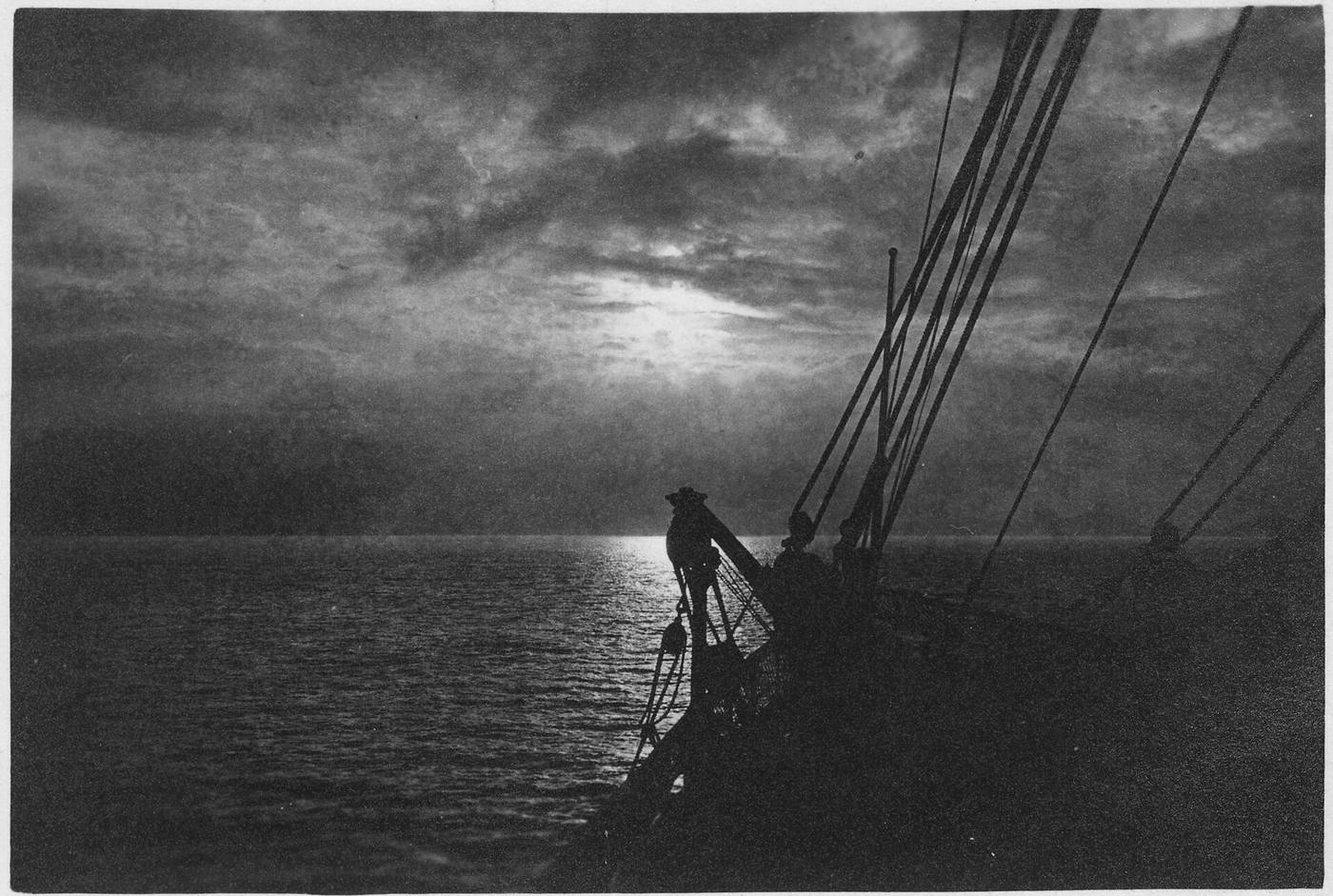
Half of every voyage happens in the dark — and the perception stack's daytime performance doesn't transfer. The camera that detects a ship clearly at noon struggles at 0300; the navigation lights that were redundant in daylight become the only signal; the lookout who's relied on vision all day is now reading a darker, less legible sea.
Night-time maritime vision is the CV problem the industry can't skip — because the night isn't the edge case, it's half the operating envelope, and the perception that works in daylight is only half a system.
Key findings
- Night is half the operating envelope — the perception stack's day performance is only half the problem. Established
- Low-light and thermal cameras extend the visual range — the hardware layer that feeds the model. Established
- Navigation-light interpretation becomes primary — the lights are the signal that survives the dark. Established
- AI enhancement of low-light imagery (denoising, brightening, thermal fusion) is the software layer. Research demonstration
- The fusion necessity peaks at night — camera+thermal+radar+AIS is the stack that works when vision alone fails. Established
The dark changes the problem
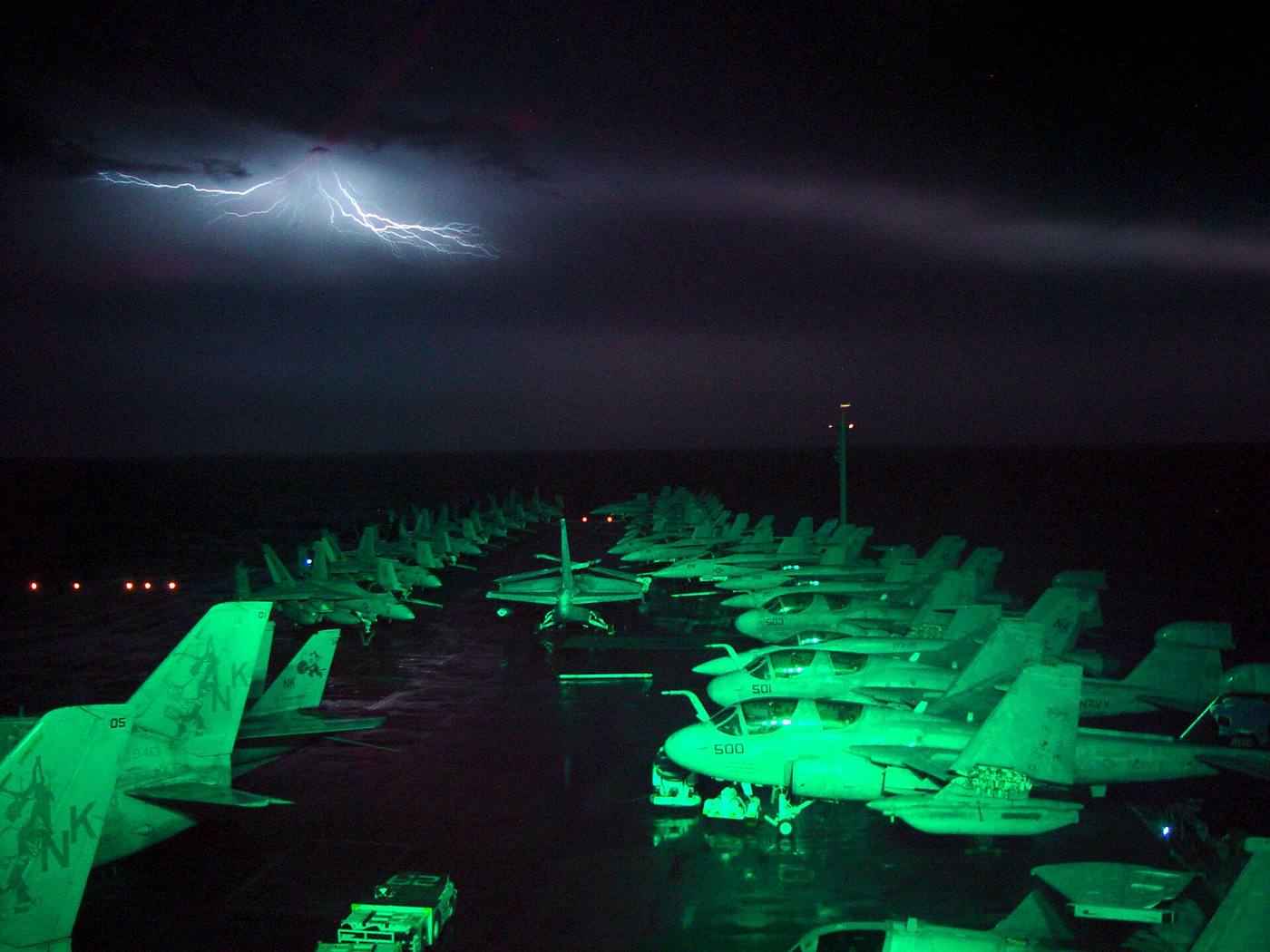
Daytime maritime vision is a detection problem — find the object in the image. Night vision is a signal problem — the object's visible signature collapses to its lights, its silhouette against the horizon is marginal, and the camera's noise floor becomes the limiting factor. The perception stack has to shift from 'find the ship' to 'interpret the lights and the faint track' — which is a different task with a different model. Established
The hardware layer
- <strong>Low-light (image-intensified) cameras.</strong> Amplify the available light — the near-visible enhancement. Established
- <strong>Thermal (LWIR) cameras.</strong> See the heat signature — vessel exhaust, engine heat, wake — independent of visible light. Established
- <strong>The fusion.</strong> Visible + thermal + radar gives the perception stack a channel that survives the dark. Established
The lights become the signal
At night the vessel is its lights — the masthead arrangement, the sidelights, the special-status signals — and interpreting them is the COLREGS-relevant task the perception must do. A model that detects the light pattern and reads it ('power-driven vessel, crossing, port side showing') is doing the lookout's interpretive job in the dark. This is the visual-COLREGS problem at its most acute — the case where the lights are the whole information. Research demonstration
Where the night is hardest
The hardest night cases compound the darkness — a moonless overcast night, rain or spray degrading the camera, a cluttered coastal background that drowns the faint target. The perception that works on a clear night fails in the compound case — which is the honest argument for the fused stack: when the camera is blind, the thermal sees the heat, the radar sees the hull, and the AIS hears the report. No single sensor survives the worst night; the fusion does. Established
What we know
- Night vision needs different sensors and models than the day problem.
- Navigation-light interpretation is the night-time COLREGS signal.
- Multi-modal fusion (camera/thermal/radar/AIS) is the robust night answer.
What we don't
- Field-validated night-time detection rates on operational vessels.
- How thermal-camera cost/performance trends affect deployment.
- Whether night-time perception can meet autonomous navigation assurance.
Being tested
- Low-light/thermal camera fusion for night detection.
- Navigation-light interpretation at night.
- All-weather perception benchmarks for the worst-case envelope.
Maritime-GPT analysis
Night is the case that exposes the perception stack's honesty — the system that's genuinely all-weather works when the light is gone; the one that's only good in the daytime is half a system wearing a full one. The fused stack — camera, thermal, radar, AIS — is the honest answer because no single sensor survives the worst night alone. The perception that works at 0300 in the rain is the perception worth trusting at noon. Maritime-GPT analysis
This is a research feature, not operational guidance. Simulation results are reported as simulation; demonstrations are not deployments; company claims are attributed as such. Verify safety-critical decisions against official nautical publications and flag-state requirements.
Sources & evidence
The maritime-CV foundation including low-light approaches.