
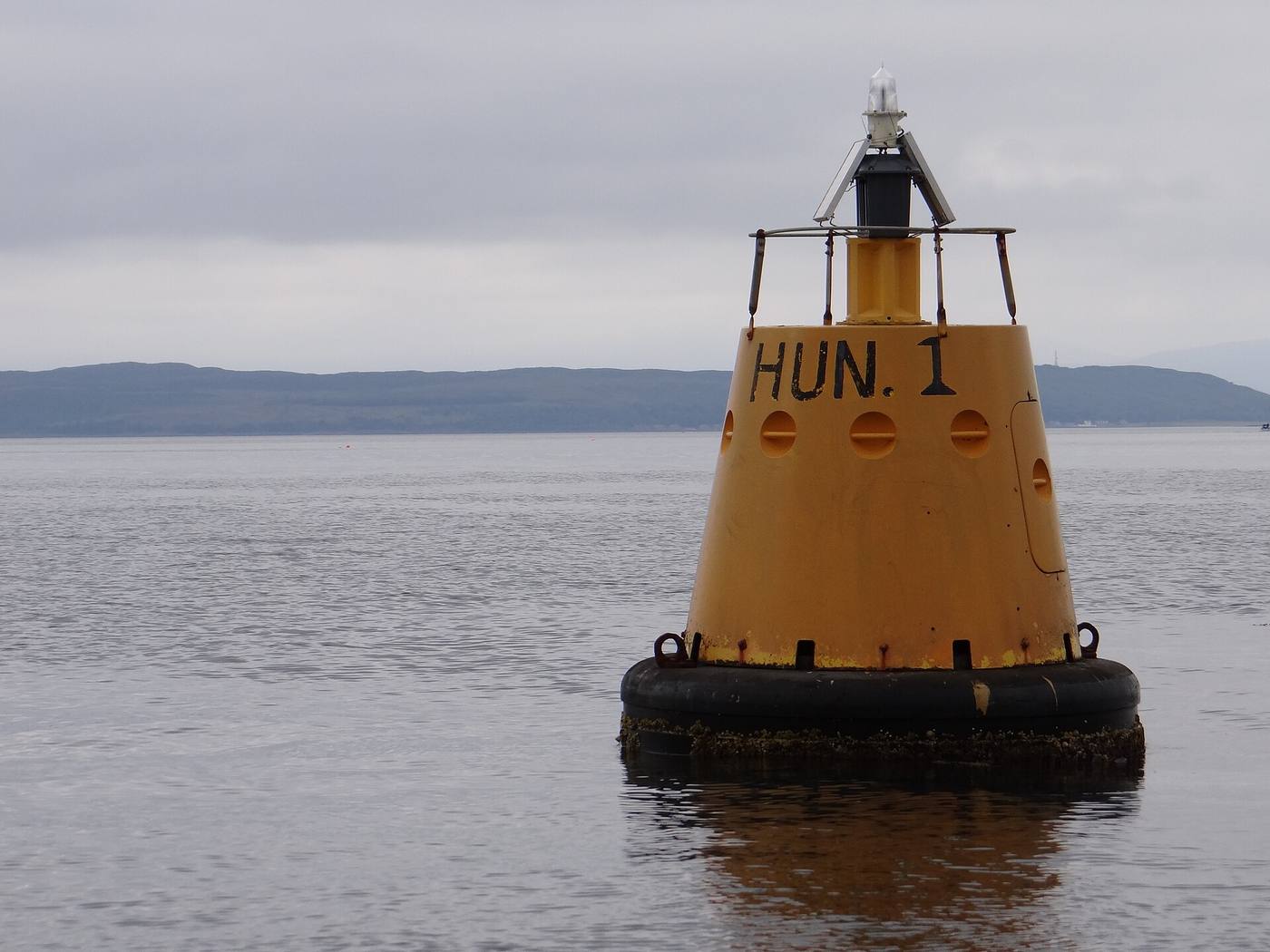
The smallest objects are sometimes the most safety-critical — and the buoy is the proof. A channel mark that defines the navigable water, a lateral buoy that separates the safe from the ground, a hazard mark that warns of the danger: these are targets a lookout reads visually and a radar sees poorly, which makes them the detection problem that matters exactly where the water gets narrow.
Buoy detection is maritime CV's precision test — small objects against clutter, in poor light, in spray — and it's the one that constrains whether an autonomous vessel can navigate a channel without a human eye.
Key findings
- Buoys are the hardest detection target class — small, low-profile, low-contrast against sea clutter. Established
- The safety criticality is channel-relative — a missed buoy in open water is a gap; in a channel it's a grounding. Established
- Radar sees buoys poorly — small radar cross-section, sea clutter interference — which makes CV the necessary complement. Established
- The detection must work in degraded conditions — dusk, fog, spray — where the buoy's visual signature is weakest. Established
- Multi-sensor fusion is the honest answer — camera + radar + chart priors, not any one alone. Research demonstration
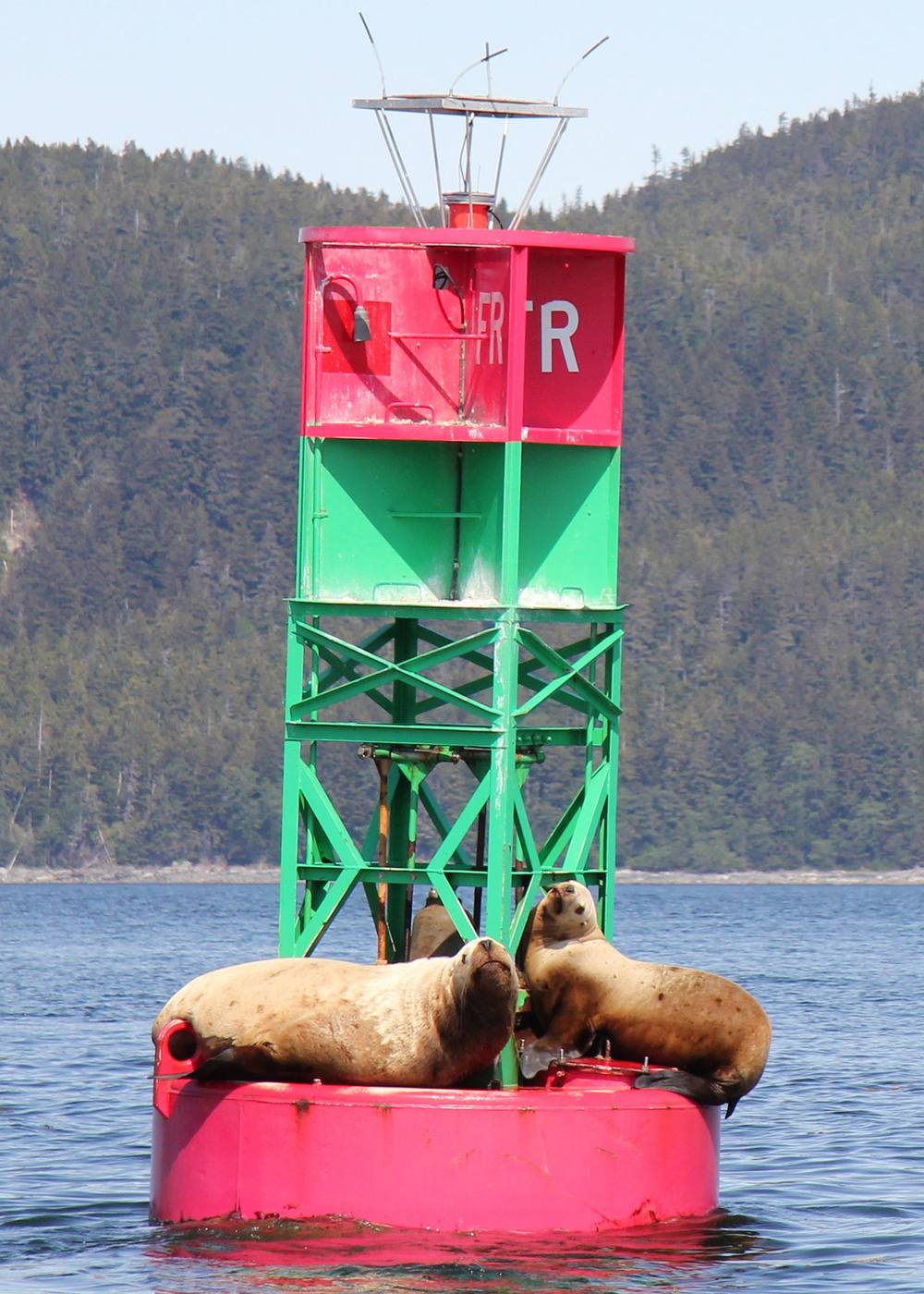
Why buoys are hard
A buoy is a metre-scale object floating low against a cluttered sea surface — small, low-contrast, often obscured by waves or spray, and at the detection limit of both radar and camera. The vessel detection the earlier CV work solves (a ship is large and high-contrast) doesn't transfer directly; the buoy is the small-object problem where the model's resolution, the sensor's noise floor, and the environment's clutter all fight the detection. Established
The channel is where it matters
The detection's importance scales with confinement — in open water a missed buoy is a gap in awareness; in a channel or fairway it's a navigation hazard, because the buoy is the mark that defines the navigable water. The autonomous or assisted-navigation system's ability to see the buoy chain is the difference between 'can navigate open sea' and 'can navigate confined water' — and the confined water is where most casualties happen. Established
Radar's blind spot
Radar is the ship's workhorse sensor and it sees buoys poorly — small cross-section, sea clutter at the same range, and returns that blend with the sea surface. The camera is the complement: it sees the buoy's visual signature (shape, light characteristic, daymark) that radar can't resolve, which makes the camera-buoy detection the necessary sensor for confined-water navigation. The honest architecture is fused: radar finds the contact, the camera classifies it, the chart's buoy positions provide the prior. Established
The degraded-condition test
The buoy-detection benchmark isn't the clear-day case — it's the dusk, the drizzle, the spray, the partially-obscured mark that the human lookout strains to see. The CV system's real test is performance when the conditions are worst — which is exactly when the human lookout is weakest too, and when the redundant detection matters most. The model that works in good visibility is a nice-to-have; the one that works in the fog and spray is the safety case. Established
What we know
- Buoys are the small-object detection problem that matters in confined water.
- Radar sees them poorly; camera + chart priors are the complement.
- Degraded-condition performance is the deployment-relevant metric.
What we don't
- Whether buoy-detection performance meets confined-water requirements.
- How detection degrades across seasons/biofouling/buoy damage.
- Whether camera-based buoy detection can support autonomous channel transit.
Being tested
- Buoy-detection benchmarks on maritime datasets (SeaShips, SMD).
- Multi-sensor buoy fusion in confined water.
- Degraded-condition (fog/dusk/spray) detection performance.
Maritime-GPT analysis
Buoy detection is the small-object problem that's actually the confined-water problem — the metre-scale mark that defines the safe channel is exactly what radar misses and the camera must catch. The honest deployment is multi-sensor: chart prior for where the buoy should be, camera for the visual read, radar for the contact — each covering the others' weakness. In the channel, the detection isn't a feature; it's the margin between the navigable water and the ground. Maritime-GPT analysis
This is a research feature, not operational guidance. Simulation results are reported as simulation; demonstrations are not deployments; company claims are attributed as such. Verify safety-critical decisions against official nautical publications and flag-state requirements.
Sources & evidence
The maritime-CV foundation including small-object detection.
The benchmark dataset for maritime object detection.