
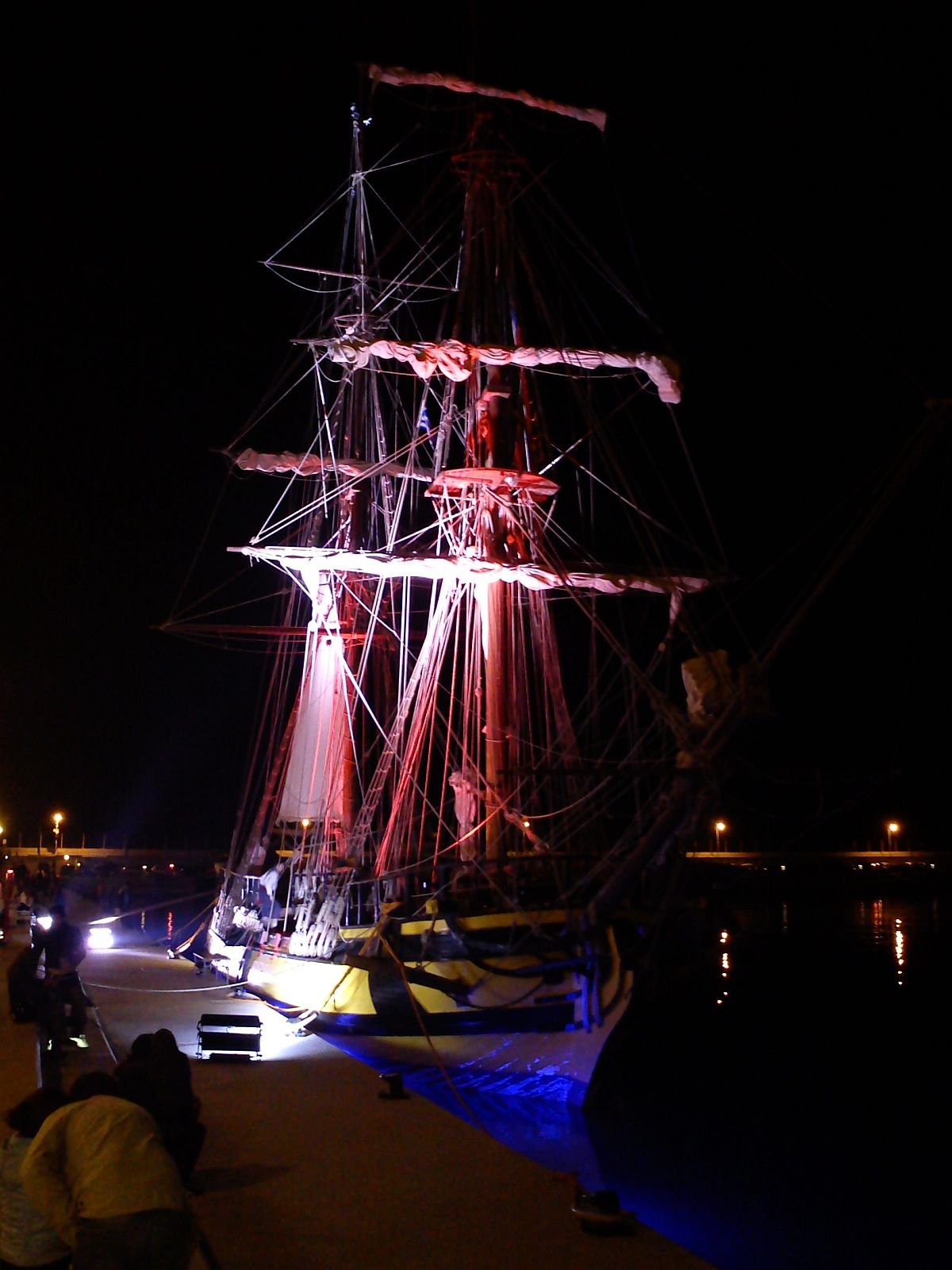
COLREGS is written in visual language: the rules speak of lights and shapes, of seeing a vessel's aspect, of judging whether she is crossing or overtaking — all of which a human lookout reads from the scene itself. The rules aren't a list of sensor inputs; they're a visual interpretation task, and the 'proper lookout' clause makes the human eye the original sensor.
So the question for computer vision isn't whether it can detect a ship — that's the earlier problem — but whether it can interpret the encounter well enough to reason about which rule applies. That is a harder and more interesting problem.
Key findings
- COLREGS is inherently visual — the rules are defined in terms of what a lookout sees (lights, shapes, aspect, manoeuvre). Established
- Visual interpretation must supply the reasoning layer — vessel type, heading aspect, relative motion — that a radar track alone doesn't fully provide. Established
- Navigation-light recognition is the canonical visual-COLREGS task — reading the light pattern to determine vessel type and status. Research demonstration
- The model interprets, the rules reason — the visual layer produces the facts, a separate COLREGS-reasoning layer decides. Maritime-GPT analysis
- The failure mode is a fluent misread — a visual classifier that confidently misidentifies the light pattern produces a confident wrong rule application. Maritime-GPT analysis

What 'visual COLREGS' actually asks
A radar gives you a track — range, bearing, CPA — but the COLREGS question is interpretive: is that vessel a power-driven vessel or a sailing vessel? Is she showing the lights of a vessel not under command? Is the encounter head-on or crossing? Those are visual facts — read from the light pattern, the silhouette, the aspect — that determine which rule applies. A camera-plus-model system that supplies that reading is doing the lookout's interpretive job, not just detection. Established
The layered architecture
- <strong>Detection.</strong> There's a vessel there — the earlier CV problem, largely solved. Established
- <strong>Interpretation.</strong> Type, status, aspect — read from lights, shape, and motion; the layer this article is about. Research demonstration
- <strong>Reasoning.</strong> Which COLREGS rule applies and what manoeuvre it prescribes — a separate logic layer over the visual facts. Established
- <strong>Action.</strong> The manoeuvre itself — the domain where human authority stays regardless. Established
The light-reading problem
Navigation-light recognition is the purest visual-COLREGS task: at night, a vessel is its lights — the masthead arrangement, the sidelights' arcs, the special-status signals — and reading them tells the lookout everything the rules need. It's a classification problem on a deliberately standardized signal — which makes it tractable for CV — but the stakes of a misread are real: misidentify a vessel's status and the wrong collision-avoidance obligation applies. Research demonstration
Why the model must stay interpretive
The temptation is an end-to-end system — pixels in, manoeuvre out — which is exactly the opaque autonomy the safety case can't accept. The honest architecture keeps the layers separate: the visual model produces interpretive facts ('vessel, power-driven, crossing starboard'), the COLREGS-reasoning layer applies the rule to those facts, and the human supervises the chain. Each layer's output is auditable; a fused black-box is not. Maritime-GPT analysis
What we know
- COLREGS reasoning needs visual interpretation — type, status, aspect — not just detection.
- Navigation-light recognition is the canonical and tractable visual-COLREGS task.
- The architecture must stay layered — visual facts, rule reasoning, human action.
What we don't
- Whether visual interpretation can be certified reliable enough for COLREGS reasoning.
- How the visual layer performs in the degraded conditions (rain, spray, glare) that matter.
- Whether a visual-COLREGS system can meet the 'proper lookout' standard.
Being tested
- Navigation-light classification on night-sea datasets.
- Aspect/heading estimation from monocular ship imagery.
- Layered visual-facts-to-rule-reasoning architectures.
Maritime-GPT analysis
Visual COLREGS is where computer vision meets maritime law — the rules are written for a human eye, and the AI's job is to produce the reading that lets the rule be applied. The key architectural discipline is keeping interpretation and reasoning separate: the camera says what it sees, the rule layer says what it means, the human says what the ship does. A system that fuses them into a black box is a liability; a layered one is a lookout's assistant. Maritime-GPT analysis
This is a research feature, not operational guidance. Simulation results are reported as simulation; demonstrations are not deployments; company claims are attributed as such. Verify safety-critical decisions against official nautical publications and flag-state requirements.
Sources & evidence
The rule set the visual interpretation serves.
The maritime-CV foundation this interpretive layer builds on.